
Mediterranean Garden Society
Mediterranean Garden Society
The Costa Blanca Branch of the MGS
The Costa Blanca branch welcomes all gardeners to our activities regardless of their nationality. We are a multilingual branch where the languages spoken are mostly Spanish and English. Our meetings are held mainly in the province of Alicante, but we also travel to Valencia. We visit the gardens of partner associations and friends and notable gardens of the region; every year we find new gardens to visit. We write a summary of each of our meetings in the "Past Events" section of this page. These reports show the range of our activities and the types of gardens we visit. Anyone interested in gardening is welcome to attend our meetings.
Our Co-Branch Heads are Edith Haeuser and John Danzer - read their biographies here.
Gardeners located in Andalucía may also like to contact Sibylle Mattern or in Cataluña contact Paul Gans.

Versión española
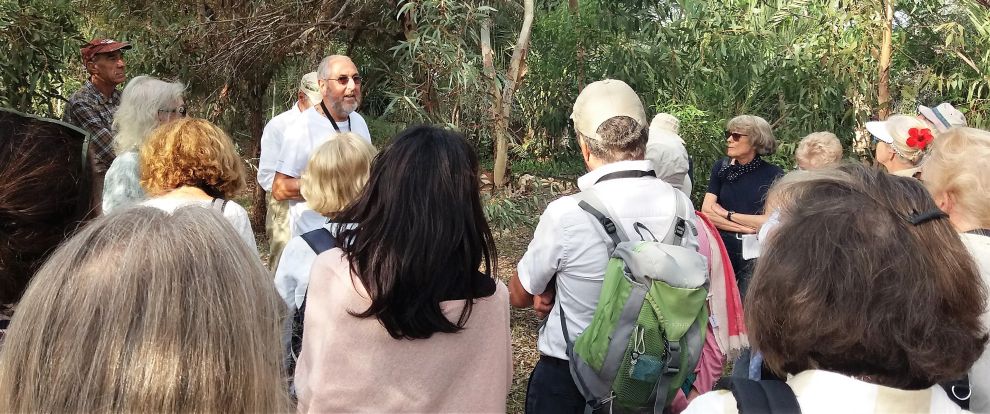
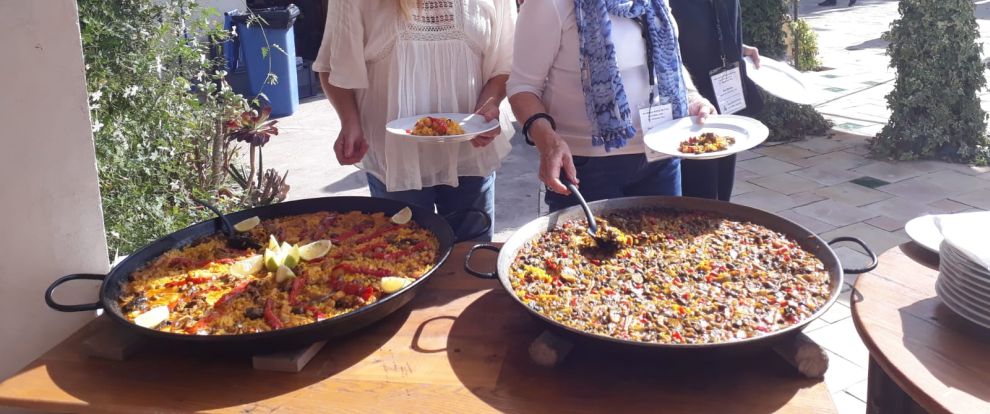
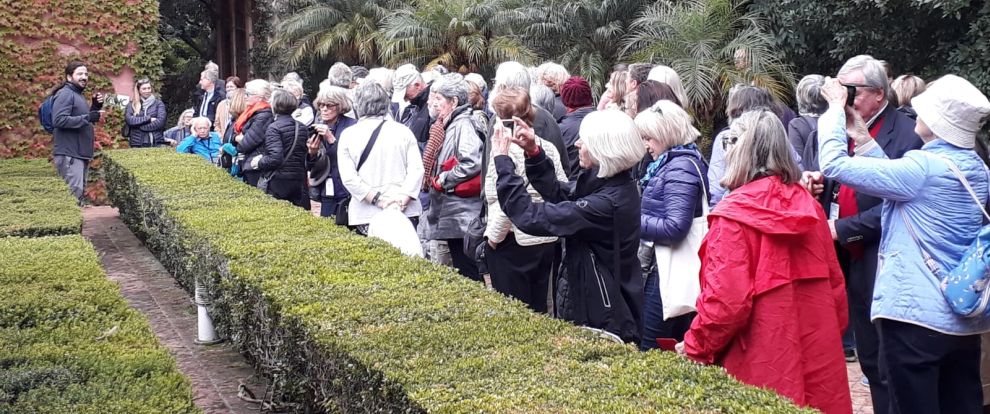
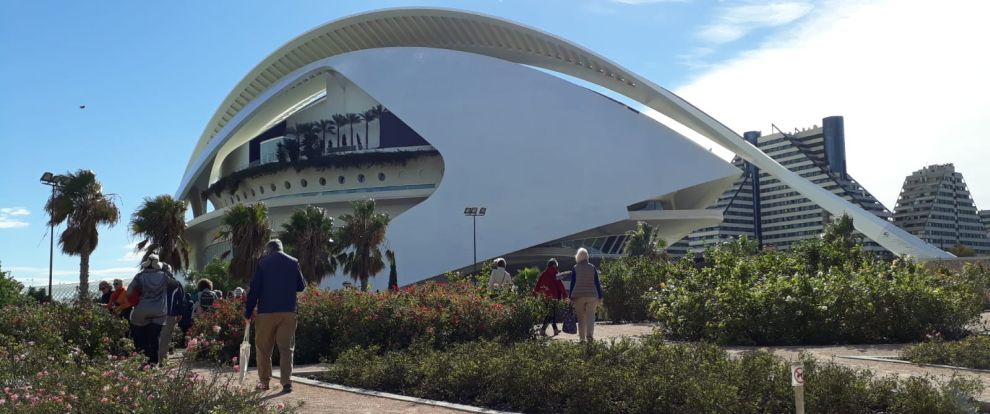
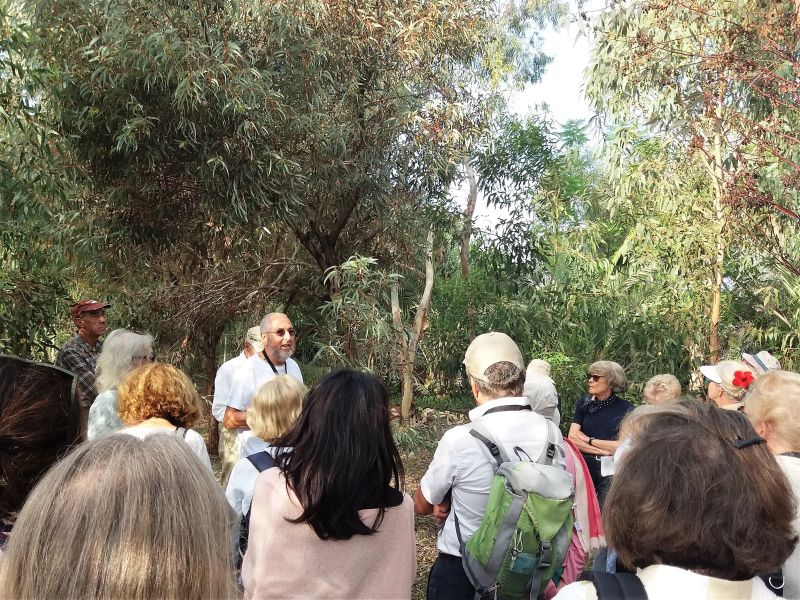
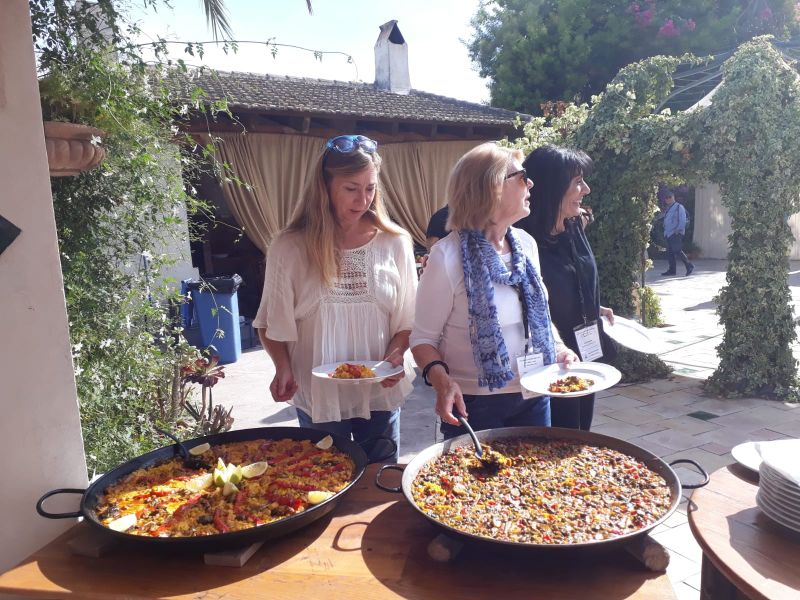
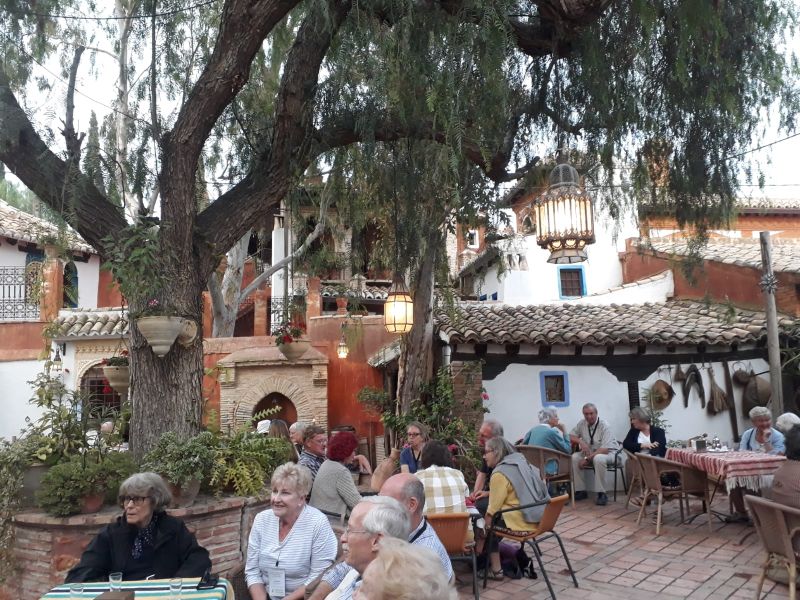
The photos at the top of this page show scenes from the 2018 AGM held in Costa Blanca: Alan describing the eucalyptus species in our garden (Carol Hawes); Paella lunch (Karen Leathers); Members enjoying the guided tour of the Albarda garden (Karen Leathers); Turia Rose Garden and Valencia Opera House (Alan Hawes); Group preparing to visit Central Park, Valencia (Alan Hawes); Central Park, Valencia (Alan Hawes).
Past Events
November 2024 - Crevillente and Catral
Two gardens and the Branch Meeting
Nearly at the end of November we held our branch meeting 2024 in the south of the Costa Blanca, 130 kilometres south of Jávea, where we also have quite a few members. First we were invited to the Garden of Alan and Carol Hawes at the outskirts of Crevillente. It is a large and mature garden which some of us know very well, and it is always a pleasure to return to it. There is an American section, an English rose garden, an African and an Australian section with a collection of eucalypts.


Afterwards we drove a short distance to neighbouring Catral to see La Carrasca, the garden of Moises Grau, with its interesting collection of jasmin plants and citruses. The conditions for gardening are dramatically different there, the water table being barely two metres below the surface, which together with geological factors make the land extremely fertile. The new gem of the garden is a pavilion made of local limestone, all remains from old houses which had been torn down to make way for modern constructions.
It was a splendid November day, and the full sunshine on that magnificent pavilion, which Moises built together with a friend, reminded me of the light falling on Greek temples.


As to this year’s precipitation, we had some rain in autumn and winter and are now up to nearly 300 litres/m2. Fortunately my fear of a second year as dry as last year has not materialised. But in some regions of Spain they have suffered terrible inundations, in Andalucía even combined with two tornadoes – a new phenomenon in Spain.
October 2024 - Valencia
Two gardens, a historic one and a modern one
At the beginning of October we resumed our garden tours with a visit to Valencia, first to the historic Jardín Monforte, which had been built in the mid-nineteenth century outside the town walls as a recreational oasis. A pavilion in neo-classical style for receptions completed the project. It consists of three parts, a formal part with neatly trimmed hedges, a rose garden and a seemingly natural, romantic garden with undulating paths, one of them leading up to a mini-hill, a mirador, from where water trickles through a charming grotto overgrown with little fern. There are some impressive exemplars of old trees which date from the very beginnings of the garden, such as a huge Ginko biloba, aCanary palm (Phoenix canariensis) and a Japanese plum yew (Cephalotaxus harringtonia).
Soon after its creation the Monforte family bought the property, and it remained in that family till they donated it to the town of Valencia in the early 1970s. What made our visit so special was the fact that Javier Monforte guided us through the garden. He spontaneously told us how he and his brother used to ride on the stone lions at the bottom of the steps leading from the pavilion to the formal garden, which is richly decorated with sculptures from Greek mythology. He mentioned how they used to play hide and seek between hedges, and how they adored the wild part of the garden, a perfect playground for boys. It is still a wonderful walled oasis, but now in the middle of town, and a rare example of a historic garden, which has been carefully preserved.


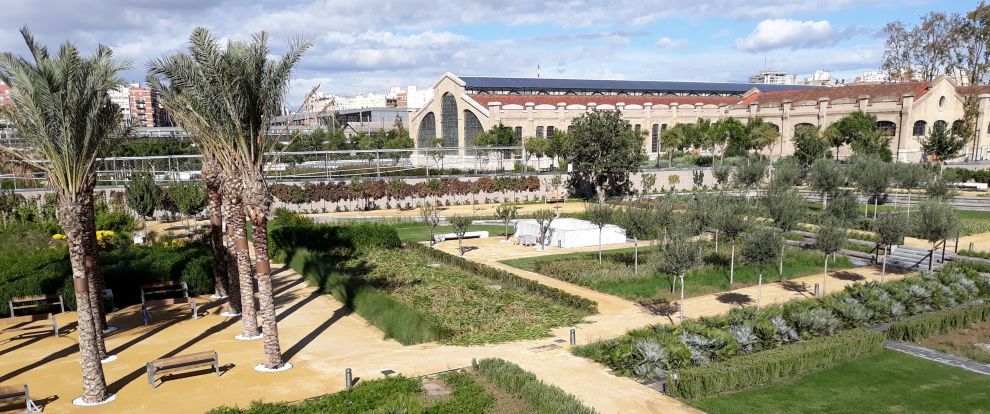
After lunch in a tranquil square we visited Valencia’s latest public park, the Parque Central of 100,000 m2, designed by the American landscape architect Kathryn Gustafson, who has specialized in park design. One can see how well she first studied the habits of Spaniards who love to use parks for family picnics and birthday parties, but also for a quiet read on a bench. Innumerable corners and niches between flowerbeds invite for such activities. On our visit we could see how the Valencians love their new park.


June 2024 - Ibi
A visit to the Estación Biológica de Ibi-Torretes
At the beginning of June we visited the Botanic Garden of the Estación biológica de Torretes. It is a botanic garden in the mountains at 900 metres altitude, which belongs to the University of Alicante. Professor Segundo Rios Ruiz, the director of the Garden, gave us a very stimulating tour through the various parts, the collection of medicinal plants and of cistuses, the collection of narcissi, and of ferns.
The collection of irises had mostly flowered earlier than usual. Many of them had been donated by Christine Lomer, who had been a passionate gardener at about 500 metres altitude in the northern Costa Blanca and an equally passionate MGS member before she and her husband moved to south-western France.
Some of us, who knew this gem of a botanic garden from earlier visits, were impressed how much it had been enlarged these past years, very ready to celebrate its twentieth anniversary in 2024.


Throughout those months our region was on high alert for fires. The hydrological year ended on 30th September, and I had the meagre amount of a total of 206 litres/m2 of rain in my garden on the northern Costa Blanca. In the south where they always have less rain, they came up to about 140 litres/m2. I think we were all deeply impressed by such scarcity; it was much food for thought. Some villages in the interior of the Generalitat valenciana had the water rationed. In two of Jávea’s neighbouring coastal villages they were no longer allowed to drink water from the tap since sea water had seeped in. The town hall of Jávea asked its residents to be parsimonious with water, although we have a desalination plant. Everybody lost plants. I was surprised how much my native shrubs had suffered. Thousands of Pinus halepensis died, first they were weakened by prolonged periods of intense heat and by the impressive drought, then two pests (Tomicus destruens and Orthotomicus erosus) and attacks by fungus finished them off, as our member Toni Pont explained to me.
I often thought of the ancient Roman saying, which Moses Grau has engraved on a stone slab in his garden La Carrasca, Sine aqua nihil – Without water nothing. One of the MGS members near Málaga told me in July that they were no longer allowed to water the garden since all was needed to keep trees and public gardens in the centre of town green for the many tourists. She was determined at the time to turn her garden into a cacti garden.
April 2024
Visit to a garden in the Vall d’Albaida south of Valencia
We had the opportunity to visit the private countryside garden of two of our members, Salvador Pastor and Paco Mengual. Salvador is an agronomist and professional horticulturist, who as a member of the technical staff supervised and conserved the complex and enormous “green” development of the town of Valencia during the past forty years. Outside of their busy professional lives Salvador and his partner Paco have spent over 30 years working on their private project in a secluded river valley in El Ràfol de Salem. Over the past decades they have taken agricultural land previously farmed by Paco's family as a vineyard and have transformed it into a forest garden. Despite initially only being able to work at weekends and in their spare time the pair remoulded the landscape including creating a winding terraced pathway between the main garden plateau and the small river running some 30 metres below. They carried out extensive planting of trees to create a rich diversity of differing trees both native and exotic. The garden was always planned as a forest garden with trees taking the lead in shaping the space and atmosphere. Initially however, before the trees grew, the garden was predominantly one of flowers and the garden’s spectacular irises are a legacy from that earlier phase.

Salvador’s expert hand has created a magical and unexpected oasis in the southern Spanish countryside with a variety of different spaces ranging from formal patio areas around the house to wilder and less manicured areas where the form of the garden is dictated by the natural growth of the plants and especially the trees. An important feature of the garden and its management is that the trees are not pruned and shaped but rather left instead to find their own natural shapes and forms, as they would in the wild. Another aim of the gardeners was to create a habitat for birdlife and a striking feature of the garden is the abundance of birdsong including the unmistakable beauty of the nightingale’s song. The soil at the garden has been enriched with around 10 tonnes of organic material in the last seven years and now includes large amounts of fungal growth which is encouraged to promote a naturally nutrient-rich growing medium not requiring substantial additional enrichment with fertilisers, which are only used sparingly. The land’s original use for agricultural purposes meant that it already benefited from water rights, and a drip irrigation system is now in place.

Amongst the species present in the garden are:
Lathyrus latifolius, autocthonous pink perennial pea, strong perennial in slopes with Acanthus molle.
Aristolochia paucinervis, perennial autocthon. This plant is the feed for Zerynthia rumina, an endangered butterfly.
Vinca difformis, strong ground cover with blue flowers in low riverbank zones.
Rosa sempervirens, wild (climber or ground cover) perennial rose with white flowers. Strong climber over trees in riverbanks.
Other wild autochthons in years with normal rainfall : Arisarum vulgare, Gladiolus italicus, Ornithogalum narbonense, Ophrys lutea, O. apifera, O. scolopax, O, lupercalis, Tanacetum corymbosum, Bellis sylvestris, Vicia tenuifolia, Myosotis ramosissima, Trachelium caeruleum, Centranthus ruber, Anchusa azurea, Centaurea aspera, Scabiosa atropurpurea, Blackstonia grandiflora, Antirrhinum barrelieri, Lythrum salicaria, L. junceum, Scrophularia valentina, Equisetum telmateia.

Salvador and Paco gave a guided tour of the garden and generously provided refreshments in the shaded patio areas of the garden. Salvador had prepared a brief set of welcoming remarks which included an explanation of the development of the garden over the past 35 years. These remarks had been translated into English by the branch co-chair Edith and were read out in English at Salvador's request during the refreshments.

These remarks are recorded below:
“Welcome to Rafol de Salem and to our garden!
First of all, I would like to thank you for your visit. We hope that you will find it interesting and will enjoy the day.
It is difficult to describe in a few words a garden to which we have dedicated so much time since we began to build it more than 35 years ago.
All of us gathered here today are gardeners. Gardening helps us in so many ways in our daily life. It fills our spare time with moments of great quality; it is also a source of perpetual pleasure because the time we dedicate to contemplating a garden is transformed into memories which remain in the mind like a reservoir of permanent pleasure. We all wish to live again and to relive those sensations of happiness and fulfilment.
In making our garden we first had to set to work – and we still have to. We transformed two irrigated agricultural terraces. For thirty years it was only a garden for weekends. Firstly, we eliminated the agricultural crops, improved the soil and started to introduce plants and trees. We also studied the different forms of vegetation and landscape of this region; the native forests and brushwood, the old gardens, and the areas which still subsisted with a rich natural biodiversity. Our admiration grew the more that we discovered.
Please excuse the obvious, but it was also very hard work! There were grey days and quite a few failures and disillusionments, but memory is wise, and when the results please us, we tend to only remember the past sweetly!
Between 1990 and 1995 we planted a lot of trees, of which 70 % were deciduous and 30% evergreen. There was a great variety of trees, mainly Fraxinus ornus but also various species of oak, cypresses and others. These were all between one and three years old, i.e. very young when they arrived in the boot of our car. We wanted the trees to develop freely, with the least trimming possible to let them be unique and different. We were looking for beauty in their diversity. The trees were planted in straight lines east-west, which would contrast with the irregular volumes created by the natural growth of the various different trees. It was a simple layout, clearly defined and maintained throughout the garden, which would emphasise the natural expression of the trees. It is this plan for the garden has become the reality you can see today.

It was and still is a great pleasure to see the trees grow. Connection we feel has intensified. We were delighted to see how fast and vigorously the trees grew in the improved soil. In the early years of direct sun they were also combined with the variety and colours of masses of bulbs blooming in spring, and also the flowering shrubs and roses, it was a magical sight in the early years when there were originally far more flowers than now. We also built a small house, our sanctuary. Later came the time-consuming work of building the terraces on the steep slope above the river Missena that we visited earlier. This work created a new area of the garden different from the upper terraces. It permits views of the trees from above and from below whilst connecting the parts of the garden area.
When the trees reached a certain size and volume, from about the sixth year, the long autumn days became full of rich colour. We installed feeders for the birds which has helped to make the garden vibrant with life. Nowadays, there is a sensation of being wrapped and immersed in the vegetation and the song of the birds.
The garden has a lot of spatial and seasonal character. We now intend to keep it like that with subtle improvements, although substantial changes are not planned.
I would also like to mention our twelve-year relationship with the MGS. We are grateful for so many interesting visits that we have shared. We have been introduced to magnificent new gardens which have inspired us. We have got to know and enjoy the company of many excellent gardeners, who have offered us their ideas together with their enormous knowledge and long experience. A special thank you to Edith Haeuser and John Danzer for reactivating the branch in 2022.
We will never stop working on our garden, despite the work being tiring. Nowadays we try to avoid rushing and worrying too much and we limit our ambitions. We try to make decisions about the garden carefully and without haste; we consider every question from different angles. Ultimately, we now solve aesthetic questions by also considering local conditions in order to advance the garden’s sustainability. We also still have our lives outside of the garden, to travel and meet new people and visit new gardens. These other gardeners also contribute to the conservation of our garden by providing us with inspiration, ideas and knowledge.
We are happy that you are with us today, and the most important thing is that you enjoy your visit.”
Text written and edited by Juan Ruano and Archie Maddan
Photographs by Salvador Pastor and various other members
February 2024 - Jávea
Visit to Jan van Eijle’s show garden in Jávea and to the Plana for honey tasting with apiarist Eduardo Fernandez
On a blue-skyed but cold and windy February morning we gathered in Jan van Eijle’s demonstration garden (www.jardinsostenible.es). First Jan gave us a brief taste of paleobotany by reminding us that before the Last Glacial period, which ended about 11,700 years ago, Spain had a tropical climate. He also pointed out that many trees which we consider native ones have actually been imported to Spain. One of the most famous ones being the Phoenix dactylifera, which was introduced by the Phoenicians. They were the first civilisation on the Mediterranean shore to explore foreign lands by boat for trading. The dates, so rich in nutrients and minerals, saved their crews from becoming ill. A much larger quantity of these palm trees were introduced by the Arabs in the early Middle Ages. The Palmeral of Elche and Orihuela in the south of Alicante province are still an impressive vegetal monument of their work. The male palm tree produces the flower, the female one the fruit. We say palm trees, but they are actually gigantic grasses. By the way, it is assumed that the very first palm trees grew around the north pole about fifty million years ago.
As an ornamental feature, the coconut palm (Cocos nucifera) has become fashionable in Spain, which also avoids problems with the palm weevil (Rhynchophorus ferrugineus), a pest introduced to Spain by importing cheap palm trees from Egypt and other North African countries in the early 1990s. From Spain, the palm weevil spread quickly to other parts of southern Europe.

Jan walked us through the demonstration gardens while discussing their inspirations:
The Moorish garden of Al-Andalus reflects Eden, paradise, therefore it is a static garden, evergreen, with jasmine, myrtle, and citrus trees, but no deciduous trees and, of course, the sound of water, the garden therefore appealing to the visual, olfactive and acoustic senses. The Medieval Christian garden on the other hand, as it was built in the monasteries and convents, was a garden with vegetables and most important of all, with medicinal plants.
Then Jan showed us some interesting details of his garden, such as Washingtonia filifera very effectively planted in a large group to enhance the impression of lush vegetation. The fronds tossed beautifully in the strong wind and made their characteristic rustling sound. Trachelospermum jasminoides, usually used as a climber, was very effectively planted as a groundcover around them. The tropical section features a biological pool, which uses no chlorine or salt to keep it clear - but nenuphars (water lilies), which absorb excess nutrients from the water, though they are dormant at this time of the year.
Behind the pool is a narrow stretch of land, cleverly planted in layers to achieve the visual effect of depth with Strelitzia augusta and banana bushes (Musa x paradisiaca) in the foreground, and Scheflera actinophylla towering behind.

Jan showed us two other striking examples of water elements, a feature which adds so much to a garden, and here on the Costa Blanca it is also an echo of early Medieval gardens of Al-Andalus: two circular ponds with a diameter of less than two metres, level with the surrounding ground, perfectly still and therefore reflecting the garden around it.

In the Mediterranean section there is a good example of mass planting of Santolina chamaecyparissus around some large stones typical of the carstic-alkaline rock of the Montgó,Javea’s mountain, and other aromatic plants, such as thyme, oregano and rosemary, some Chamaerops humilis, the only European palm of Western Europe - (Phoenix theophrasti, a native palm of Crete is the other European palm). A Pinus pinea andseveral cypresses beautifully combined with a stone column form the background.

A few steps lead down to the vegetable section. Two original high vegetable beds, one of wood the other of concrete and linked in a deconstructionist way form the centre of the vegetable garden. Along the wall are some grape vines trained as very decorative low trees, a loquat tree (Eriobotrya japonica)and a lemon tree.
Another interesting feature is in the house, which on the ground floor features a small art gallery, and along the wall leading to the office on the upper floor a beautiful vertical garden. The pump for watering the plants three times a day is hidden under the staircase.

Afterwards we drove to La Plana de Jávea, roughly 130 metres above sea level. The plain leads to the lighthouse of Cap San Antonio where the land falls abruptly into the sea forming breathtaking cliffs. Due to the unusually severe drought there were hardly any wild flowers.

Jan also explained some interesting characteristics of the northern Costa Blanca. In the region around Jávea and Dénia, the town on the north side of the Montgó, you see very clearly how human activities have formed the landscape: In the seventeenth and eighteenth century the silk production was very important in the region of Valencia, there were mulberry tree plantations everywhere, a tree which is still quite common (see also Silk Museum Valencia/Museo de la Seda). And the beautiful silk costumes are still worn for saints’ festivities, but especially for the Fiesta de San Juan in June. In the nineteenth century the raisin industry became dominant. On many slopes around Javea you still see the low walls that terraced the land to grow Muscat grape vines. From these two towns on either side of the Montgó the raisins were shipped to England and even to the USA. But by the beginning of the twentieth century the insect Dactylosphaera vitifoliae, which had reached Spain in the late 19th century and gradually caused a disastrous vine disease, finally put an end to that flourishing industry. In the 1920s it also became cheaper to import raisins from Turkey.

The importance of the raisin industry in the 19th century in the northern Costa Blanca (Marina Alta) is also visible in the rural architecture of the beautiful old farm houses with their ‘riurau’, a low construction adjacent to the house with beautiful arches, and the ‘naia’ of the house, a covered terrace also with arches for drying the raisins on reed mats and at the same time having them protected from rain.
Text Edith Haeuser
Edited by Albert Salas
We ended the tour with a walk through an apiary and a discussion of how honey is produced. Eduardo Fernandez (Miel Montgó) explained that there are about 20,000 species of bees and each colony contains three types: a single queen, workers and drones. A queen bee is the only female bee in the hive that gets to reproduce. Worker bees are all female, and are all offspring of the queen. But there are males in the hive called drones. Drones protect the hive and fly off to reproduce with other young queens who will start a new colony. We also learned that honey is the only food on Earth that will not spoil.

Finally, we enjoyed a tasting where we got to sample several different kinds of honey produced by bees collecting pollen from various plants – like rosemary or thyme – plus one from a secret origin, which Eduardo revealed was purchased at the grocery store. The differences were very distinct, with the grocery-store brand tasting like pure sugar compared to the others.
Text Carlos Torres
Edited by Albert Salas
Photographs by various branch members
(For more photographs see also the Spanish website.)
November 2023
Branch Meeting in Jávea
Nearly at the end of November we were again generously invited to John Danzer’s and Chip Allemann’s property for our end-of-the-year meeting. Like last year the weather was marvellous so that we could stroll through the garden, enjoy the magnificent view of Javea’s emblematic mountain, the Montgó, exchange memories of gardening joys and gardening problems, also our worries about the fact that we had had no real autumn rain. (There was much hope of having some in December - which we now know, did not happen.)
After some delicious tapas served in the beautiful, large patio formed with green “walls” of Trachelospermum jasminoides, Gonzalo Morillo Holguín, co-director and founder of Locus Landscape Architecture in Madrid, gave an interesting talk. Before he founded his own company in 2011 he had worked for Fernando Caruncho as project manager in such different countries as Belgium, Britain, Switzerland, New Zealand, and some States of the Persian Gulf. Gonzalo Morillo wrote on his website:
“The environment is constantly with us, but only when surrounded by true beauty and harmony does the inner world take form as the pieces of spirit and nature combine.” (translated by Juan Ruano and Archie Maddan)
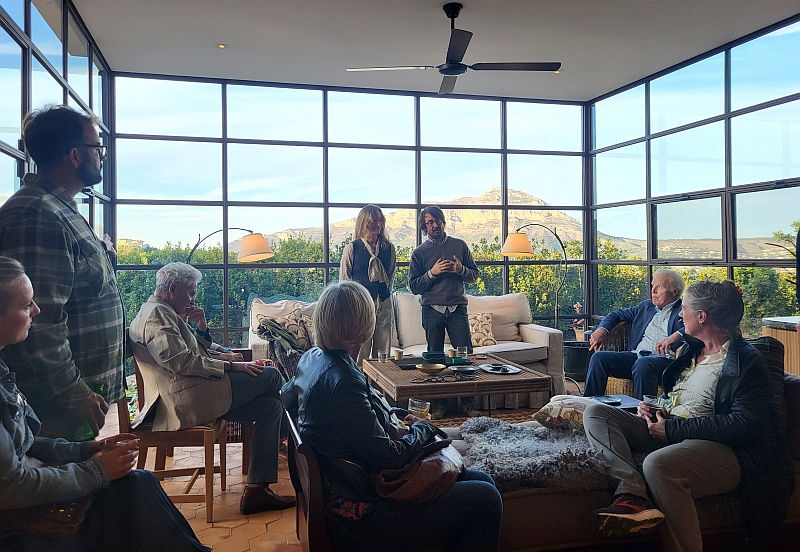
Stimulating conversations followed about the different viewpoints that plant collectors and landscape designers have. I know that Gonzalo Morillo was very impressed by the profound knowledge of plants which some of our members have.
On my way home I realised that I was already looking forward to the next set of branch excursions.
(Text by Edith Haeuser)
September 2023
Visit to the Park El Recorral and Ana Rodriguez’ Garden
It was a pleasant summery day when a group of 20 members visited the Parque El Recorral at the edge of Rojales on the southern Costa Blanca, in the so-called Vega Baja. It seems a genius idea, which is well worth copying: The town of Rojales has a modern depurification plant at its southern end. The purified water is led into a large park with five lagoons of various sizes. In cascades it flows from lagoon to lagoon and thus forms a unique fluvial ecosystem with a rich vegetation.

In an area which is heavily urbanized this park has become a welcome green oasis. Pedro Moya, biologist and member of the MGS, was responsible for the vegetation, all native plants and trees. But first the seriously degraded land had to be enriched with tons of plant mulch. In a competition artists from all over Spain were asked to form a sculpture with a chain saw from the wood of a large tree which had grown by the entrance. These wood animals add to the charm of this special park.
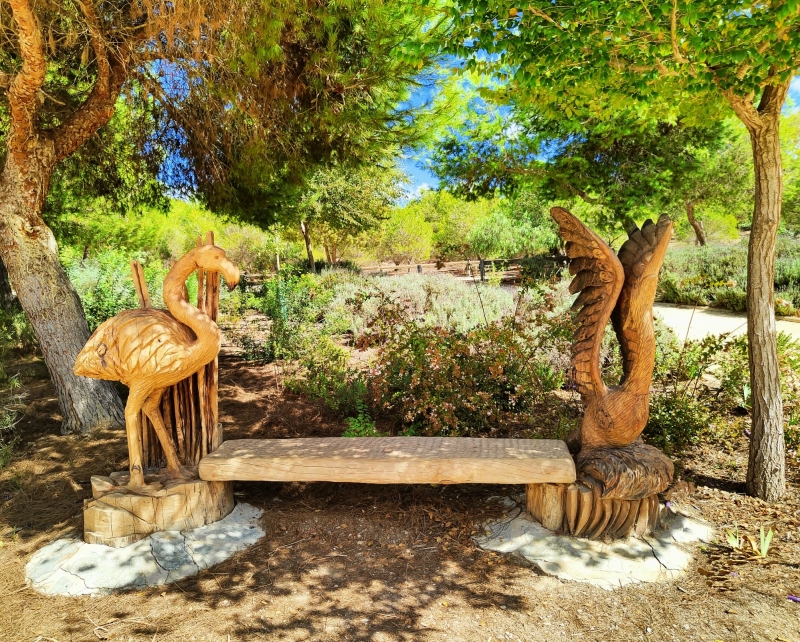
Here and there are wood benches and tables for a picknick, or for simply enjoying the view of the ponds and the tranquil atmosphere created by using native plants exclusively and by the omnipresent element of water.
Afterwards we drove twenty kilometres northward to Ana Rodriguez’ garden at the outskirts of Catral, where she awaited us with a delicious lunch.

As we were sitting at lunch I noticed with great pleasure that we are now a much more international branch with members from England, Holland, Belgium, France, Norway, Sweden, USA, and, of course, from Spain, reflecting the reality of the Costa Blanca.
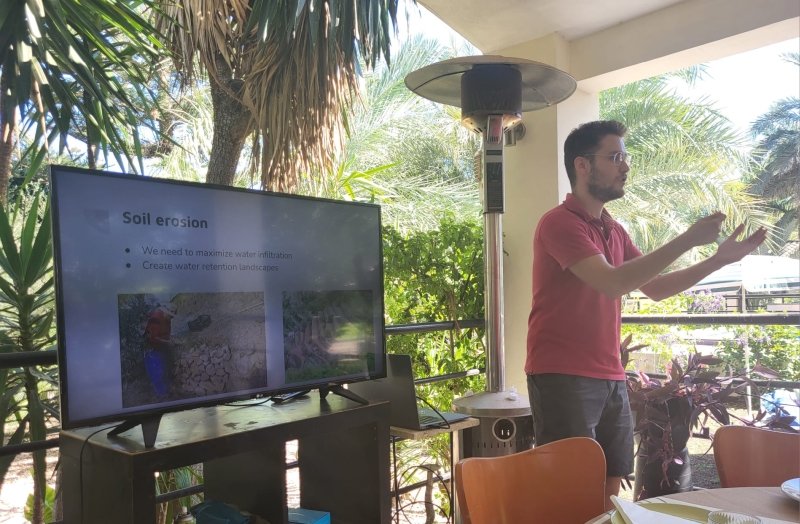
This event’s speaker was Antonio Ballesta, a young biologist and specialist in ecological farming. He gave an interesting talk about how to improve the soil, and how to create and maintain a good compost. With his great enthusiasm he surely inspired quite a few to start or restart composting.
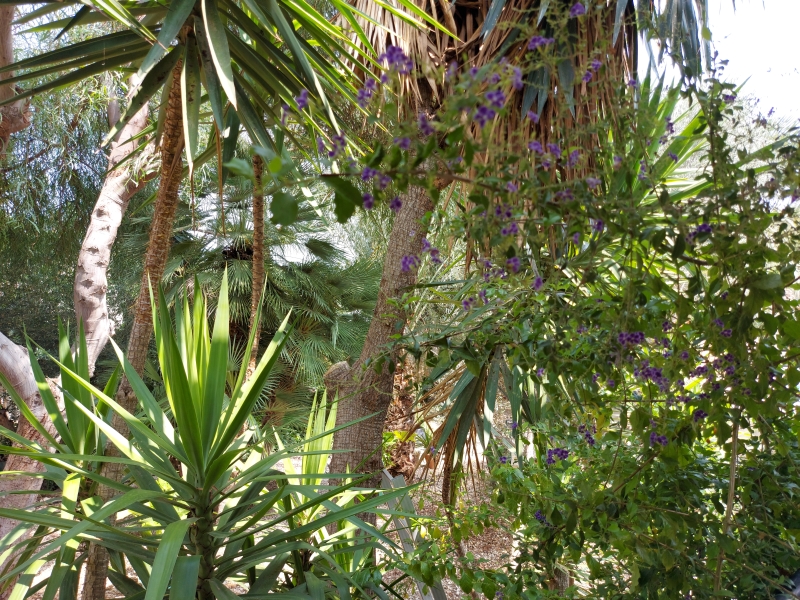
The Vega baja is almost 150 kilometres south of Jávea, and therefore their summers have always been hotter than on the northern Costa Blanca. This past summer temperatures often hovered around 40° C. By the way, it was the hottest summer Spain had ever registered. This explains why Ana’s garden is a haven of shade with gravel paths meandering through it. Everything in her garden grows exuberantly, as the water table is just two metres below the surface.
Text: Edith Haeuser
Photographs: Paul Muraillat and Edith Haeuser
May 2023 - Northern Costa Blanca
Visit to Toni Pont’s Garden and Judith and Bernhard Bauer’s Garden, lunch at the Finca La Cuta
After more than a hundred days without a drop of rain we were all relieved about some late spring rain in May. It had come unexpectedly even for Spanish meteorologists. We parked our cars at a five-hundred-metre distance from Toni Pont’s garden and had a short walk on a narrow street through untouched natural vegetation with Pistacia lentiscus, some Pinus halapensis, shrubs of prickly Quercus coccifera, Euphorbia characias and a lot of Hypericum perforatum blooming. Then we passed the properties of Toni’s few neighbours, all with gardens in harmony with the natural environment. At the end of the street we were at the entrance to Toni’s garden, marked not with a gate but a line of elegant old Cupressus sempervirens, leading to his house. They were pruned in Florentine fashion, i.e. ‘topped’ to control their height and make them grow wider. Toni has built a very special garden on a breathtakingly steep slope of old agricultural land, terracing it with stones found on the property, with narrow paths and steps meandering along the slope and leading from one level to another.

Everybody was impressed by the spectacular view of the plain of Lliber planted with historic Mediterranean vines (mainly Moscat of Alexandria) far below us. The mountains on the horizon were mostly shrouded in dark cloud and mist, not exactly typical weather for being the end of May.
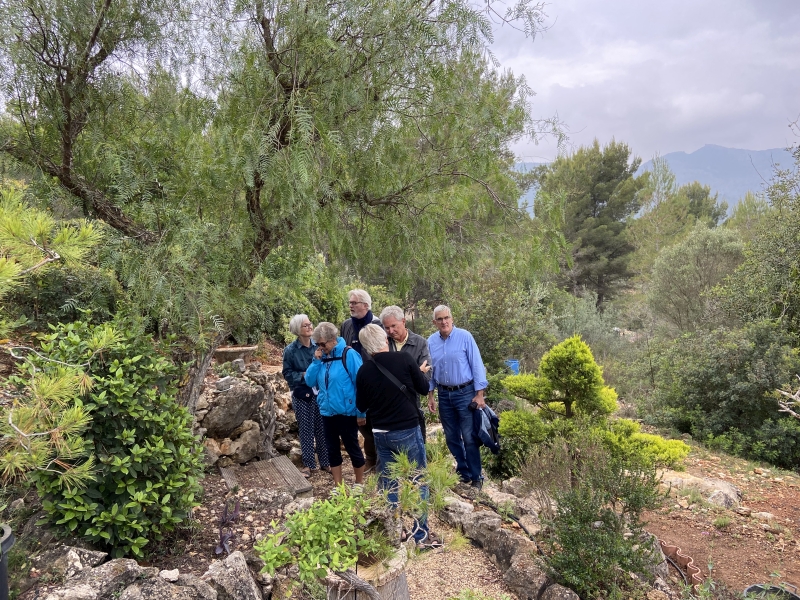
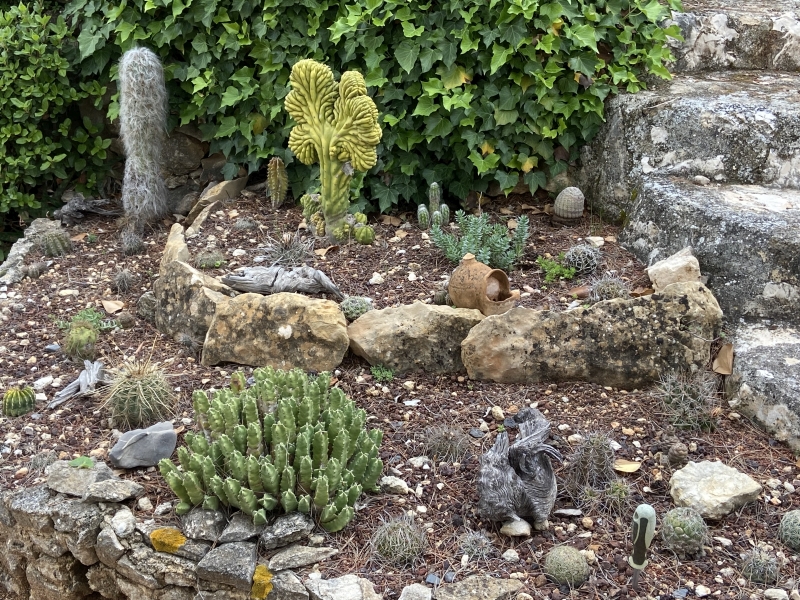
It is a fascinating garden with a huge variety of plants, all drought-tolerant, interspersed with some local wild flowers, grown from seeds, such as Teucrium flavum subsp. glaucum, Dianthus broteri, Sideritis dianica, Carduncellus dianius.

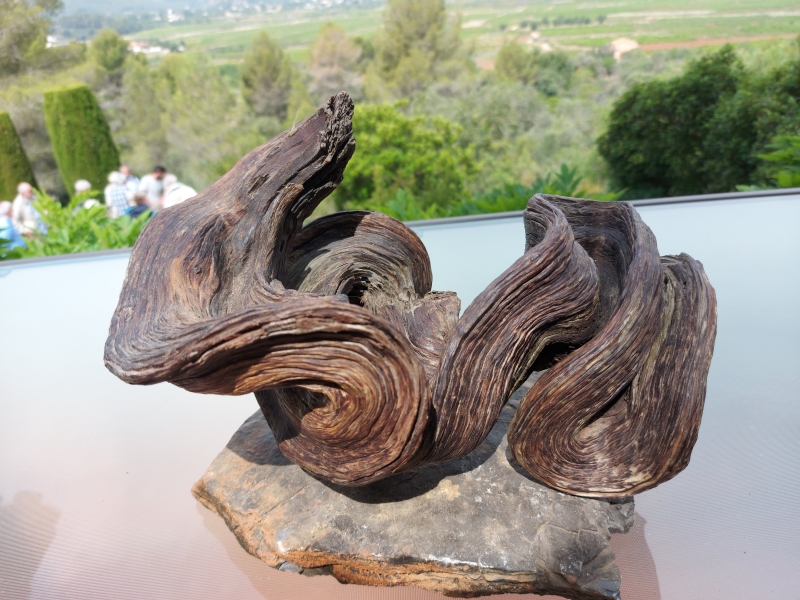
Here and there, beautifully integrated in the garden are bonsai of Aleppo pines, of olive trees and pomegranate, which, as Toni phrased it, have lived with him for more than twenty years. I was intrigued by the wood sculptures made over time by nature, and which he had found on his innumerable walks in the local mountains. They are all made of wood from Juniperus: Juniperus oxycedrus and J. phoenicea. One sculpture struck me as the wood was much more polished, the forms rounder, so much so that at first I thought it had to be man-made. But no, it is also the slow work of nature, but of a softer wood, wood of Juniperus thurifera.
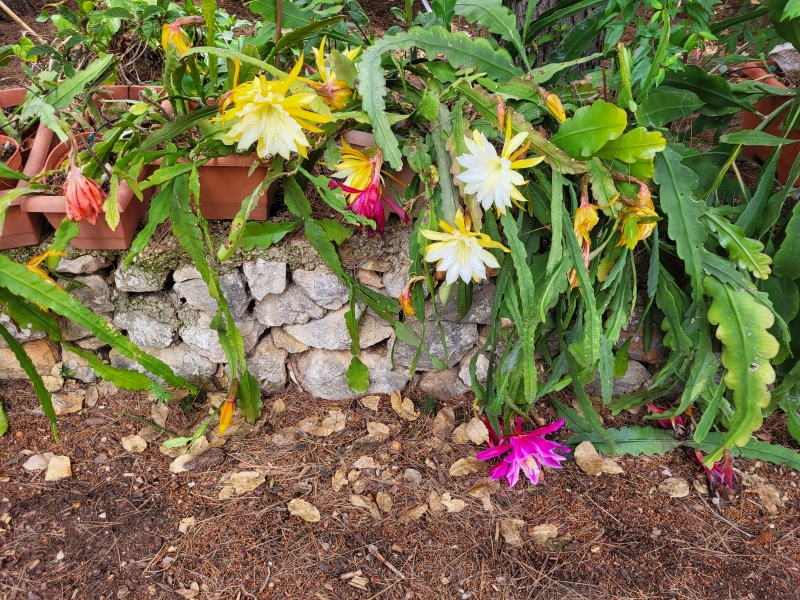
On the terraces above the house Toni showed us his vast collection of potted cacti. Due to the lack of sunshine very few showed us their beautiful flowers. Toni spoke so enthusiastically about his cacti collection and the excellent producers there are in Czechia that he surely succeeded in our looking at these prickly beauties with different eyes.

By the time we arrived in Judith and Bernhard Bauer’s garden, the sky had cleared and the sensation of a cold day was gone. Their garden, which is located at the edge of Alcalalí, a few kilometres further inland from Toni’s garden, transferred us into the wonderful world of mainly tropical plants.
As soon as we had walked past the old iron gate, past a Solandra maxima on the right and beautiful potted Epiphyllum oxypetalum, shaded from direct sun by some old pine trees and past a Brachychiton rupestris to the left, a native of Queensland with its characteristic bottle trunk for storing water, I heard many ahs and ohs about this exciting garden. It is so densely planted that sometimes I didn’t know where to look first, here some fiery red blossoms, there bright yellow ones, and always the impression of being surrounded by a thousand and one wonderful plants, and lush green foliage everywhere.
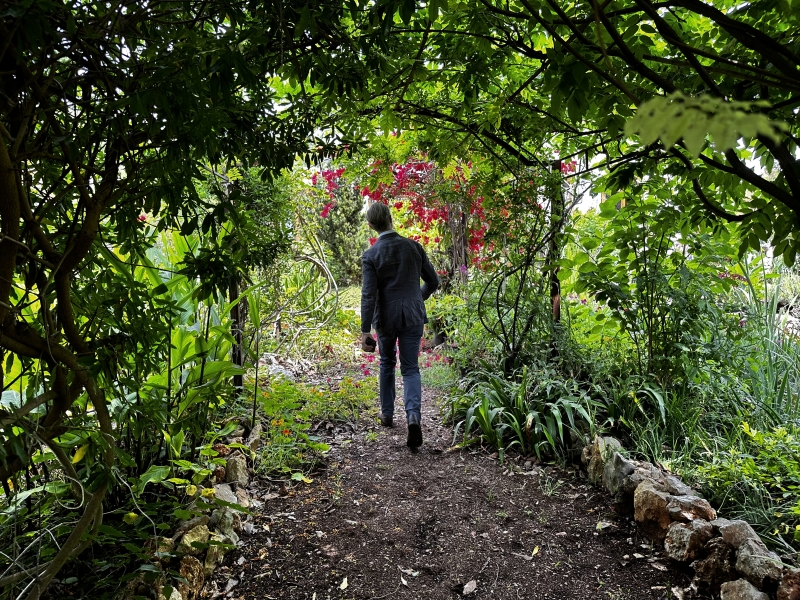

Half the garden is shaded by a magnificent huge Pinus pinea. As Bernhard explained, its needles, which are also used for the paths, have gradually turned the soil slightly acid, absolutely perfect for this garden, which faces due south and is protected, as well from the north wind as also from the west wind, which blows so frequently in our region.
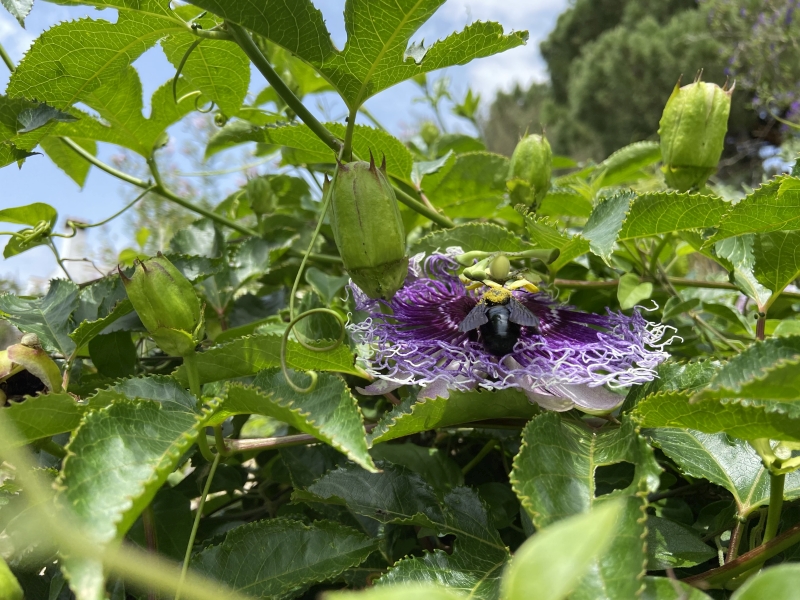
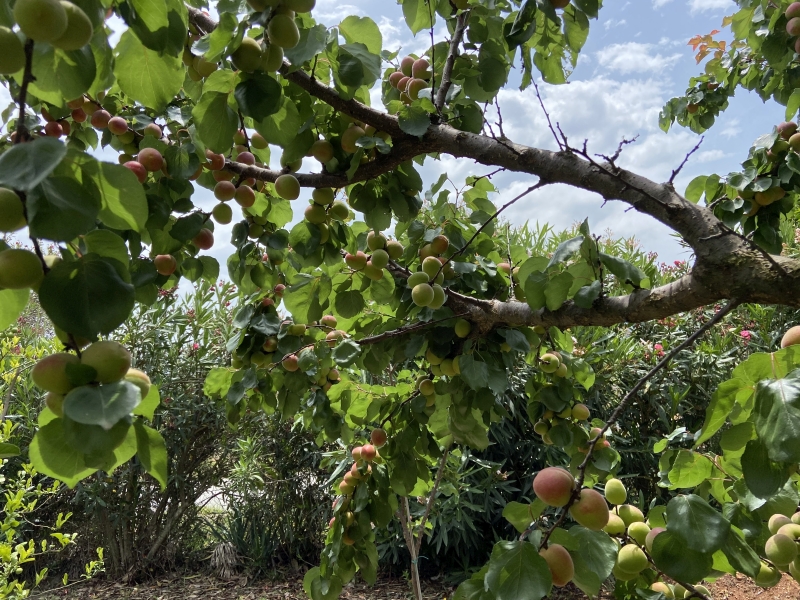
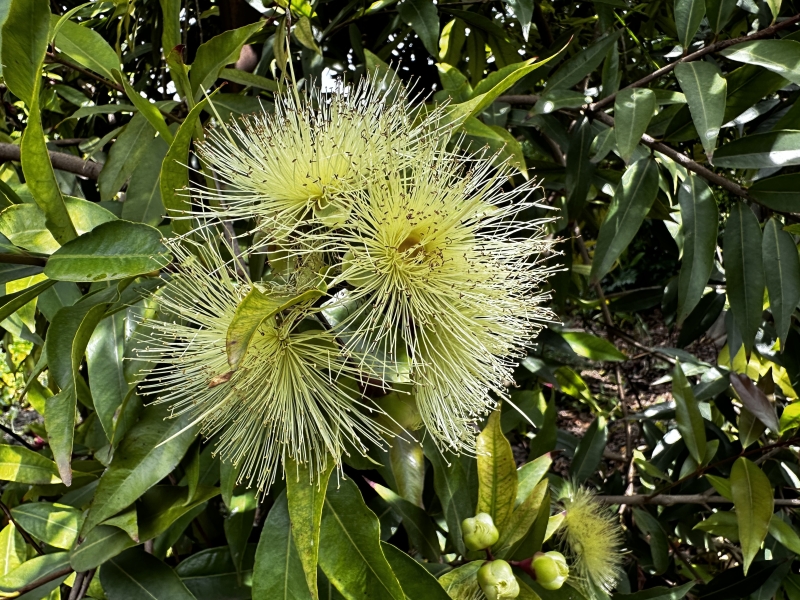
On the lower level they have planted the orchard with quince, plums and pears, and a Citrus maxima, but also with some tropical fruit, such as Pitanga, Chirimoya, Dimocarpus Longan, Psidium guajava and Zapote.
Originally the house had belonged to a farmer who had vines (Moscat of Alexandria), of which most were dried for raisins on bamboo (Arundo donax) mats in front of the house. In the nineteenth century many people in our northern region of the Costa Blanca were dedicated to that production, and most of the raisins were exported to Britain until Turkey became the main raisin exporter in the 1920s. Judith and Bernhard have planted an echo of the original farm with some grape vines, which grow beautifully in the lowest part of their garden, where they also have some raised beds for vegetables.
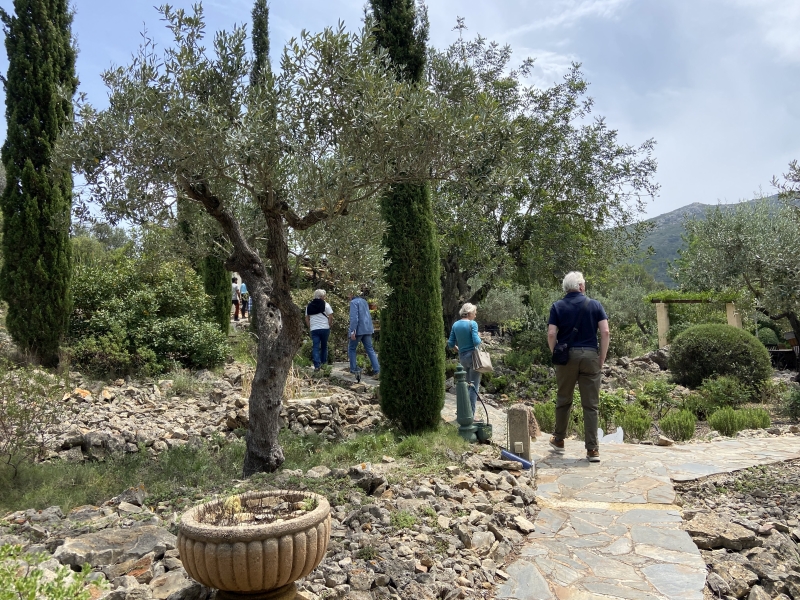
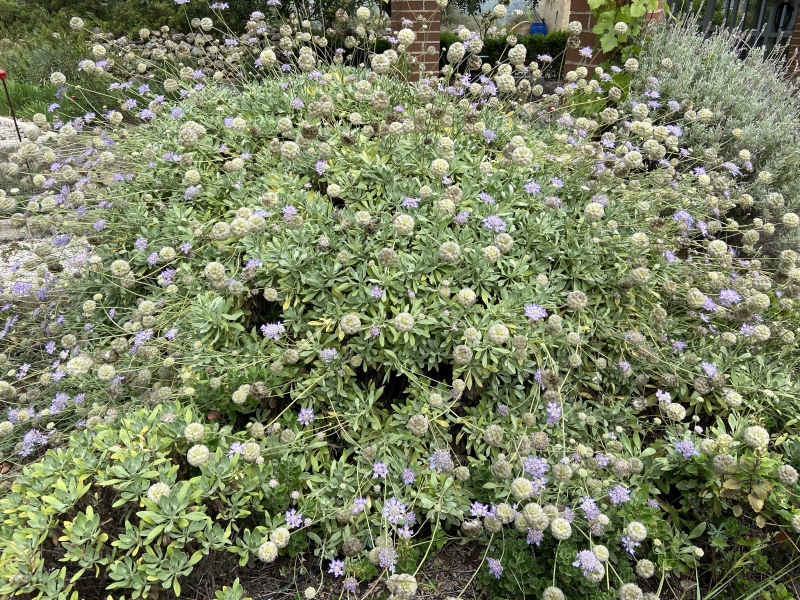
After this visit we drove to Susanne Semjevski’s Finca La Cuta, also called the Lavender garden, because she has produced essential lavender oil for many years. Her large, mature garden took us back to the reality of many of our gardens: creating a beautiful environment that is drought-tolerant, integrating also some wild flowers and shrubs, e.g. Clematis flammula, Rhamnus alaternus, and others. Susanne had cooked a delicious vegetarian lunch for us, which we enjoyed in the shade of a large pergola.
John Danzer, my co-chair, had prepared a special surprise for us: a guest speaker. Thomas Woltz, an American landscape architect who first became famous with a project of restoring the landscape on farmland dramatically degraded by sheep in New Zealand. Nowadays he and his large team do only public parks, always with the goal of making the history of the space visible again, considering the original planting, etc. One would have heard a needle drop while Thomas was speaking. He also emphasized that all of us were contributing to the maintenance of the biodiversity with our gardens.

Text by Edith Haeuser
Please, check also the Spanish version for more photographs
February 2023 - Palmera
Visit to Vicente Todoli’s Citrus Foundation
One of our members said later in our branch chat group that it had been very special. So it was indeed. Vicente Todolí, the famous art curator and former director of the Tate Modern in London, guided the tour for us. But let me start at the beginning. In early spring 2020, when Spain was under lockdown because of the pandemic, one of our Spanish members pointed out in our branch chat group that there was a collection of well over 400 different citrus varieties in Palmera, about seventy kilometres south of Valencia. I thought immediately, super, next year we’ll go there with the branch. But it remained a dream until the other day.
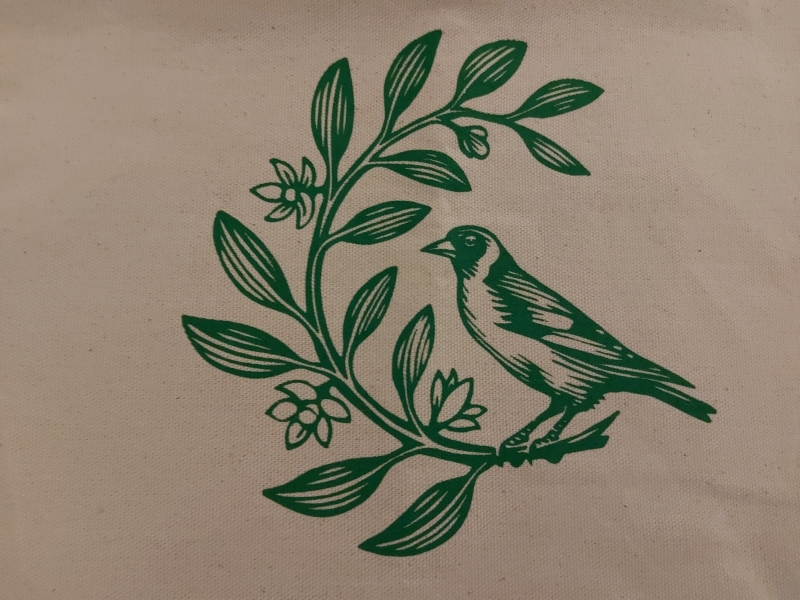
As we stood in the entrance area of this exciting botanical citrus garden (El Huerto Botànico El Bartolí), surrounded by lush green foliage of citrus trees, Vicente Todolí explained that in the morning and evening he can enjoy the most beautiful concert of birds in his trees, favoured by them because these trees are not deciduous and therefore protect them very well from predators. That explains the emblem of the Foundation, namely a citrus twig protectively curved towards a bird sitting at the lower end of it.

First we were led to a small wood house, El museo cítrico, to see beautiful old copperplate prints of citrus, which were coloured by hand afterwards. He also showed us copies of the earliest books published on citrus fruit:
Hesperides sive de Malorum Aureorum Cultura et Usu Libri Quatuor, the first book with illustrations and descriptions of citrus fruit, published in 1646 by the Italian Jesuit professor and botanist Giovanni Battista Ferrari. This book became possible thanks to his close relationship with Cassiano dal Pozzo, a specialist in citrus, who inspired him to write this work. The first of these books is dedicated to the citrus and its many variations. The copperplates were created by the best artists of the time.
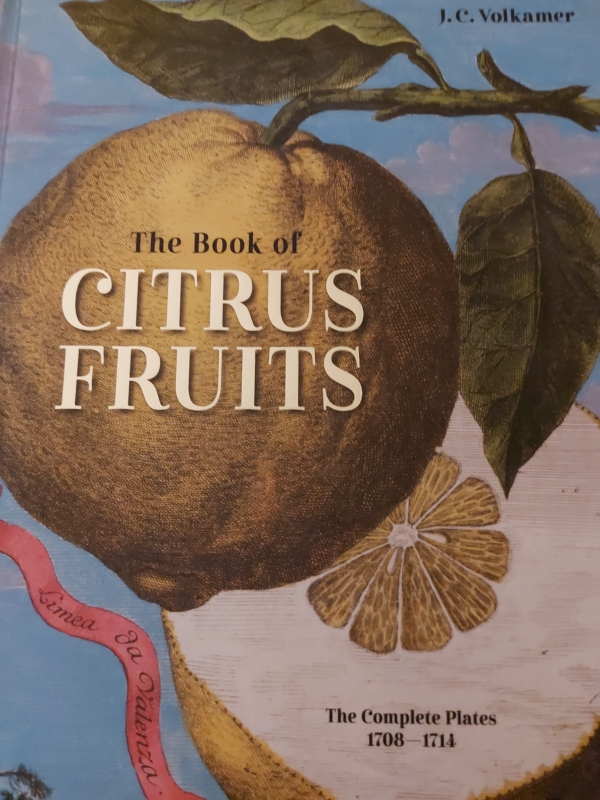
Johann Christian Volkamer, a German merchant and botanist, published Nürnbergische Hesperides, oder, gründliche Beschreibung der edlen Citronat- Citronen- und Pomerantzen-Früchte [Nurnberg Hesperides, or, a Thorough Description of the Noble Citron, Lemon and Bitter Orange], in 1660. A reprint of all the copper plates is available with an introduction in English, German and French, entitled The Book of Citrus Fruits, Taschen, 2020. Whereas the first book is also a hymn to the Tuscany and its fertile land, Volkamer’s is also a hymn to fertile Nurnberg.
Afterwards we were shown a large collection of those colourful thin wrapping papers for oranges. I had quite forgotten about those days – in my childhood – when oranges were purchased, each carefully wrapped to enhance the exquisiteness of the fruit and often to indicate the variety. It was the smallest museum I had ever visited, but what a treasure!
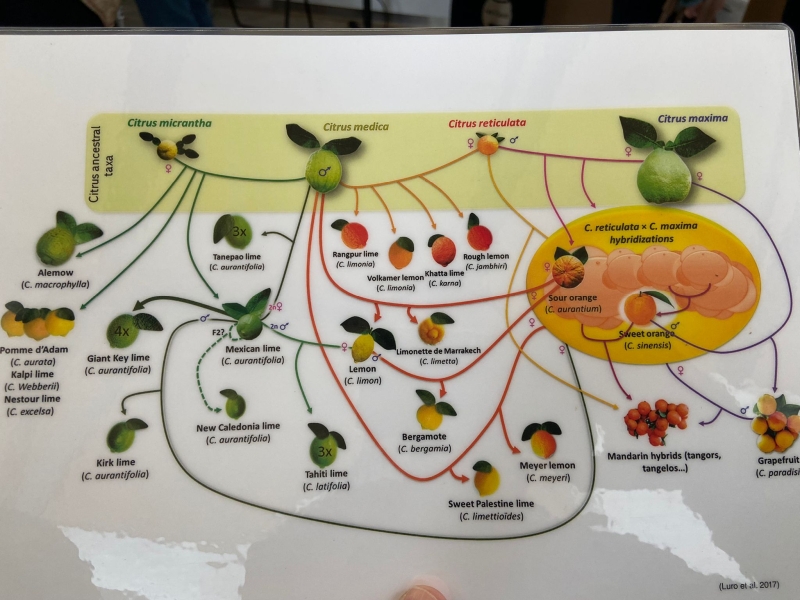
Then followed a tour d’horizon of the complicated origins of citrus. Also its taxonomy is complex with species, hybrids, varieties and cultivars. They all originated from the foothills of the Himalayas, from India, Myanmar (Burma) and from China. The four most ancestral citrus fruits are Citrus micrantha, Citrus medica (citron), Citrus reticulata (the mandarin), and Citrus maxima. A characteristic of all citrus is that they hybridize very easily. Besides all of them possess vitamin C, antioxidant flavonoids and essential oils.
This exotic fruit and its easy hybridisation fascinated Italians in sixteenth century Florence. New hybrids were created more often for their exotic appearance than for their flavour. For painters they became a favourite fruit in their still lifes. When Cosimo I de’ Medici came to power in Florence in1537 he wanted to have his own personal paradise garden at his palace in Castello. At that time horticulture was considered one of the arts. His grandson Cosimo III, Grand Duke of Tuscany, was even more passionate about citrus and asked Bartolomeo Bimbi, a painter of still lifes, to paint every citrus known in Tuscany, thus glorifying the region as a very fertile paradise garden (see Palazzo Pitti and the Museo Botanico dell’Università). But they quickly recognised one problem, citrus do not adapt to really cold winters, and so they built so-called limonaias, shelters where potted citrus plants would spend the winter months. A practice that continues to the present day.
That is a problem Vicente Todolí and all the other citrus growers in the Valencian region do not have. He who is now a fifth-generation citrus grower is not interested in the commercial varieties, but in rare ones, exotic ones and even extinct ones. He showed us proudly some two-hundred-year old citrus trees he has brought to life again with a special technique of keeping the soil away from the main roots so that they are constantly aired.

Citrus medica, which originatedin northwestern India, was probably the first citrus known in Europe. Already Alexander the Great encountered it when he was in Media, now western Iran, hence the name C. medica. It was equally known in the days of the Roman Empire. Plinius the Elder describes it in his Naturalis Historia (XII, 7) and also describes its medical use. C. medica has very little juice and often a wrinkled skin with small oily glands. Under the yellow rind is a very thick white layer, the so-called mesocarp, which in Italy is often thinly sliced and mixed into salad. Our guide also pointed out that practically all citrus can be used for cooking in one way or another. Close to the charming museum there is a new building by the Valencian architect Carlos Salazar for medicinal and culinary research, which features a test kitchen where famous chefs can come, experiment and concoct sophisticated new dishes.
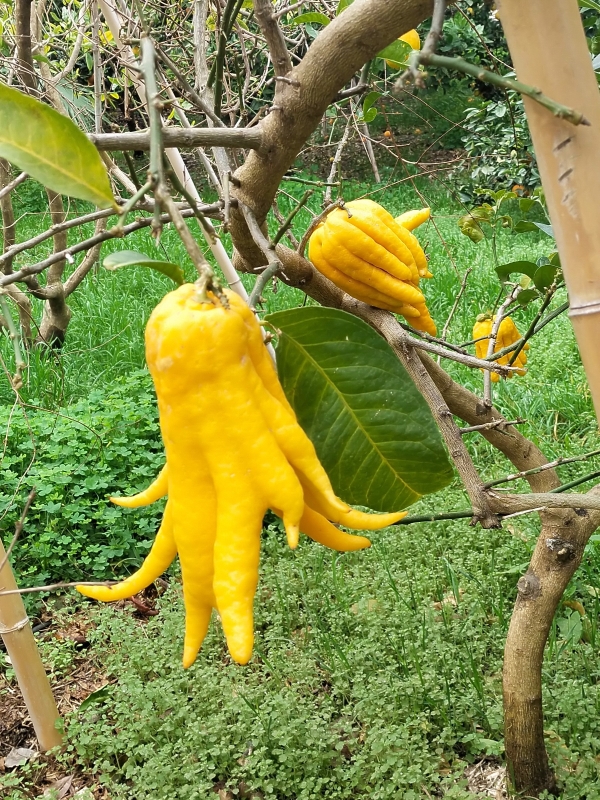
C. medica var. sarcodactylis, the famous Buddha’s Hand, also originated in India. Its grated rind is used in desserts or finely sliced and mixed into salads.
C. aurantifolia, the hybrid between C. micrantha and C. medica, i.e. the lime, which is very rich in vitamin C, was introduced in Europe by the Crusaders in the Middle Ages via the Middle East and North Africa. It became essential for British sailors in the eighteenth century to avoid scurvy. Spanish explorers and conquerors introduced the lime in South America. I think we were all surprised when Vicente showed us lime with a yellow rind: All citrus fruit ripen to yellow or tones of orange, but to fully ripen they need some cold nights. Those we buy in the shops come from Latin America, and they are always green because they could not be exposed to cold nights.
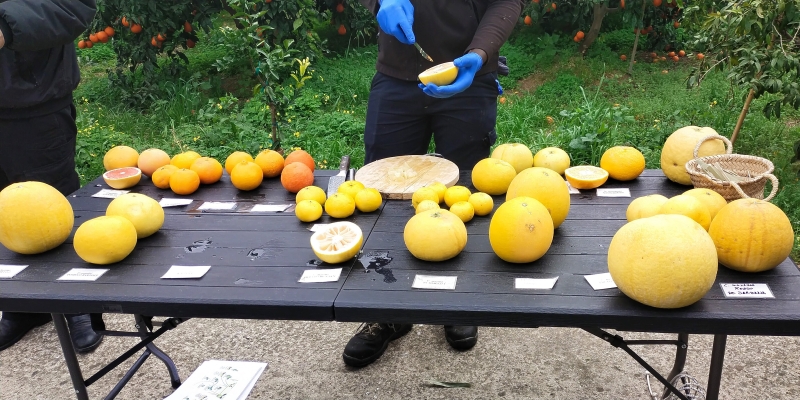
In Spain we are very familiar with C. x aurantium, a hybrid between C. maxima and C. reticulata (the mandarin)as a decorative tree along pavements. Especially in Andalusia they are extremely popular so much so that in English they are often referred to as Seville oranges, the bitter orange used for marmalade. Its essential oils extracted from the rind as that of other varieties are used in perfumes. By the way, the original Eau de Cologne 4711, which was launched in 1792, contains among many other secret ingredients lime and bergamot.
The C. x bergamia, a hybrid between C. limon and C. aurantium, the Italian name Bergamotto comes from the Turkish words ‘bey armudu’ ‘pear of the bey’ (‘bey’ was used for various governors in the Ottoman Empire), because its fruit is slightly pear-shaped. The famous Earl Grey tea is perfumed with bergamot.
The C. maxima (pomelo) is the largest of all citrus, almost the size of a baby’s head. We saw them hanging impressively from the trees, and the branches all supported by bamboo poles to support so much weight. Like the C. medica it has a very thick rind.
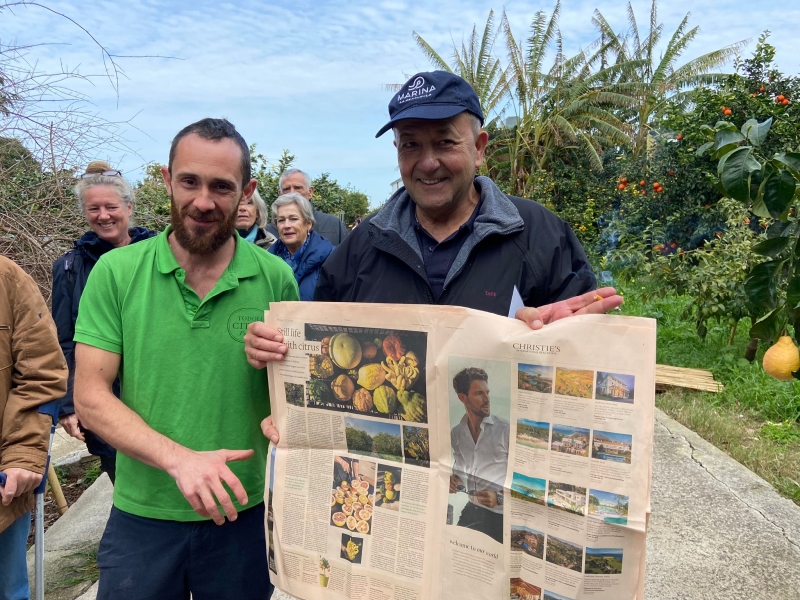
The grapefruit, C. x paradisi, is probably a spontaneous hybrid between C. maxima and C. sinensis, the sweet orange.
The tasting of innumerable varieties of Citrus was a unique experience. We were led from table to table, starting with the pomelo varieties first, where we tasted all shades of slightly bitter to almost a tinge of sweet. One of the employees cut each fruit professionally into small slices. Professional was also to begin with the bitter category first. Half-way through, after about the sixth table I thought, some of us will probably suffer a stomach ache afterwards, but the sequence was so carefully chosen to create a perfect balance. After about two hours of tasting and listening to all the interesting explanations by the curator of this unique collection, I wondered if I was slightly tipsy. I could not have said, which fruit I liked best. They seemed all delicious in their own way, none was aggressive.
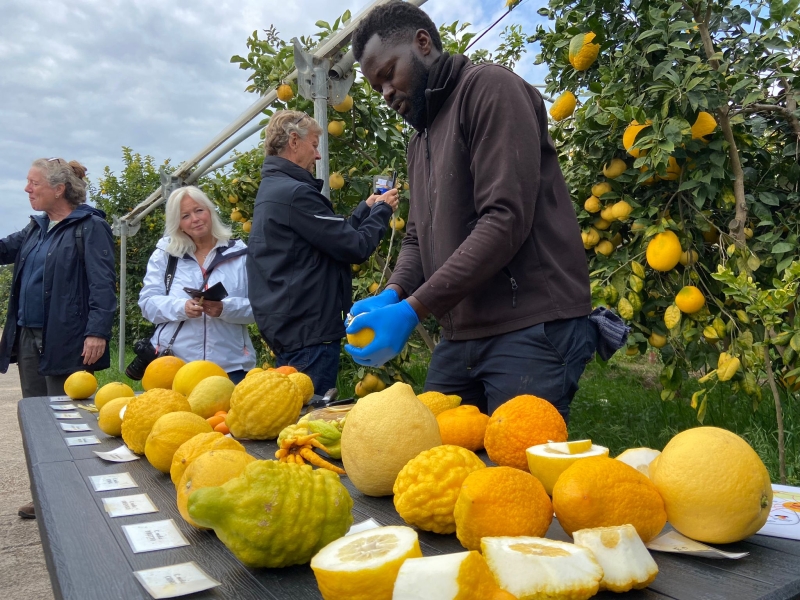
I remember when walking to the last table - was it the tenth or the twelfth? - just behind Vicente Todolí I exclaimed truly overwhelmed, this is a paradise, and he smiled and replied, that is exactly what we want it to be, a paradise garden, appealing to all our senses.

The tasting continued with delicious marmalades, e.g. Limón Meyer (Citrus meyeri), Shikwasa (C. depressa, native of Taiwan and the Japanese island of Okinawa), Limón Yuzu (C. ichangensis x C. reticulata var. austera, a lemon which they have appreciated in the Far East for their sophisticated cuisine for a long time). Many of us bought some jars, probably like me wanting to take home some visible token of this very special event. They can also be purchased online. My report is by no means exhaustive, but I do hope that it is an incentive for others to visit the Todolí Foundation some time.
Text by Edith Haeuser, photos by Edith Haeuser unless stated otherwise
November 2022 - Jávea
The Re-launch of the Costa Blanca Branch
The re-launch of the Costa Blanca branch was an unforgettable event, and there was a lot of joy meeting up with old members after such a long time and welcoming new ones. The weather was gorgeous, and the soft autumn light enhanced the harmonious beauty of John Danzer’s and Chip Allemann’s very Mediterranean garden. Already in the driveway the visitor feels the soothing and at the same time refreshing effect of all this lush green of the planting: Myrtus communis, some Chamaerops humilis, Elaeagnus x ebbingei around some Aleppo pine trees on one side, an Arbutus unedo tree and a Mediterranean oak on the other side.
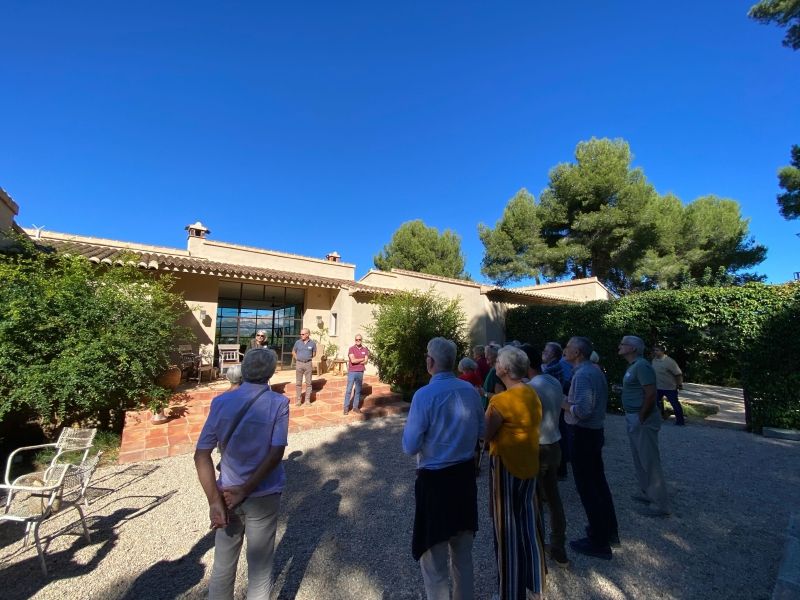
Opposite the entrance to the house there is a large square patio framed by green “walls” of Trachelospermum yasminoides. Behind it stretches the main partof this 10,000 square metre property, with some magnificent specimen of trees, a Ceratonia siliqua, a gorgeous Arbutus unedo tree packed with fruit, and some fine Olea europaea by the pool.
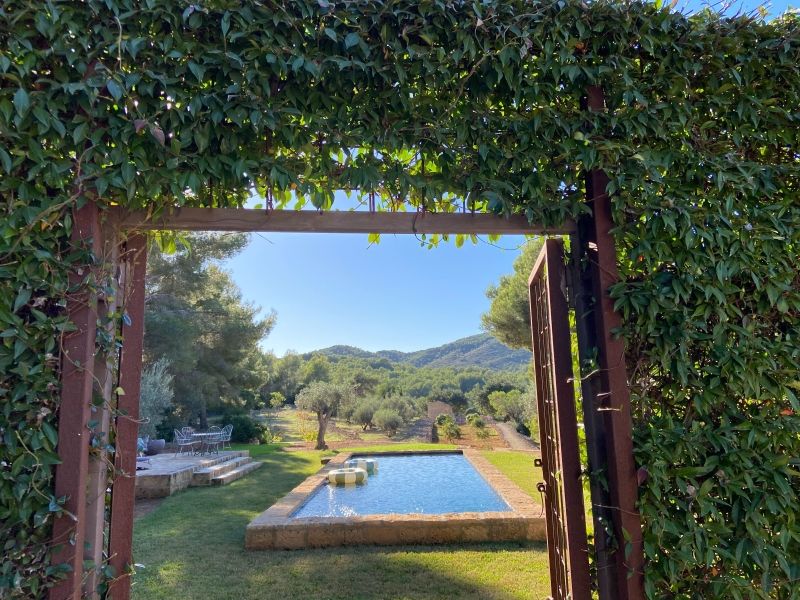
A pineda with Pinus halepensis runs along the south border, where you walk as if on soft carpeting, and some typical wild shrubs of our region, such as Rhamnus alaternus, Quercus coccifera and Cistus albidus form the undergrowth. A young olive grove and a citrus grove complete this beautiful garden, which in the distance seems to merge gracefully with the landscape.
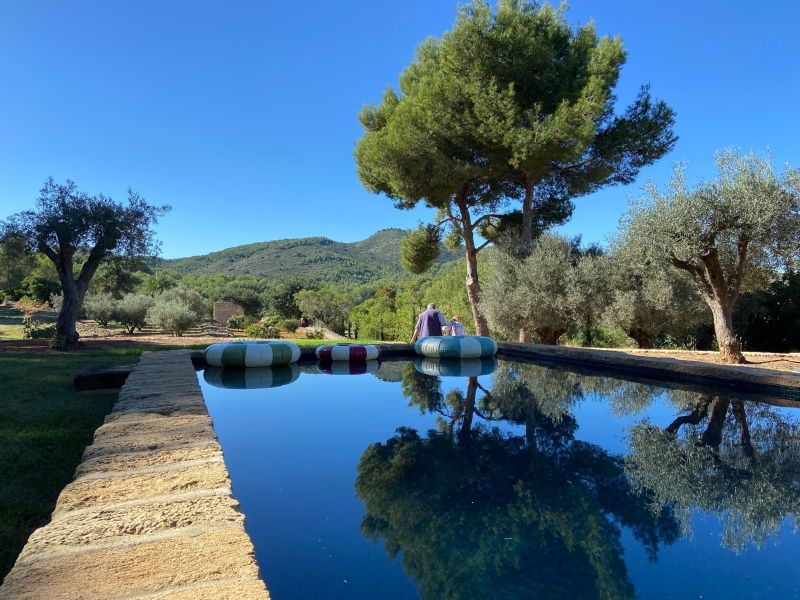
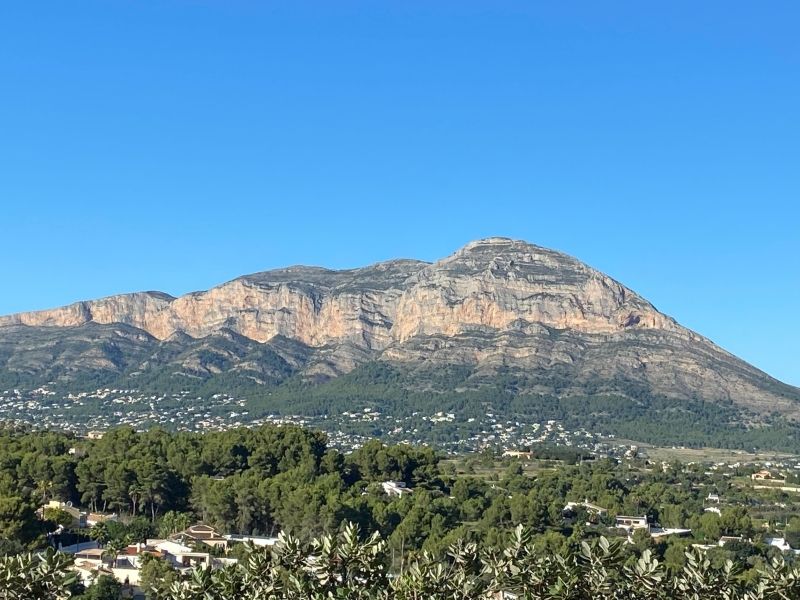
Looking northward towards Jávea’s emblematic Montgò (753 m / 2470 ft), which from this angle is also known as the Elephant. The eye is the entrance to a cave where about 8000 years ago the inhabitants of this region held rituals. This mountain is also an important nature reserve with a rich flora and fauna.
In small groups people strolled through the garden, before we were all spoilt with an exquisite lunch.
Text Edith Haeuser, Photographs Juan Ruano
November 2019
End-of-year Branch Meeting and Plant Fair
After a long hot summer, the cool autumn/winter weather arrived suddenly here in November with storms and heavy rain. However, we were lucky in having a sunny day for our last meeting of the year and the accompanying Plant Fair. This was kindly hosted by two of our Dutch members, Cora and Nico Dekkers, at their beautiful house in Teulada, about 70km. north of Alicante and just a few kilometres from the coast.
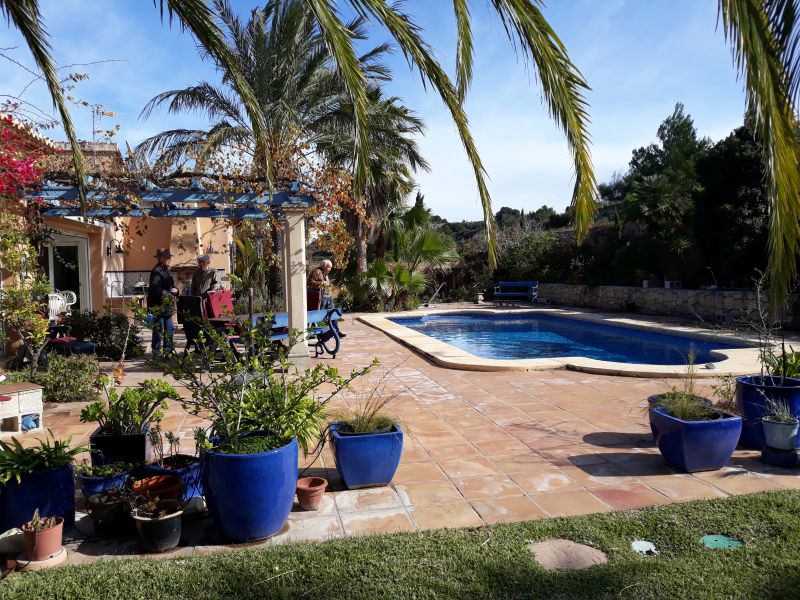
The 11,000 m2 hillside plot contains a central level terrace, where the house and main garden are situated, lower areas informally planted with drought-resistant trees and shrubs, plus higher terraced land left in a very natural state. There, spring can bring wonderful displays of native orchids.
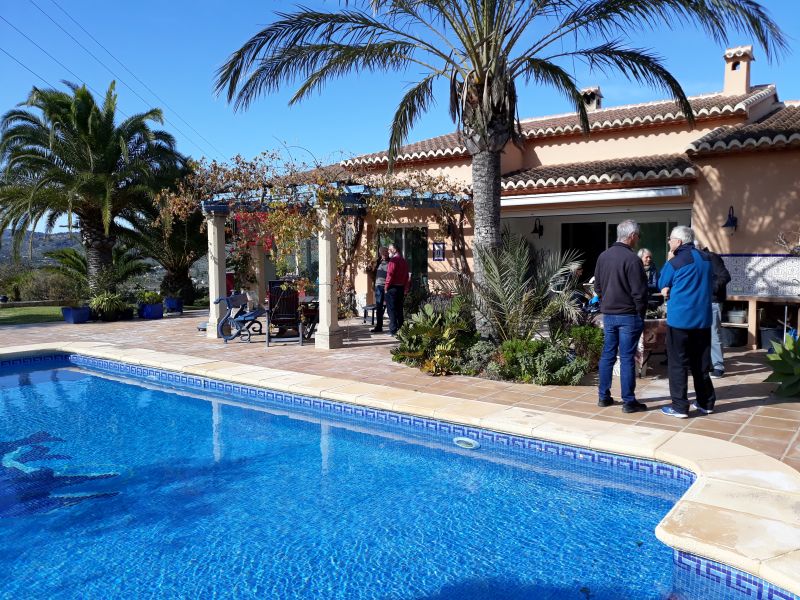
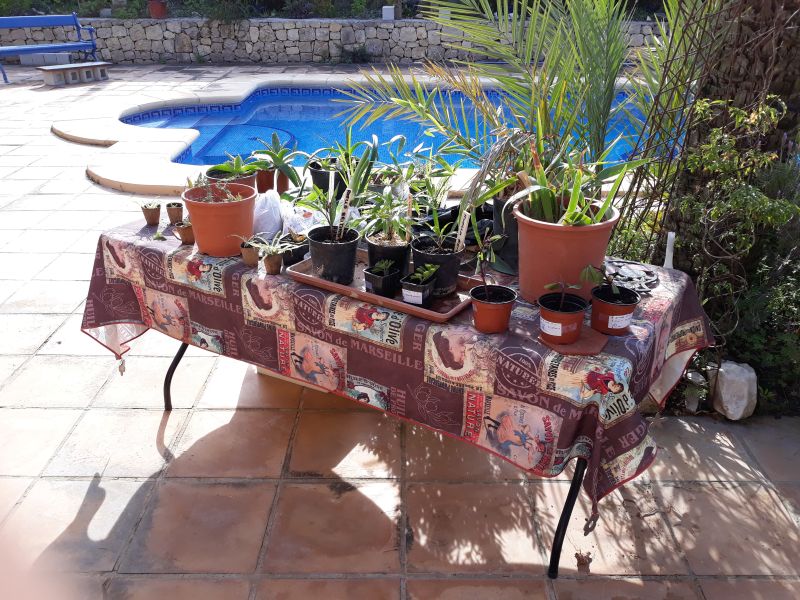
As members arrived, many were pleased to acquire plants and advice on their care, while others added to the array of delicious cakes and biscuits indoors. All enjoyed the refreshments while we listened to a very interesting report on the Greek gardens visited on the Saturday of the recent MGS AGM in Athens. This was given by Edith Haeuser and was illustrated with a display of 64 beautiful photographs.

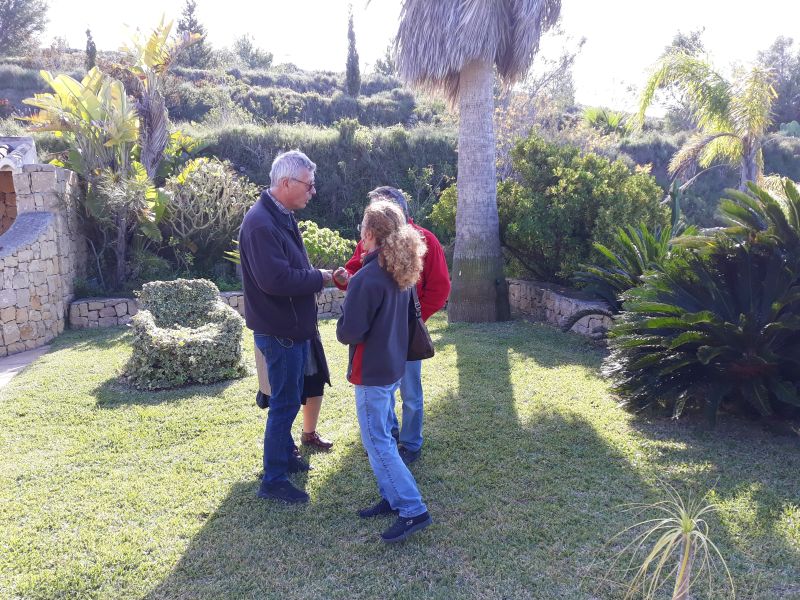
After the talk, Cora led a tour of the garden, while some members investigated plants of particular interest to them. The collection of palms and cycads on the main terrace frames a view of the surrounding mountains.

The lower part of the garden features a large ‘strawberry tree’ (Arbutus unedo) in fruit, cypresses (Cupressus sempervirens), palms and ground-cover plants. This area also holds olive and almond trees where members enjoyed stopping to chat.


Returning to the main terrace, we passed through a ‘dry garden’, with a fine Agave weberi, Ceiba speciosa and other succulent plants

We then noticed an attractive set of established palms, Strelitzia nicolai and Agave attenuata at the far end of the main pool area. Cora emphasized that wall shelter was vital for the survival of more tender plants in their garden.

After the garden tour some people gathered a few more plants from the depleted plant table
We were all then guided to the restaurant in nearby Teulada where Cora had booked a table. The three course typical Spanish ‘meal of the day’ was interesting and generous, and lasted several hours, allowing us plenty of opportunity to share views on many topics. It was wonderful to hear conversations in Spanish, French, German and Dutch as well as English, emphasising the multilingual nature of the group and the pleasure which we all enjoy in each other’s company. Our thanks go to Cora and Nico for their efforts in organizing this very pleasant day, and for showing us their maturing garden.
Text by Carol Hawes
Photos by Alan Hawes unless otherwise stated
June 2019
Visit to Central Park in Valencia
On 2 June, 27 members and friends from as far away as Murcia gathered to enjoy a guided tour of the new park by member Salvador Pastor, who, as one of the city's head gardeners, is partially responsible for its planting and maintenance. This 11 hectare site is the first stage of a long term project which aims to reclaim 23 hectares of land long occupied by railways and associated buildings, in order to unite neighbourhoods in the south of the city and provide them with green spaces, attractive gardens and buildings for social and cultural activities. The park was designed by an international team, led by the American landscape architect Karen Gustafson, which won a worldwide competition attracting 36 proposals from 8 countries. Their exciting design was felt the best to reflect the history, culture and geographical uniqueness of the whole Valencian region.
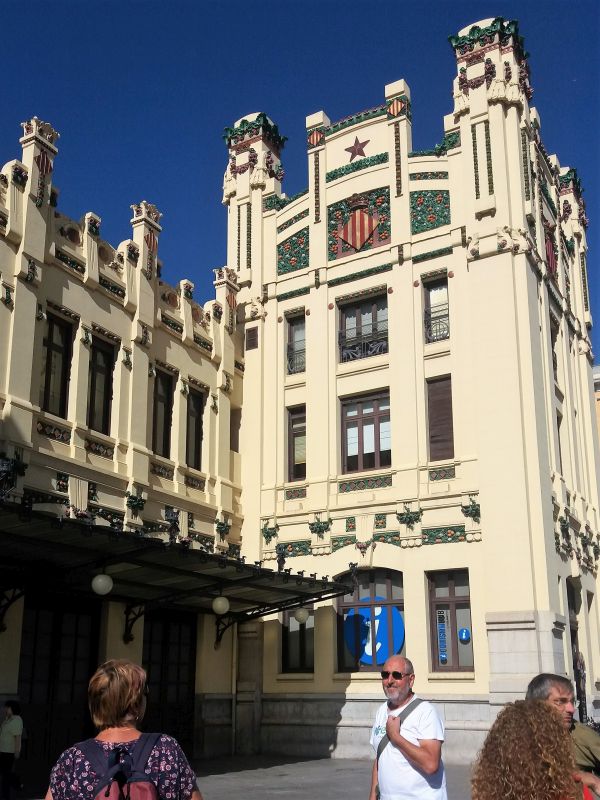
The site needed much modification and soil improvement before planting could begin. All of the six historic buildings attributed to the fine architect Demetrio Ribes (also responsible for the design of the North Station with its splendid tiled panels depicting flowers and gardens) were renovated and will be used for various cultural and sporting activities. The park’s design required that soil levels be lowered in some areas creating ‘bowls’, allowing rain to be collected and stored for use in the irrigation systems. This makes it much more interesting, because there are several levels from which different parts of the park can be viewed, and has prompted the construction of some fascinating ‘vertical gardens’.
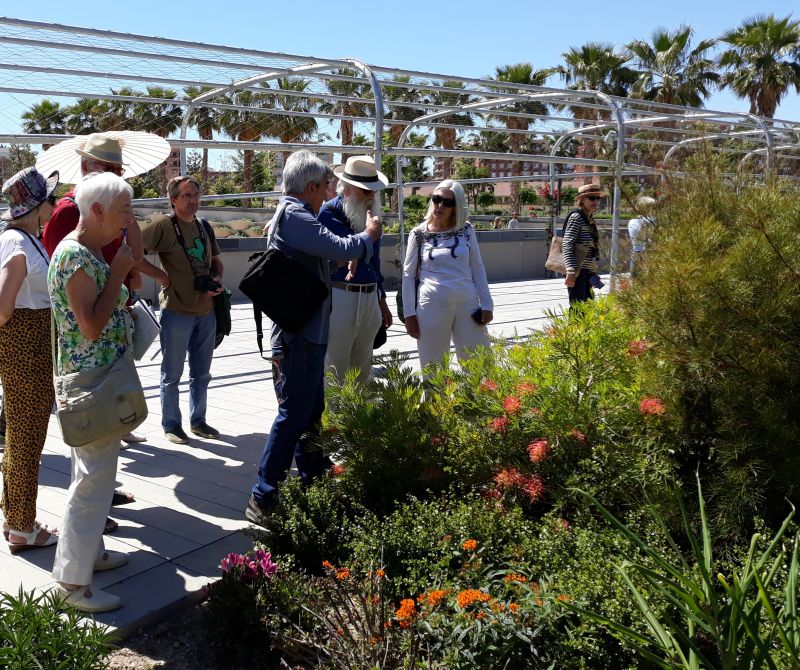
A long curving pathway, covered by a metal pergola planted with a variety of climbing plants, connects the two opposite sides of the park and allows visitors to look down into two of the ‘bowls’, one of which holds a large grassy space for children to play and the other, a very interesting collection of small plots representative of the typical crops and gardens found in the region of Valencia. On the other side of the pergola there is a set of beautifully planted beds filled with a wide range of flowering shrubs and many tastefully combined herbaceous plants, many of which are new to Spain.
Water plays an important role in the layout of the park, with several pools and channels along which water can flow, often between avenues of trees. Especially peaceful is a long, narrow pool planted with aquatic plants, shaded by lines of trees and surrounded by beds of ornamental plants in soothing tones of colour.
Altogether, the new park contains more than 100,000 plants and 1000 trees (of 69 different species, some of which are being grown in the area for the first time). It has only been open for 6 months but is aready popular with the local residents, as we noticed during our tour of the park.

Our tour began with an introduction to the park by Salvador, after which we followed the path under the large pergola, frequently pausing to look down to our left into the lower zone devoted to the traditional plants and gardens of the region, called the ‘Jardín de la Huerta'.

To the right of the pergola, and on the same level, was the ‘Jardín de las Flores’ (the Flower Garden), which richly deserved its name. It was comprised of many beds of colourful shrubs and herbaceous plants, some areas brightly coloured and others filled with clever combinations of plants with flowers in cooler shades.

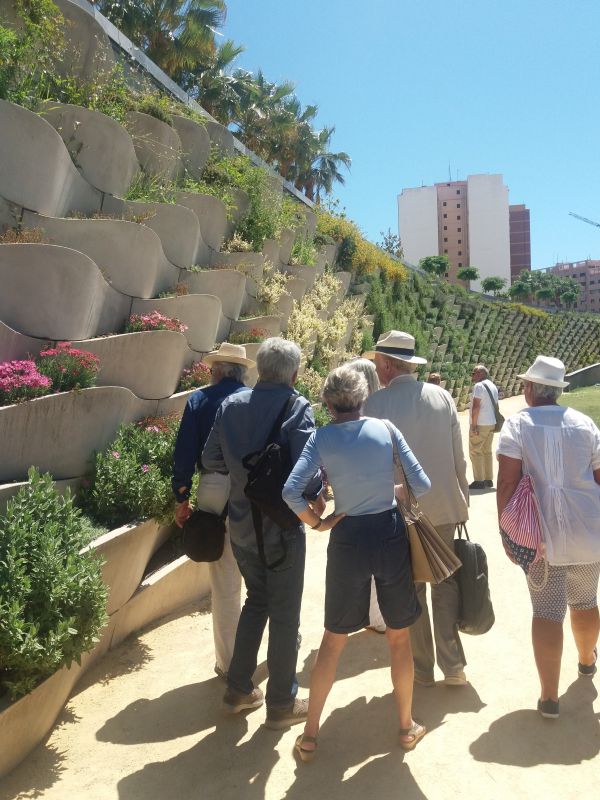
We next descended into the children’s area, to take a close look at the sunny ‘vertical garden’ which edges it. The sinuous curving concrete walls offer a multitude of pockets for plants such as Cistus, Helichrysum, Scaevola, Armeria, Festuca glauca, Scabiosa, Stachys lanata, Cerastium and trailing Lantana.
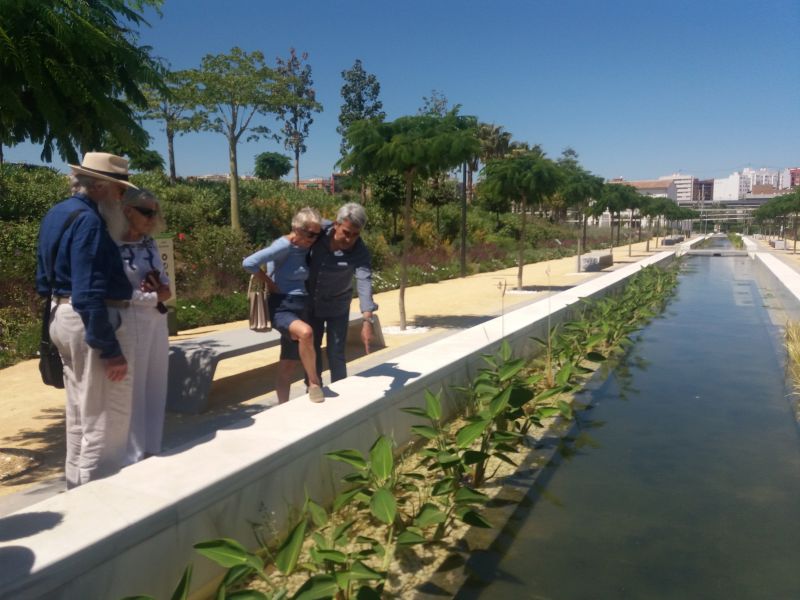
Between the two ‘bowls’ there is a very attractive long pool planted with aquatic plants and lined with Albizia trees, backed by sloping beds of mixed trees, shrubs and herbaceous perennials.
Entering the ‘Jardín de la Huerta', which we had earlier viewed from above, we passed along the shadier of the two ‘vertical gardens’, and here we saw the planting pockets had been filled with a variety of ferns, Hemerocallis, Tulbaghia and several trailing plants including Trachelospermum and white and blue varieties of Vinca.

Walking through the main area we noted that it had been divided up into many smaller plots, each of which contained plants typical of local gardens and agricultural areas. Groups of trees included not only varieties of citrus, widely grown around the city itself, but others which thrive in drier or cooler conditions, such as date palms, almonds, olives, mulberries and cherries. Some of the beds held shrubs with traditional uses, such as Sambucus, (elder, used in elderflower drinks) or coppiced willow, for making baskets. Others contained fruits, including thornless blackberry bushes and grape vines, or plants with medicinal uses like Aloe Vera. Even the walls were covered with kiwi fruit vines and fan-trained Prunus trees.

Our tour had brought us back to our starting point at access point no.2 of the park, next to the Russafa neighbourhood. Just inside Russafa, in a restaurant in a small tree-shaded park, we all enjoyed a long and delicious lunch.
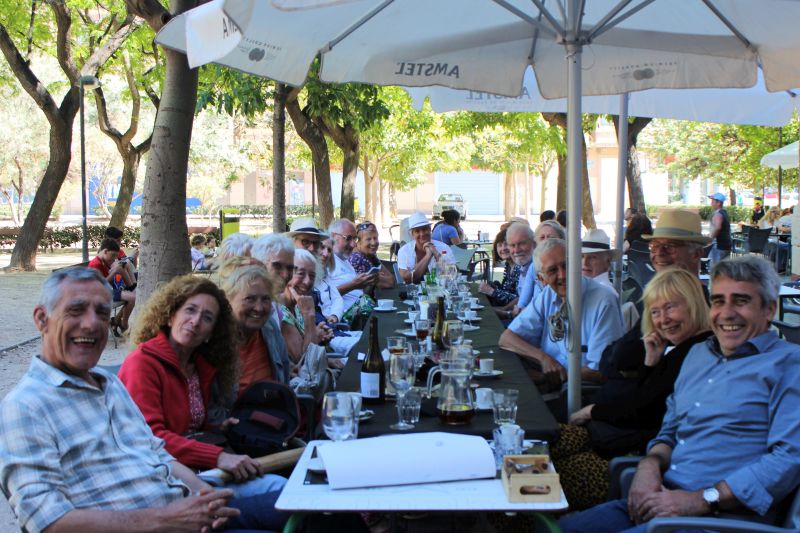
Afterwards, Salvador led many of us on an exploratory walk through this interesting area. Originally an independent town with mainly 19th century buildings, before being engulfed by the growth of the city, it later suffered a period of decline. However recently, after an effort by the city to revitalise the district, it has become a popular area of specialist restaurants and eccentric cafes, and possesses its own enticing and colourfully-painted market. Members gradually left the tour during the afternoon to make their way home and just six of us accompanied Salvador to the North Station, where we offered him our grateful thanks for providing us all with a memorable day.
Text by Carol Hawes Photos by Alan and Carol Hawes unless otherwise stated.
May 2019
Visit to the Christine Lomer Iris Collection at the Estación Biológica y Jardín Botánico at Torretes
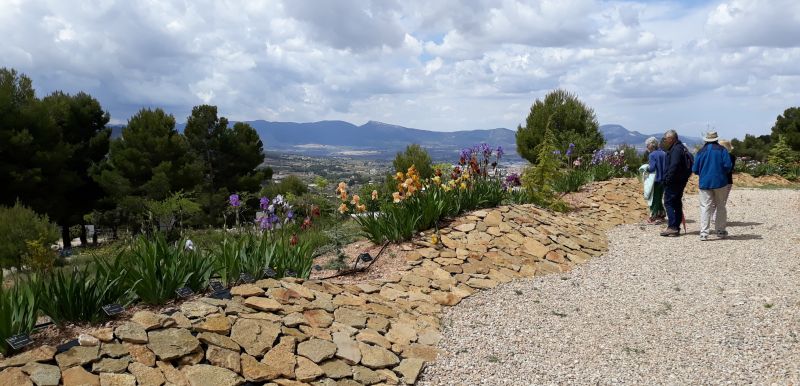
When Christine Lomer regretfully decided that she could no longer open her famous Iris Garden to the public she donated a large part of her impressive collection to the Botanic Garden at Torretes. Local MGS member Pedro Moya, who has a great love for and knowledge of, irises worked hard to establish the plants, in an area high up the sloping site above many of the other plant collections, where conditions would suit them.
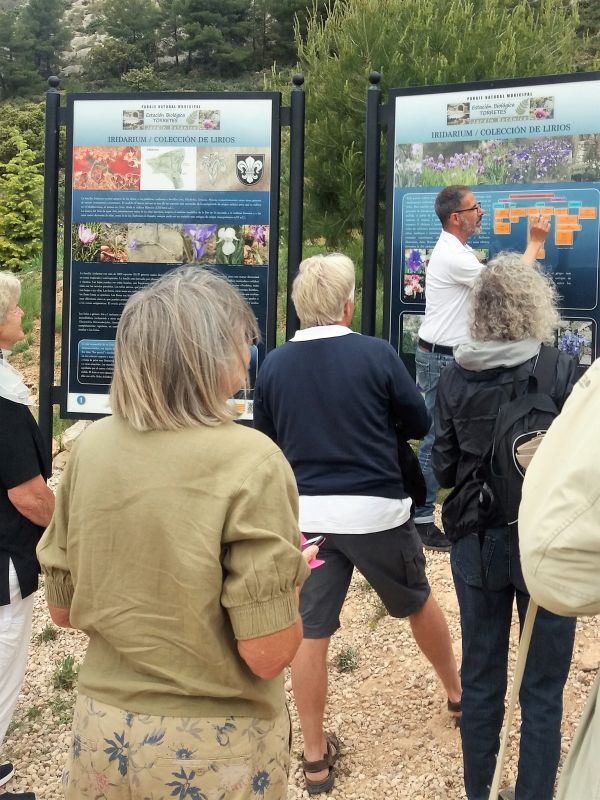
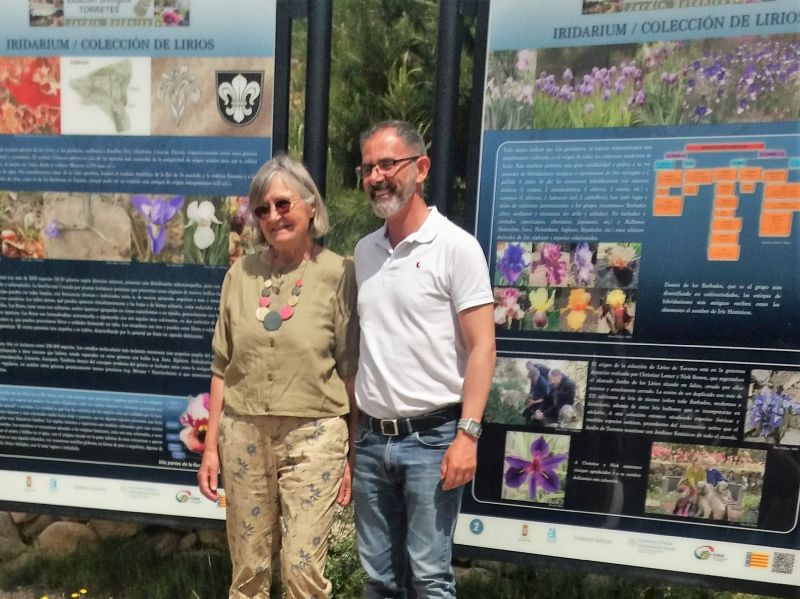
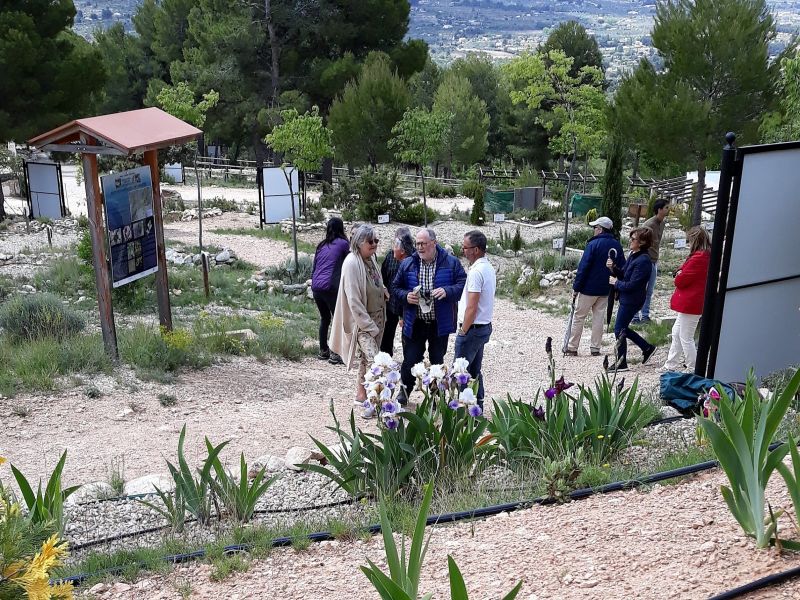
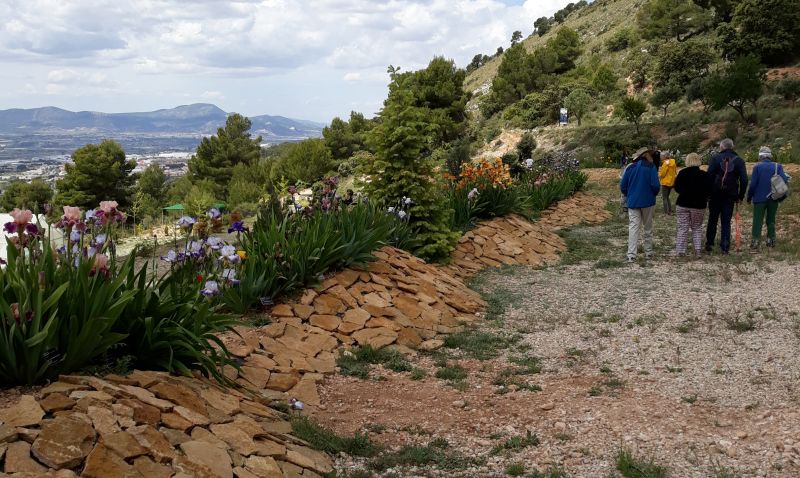
After only a few years it is now possible to enjoy the colourful sight of two longitudinal raised beds filled with many different and exquisite named iris cultivars, interplanted with some attractive small conifers. Pedro was kind enough to arrange this visit for the group and to explain to us the information about the iris family on the display boards.

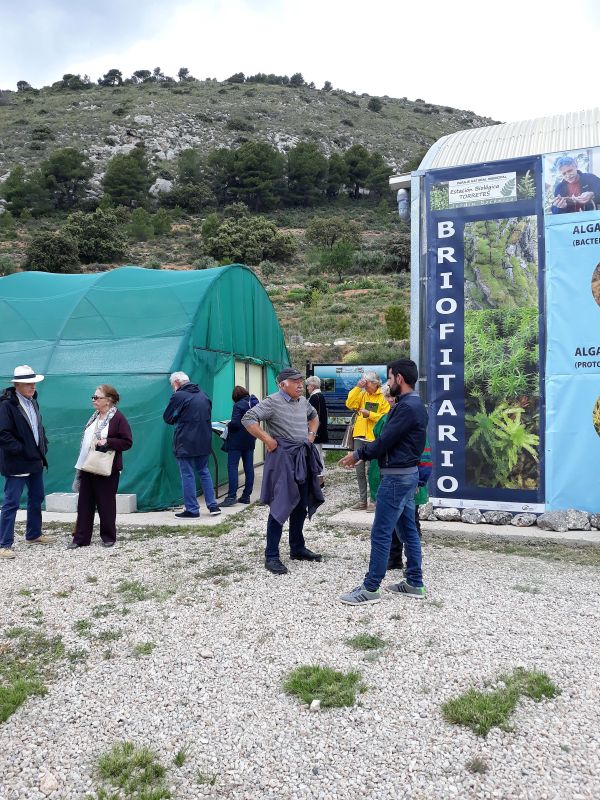
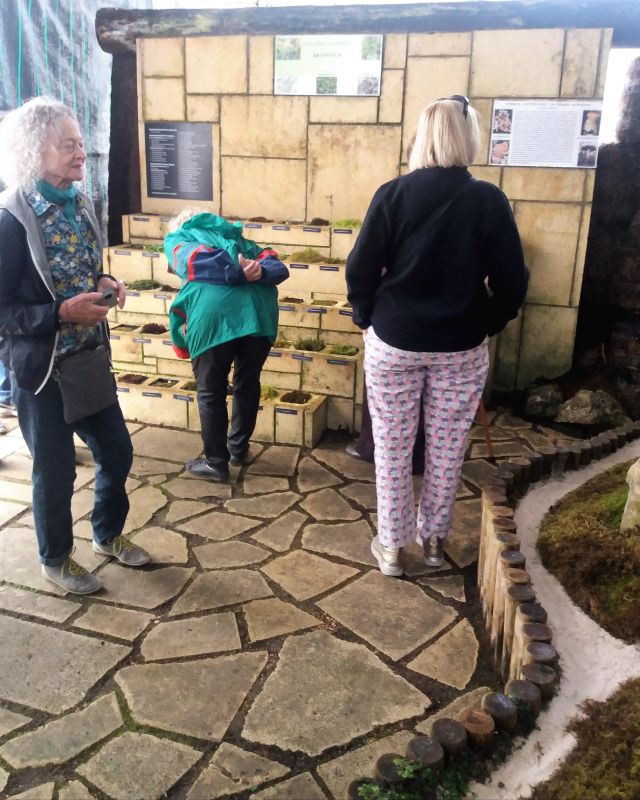
Afterwards, we took the opportunity to visit some of the other interesting features of the garden. For those who were here for the first time there were many to see, but especially important were the two latest projects: the collection of ferns and the collection of liverworts and mosses (bryophytes), both artistically and practically housed in a large greenhouse where temperatures and humidity levels can be controlled.

It was difficult for some of the group to leave the exploration and enjoyment of the garden in time for us all to reach the restaurant in the nearby town of Ibi for the lunch which Pedro had kindly organised. However, it proved to be a very enjoyable afternoon, with the chance to chat about what we had seen and discuss future plans while we ate a delicious Spanish meal. Many thanks for your efforts, Pedro.
Text by Carol Hawes; Photographs by Alan and Carol Hawes
May 2019
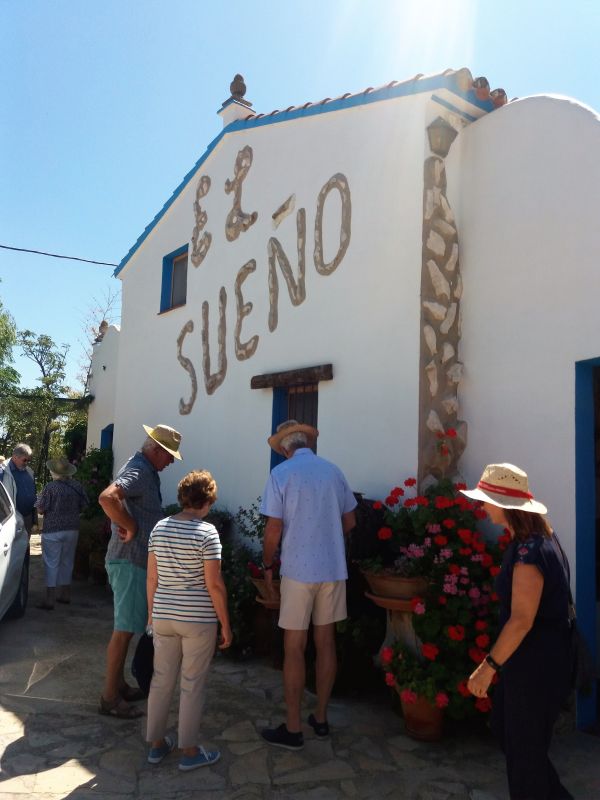
Visit to the garden ‘El Sueño’ (The Dream) near Ondara, in the north of our area.
Our first visit of the year was recommended and arranged by a local member, Ann-Marie Monet, who felt that this special garden would be enjoyed by our group, and she was proved to be correct. This garden is privately owned by Pedro and his wife Lucrecia but is open to the public on most days by appointment. It has been created over the last 16 years to fulfil their long-held ambition to house a wide collection of plants of especial fascination to the owners, from succulents of many kinds to varieties of fruit trees and roses. There are also several extra features to enjoy, including a ‘cave' with cascading water to shelter ferns and a small museum holding collections of fossils, minerals and shells. The interest shown by the many visitors to the garden is of great importance to the owners because they love to share their enthusiasm and knowledge of plants.
The plot of more than 5000 square metres of land, with its own well, was formerly used for growing oranges and so has a good fertile soil. This suits the collections of Mediterranean and more tropical plants, but the area devoted to the succulents has been designed as a series of narrow raised beds filled with a more porous soil and mulched with volcanic lava. All the planted areas are carefully watered by drip irrigation according to the particular needs of the plants.


Pedro first showed us many different cacti, from tiny species such as early-flowering Mammilaria, through a set of barrel-shaped Echinacea grussonia and Ferrocacti, to some small star-shaped Astrophytum species. As a contrast, we soon came to a huge Cereus peruvianus from Mexico, which produces large white flowers which last only one night. There were also some large climbing cacti with wonderful fruits called ‘pitayas' (‘dragon fruits’). Pedro told us that specimens of Opuntia (of which he has more than 20)were the first cacti to be introduced into Spain from America, bringing with them cochinilla insects (the source of the red cochineal). All of the fruits of cacti can be eaten, and we were invited to sample some of them.

We next visited the bed devoted to plants in the genera Agave, Yucca and Dracaena, where there were large examples of Yucca rostrata (with beautiful silvery leaves), Yucca elephantipes, Agave americana marginata and A.ferox, among others.
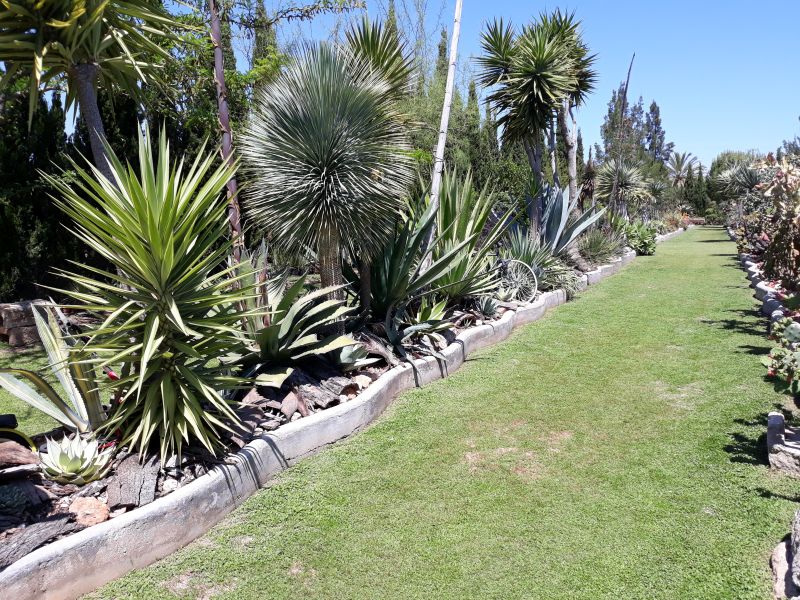
Many other raised beds are devoted to some of the other genera of succulent plants such as Aloe, Crassula, Kalanchoe, Aeonium, Echeveria, Sedum, Stapelia, and Senecio.
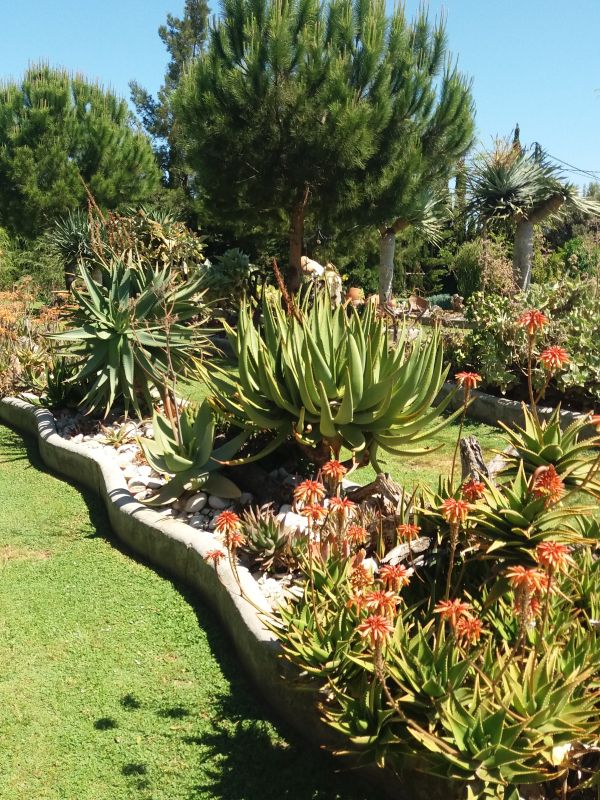
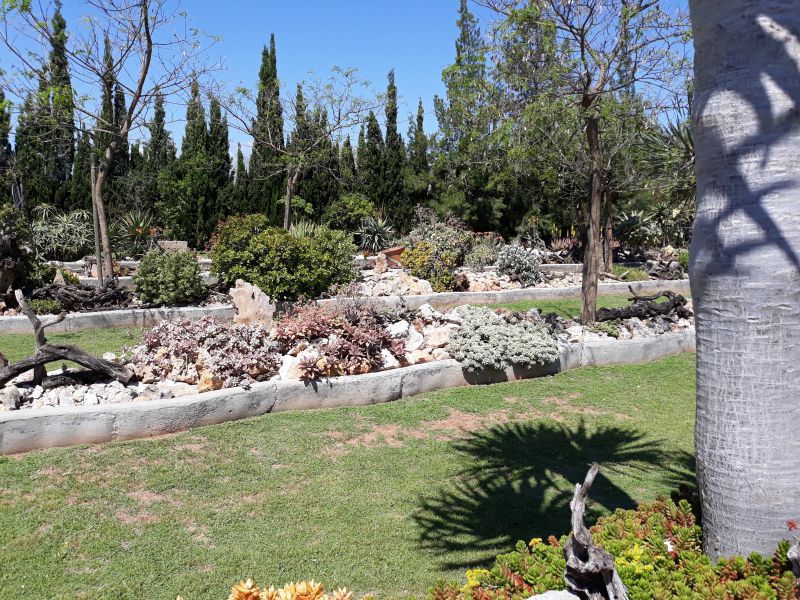
The perimeter of the garden around the raised succulent beds is planted with a variety of interesting trees and shrubs including Gleditsia tricanthos, Parkinsonia aculeata and Carissa macrocarpa (all three with vicious spines), a Macadamia tree, Erythrina crista-galli and E.caffra, a group of young cedars (Cedrus) and a stone pine (Pinus pinea). There are also many examples of citrus trees, almonds, apricots and figs as well as other attractive trees such as Acca sellowiana (flowering beautifully, with pink flowers whose petals are edible, as are the fruits which follow) and a large Dombeya, which has hanging clusters of showy pink flowers early in the year. Close to this we saw a small pond, home to turtles, frogs and fish, and surrounded by plants including sugarcane, Phormiums, Metrosideros, Chirimoya, Avocado, Actinidia deliciosa (kiwifruits) and a huge guava tree (Psidium guajava).
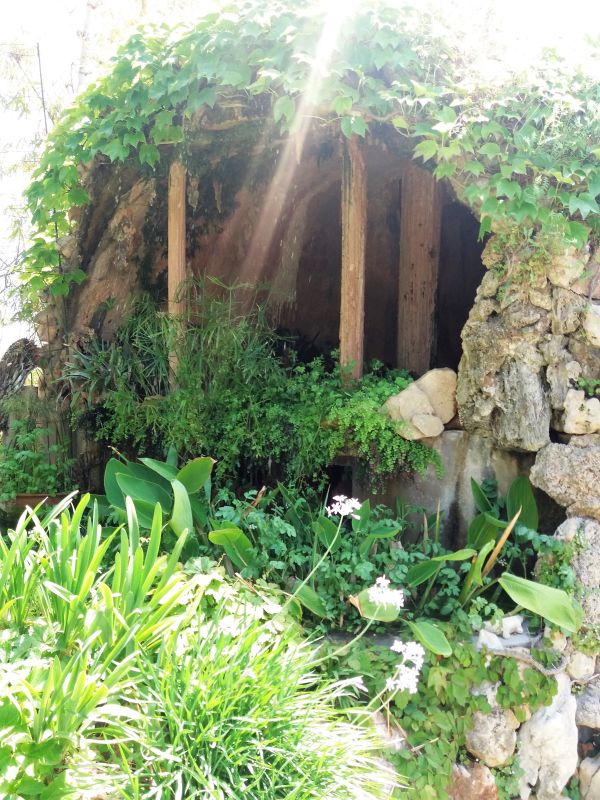
The artificial ‘cave' houses ferns, which enjoy the humidity provided by collected rainwater stored in a tank and fed to them by gravity. Below the cave there is a cleverly constructed room which is cooled by the cascades of water and is a wonderful place to relax and escape the summer heat. Surrounding the pool and cave there are many impressive plants including huge bamboos, a large Strelitzia augusta and a big Eriobotrya japonica (loquat or, locally, nispero) tree, which was made even more interesting because of the many potted Epiphyllum plantshanging from its branches.

Nearby we saw some beehives which ensure that the fruit trees are pollinated, and collections of Pelargonium varieties in pots and Tillandsia, (air plants) hanging at eye height. We then had the opportunity to walk through the propagation tunnels (and to buy some of the amazing array of small plants available).
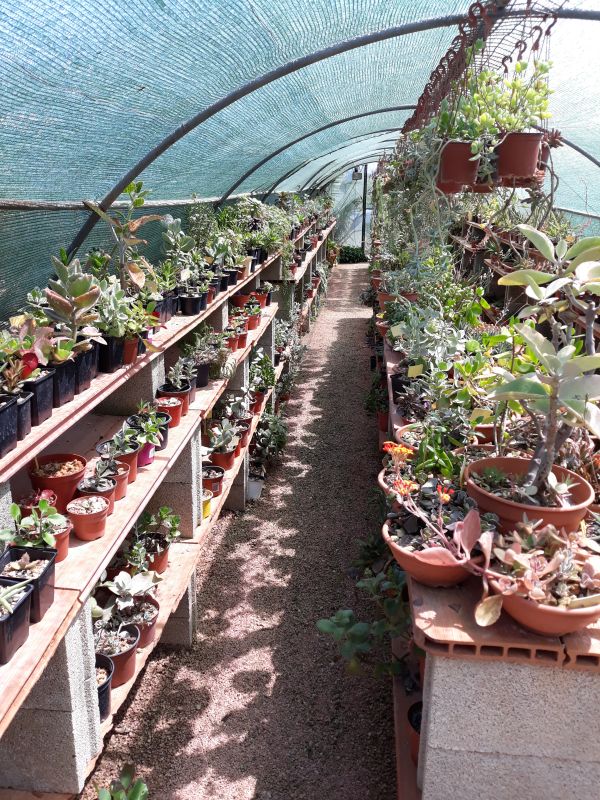
The final feature of the visit was a small but very interesting museum which holds the collections of fossils, shells and beautiful mineral specimens which have been amassed over many years. In all, it was a very exciting and amazing experience to visit such a fantastic and personal garden, the result of many years of hard work for both of the owners, and a tribute to their knowledge and dedication.
We were extremely pleased to have the chance to relax and discuss all that we had seen while we enjoyed a delicious meal in a nearby restaurant (also arranged by Anne-Marie – again, many thanks!)
Text by Carol Hawes; Photographs by Alan and Carol Hawes
November 2018
Final branch meeting of the year at the house of Branch Heads, Alan and Carol Hawes, Crevillente
We were pleased to welcome a large number of members and friends, both old and new, including several Spanish ones. It was a splendid opportunity for us to get to know those who had most recently joined the group, and to have time to chat about their interests and gardens.
Toni Pont, professional gardener, took charge of the exchange of plants, while our stalwart helpers with refreshments and the contributions to the lunch brought by those attending (Karen Leathers and Pauline Weal) worked hard to keep everyone happy.
Alan gave a presentation about the AGM tour and post-AGM tour in Valencia, which had been both exciting and exhausting, showing photos of many of the gardens which had been visited. One of the visits in Valencia was to a large redevelopment of redundant railway land, the new ‘Central Park’, which would be a good subject for a branch visit next year. For other branch meetings, Alan requested help from members with suggestions for suitable gardens or themes. More importantly, he stressed that in the future we shall also need help with the practical arrangements in the areas chosen, although we feel that we can continue to coordinate attendance lists, travel plans and visit reports.
After sharing a relaxed buffet lunch and touring the garden everyone collected their plants and made their farewells, until the ‘New Gardening Year'.
The Alicante AGM
The 24th Annual General Meeting of the MGS was held on the Costa Blanca from 25 to 28 October, based in Alicante. This was an ambitious undertaking for a small branch such as ours but a number of branch members and friends (Guy and Elizabeth Marriott, Diane Wright, Karen Leathers, Moisés Grau, Jacqueline Charron and Ana Rodriguez) shouldered much of the responsibility for the arrangements for the AGM and the post-AGM tour to Valencia, where member Salvador Pastor was also a great help and a highly knowledgeable guide.
We were pleased to welcome a total of 73 participants, including 20 from Australia, 12 from California and 1 from Canada, with the rest coming from 8 European countries including Spain. We were sorry to have to turn away a few late applicants because the pre-AGM and post-AGM tours were fully booked. The 50 people who visited MGS members’ gardens in Mallorca, guided and organised by the Balearic Islands Branch Head Sally Beale, told us that they had very much enjoyed the experience.
The schedule then allowed time in Alicante for the members of the Administrative Committee to hold an afternoon meeting and enjoy dinner together, while on the following morning the AC met with all the Branch Heads. We were especially glad to see so many present, and to meet the heads of the branches in Greece, Crete, Italy, Cyprus, Southern and Northern California, Western Australia, Victoria Australia and the new head in the UK. Two committee members of the South Australian branch attended in place of their Branch Head. Having such a large group of people to discuss issues with the President, Vice-president, Secretary and Treasurer made possible wide-ranging and useful expressions of interest or concern, including possible future aims for the Society as a whole and suggestions for sites for future AGM’s.
In the evening of Thursday 25 there was a Welcome Reception at the Melia Alicante Hotel, during which participants registered and were given a pack of useful information about the cities and gardens to be visited. We all had the chance to get to know each other as we enjoyed the Spanish snacks and the wonderful view of the lights along the Alicante coastline.
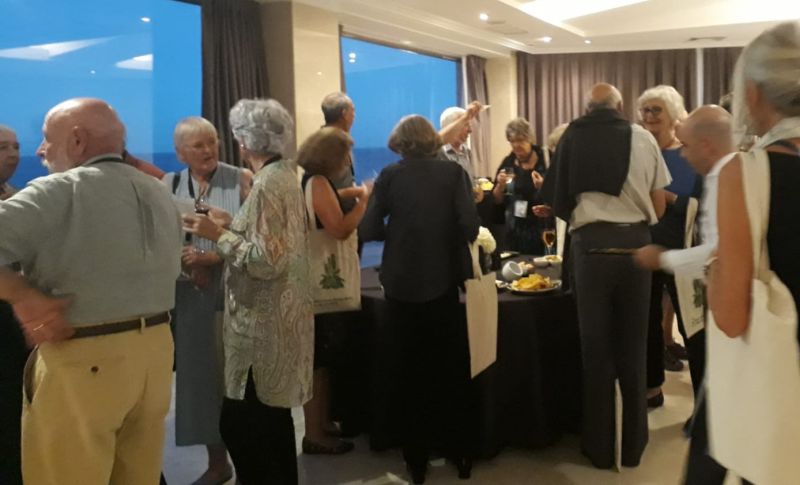
Friday 26 was devoted to visits to gardens in the fertile plain south of Alicante, including a visit to our own garden. Alan enjoyed discussing our collection of eucalypts with the many Australians present and we both appreciated the enthusiastic comments on the garden during the visit.
We all shared a delicious Spanish paella lunch in the attractive country garden of a local member, who also showed us his collections of citrus and jasmine varieties.
Visitors were also guided through the best features of the nearby city of Elche, famous for its situation among 300,000 date palms, and especially for the ‘Huerto del Cura’ garden, which has received many important visits in the past. The impressive ‘Imperial Palm’ records the visit of the Empress of Austria in 1894.

We ended the day at a favourite local Tea Garden, whose owner has created an incredibly beautiful garden in the Moorish style, reminiscent of that of the Alhambra palace in the city of Granada, where he was born.
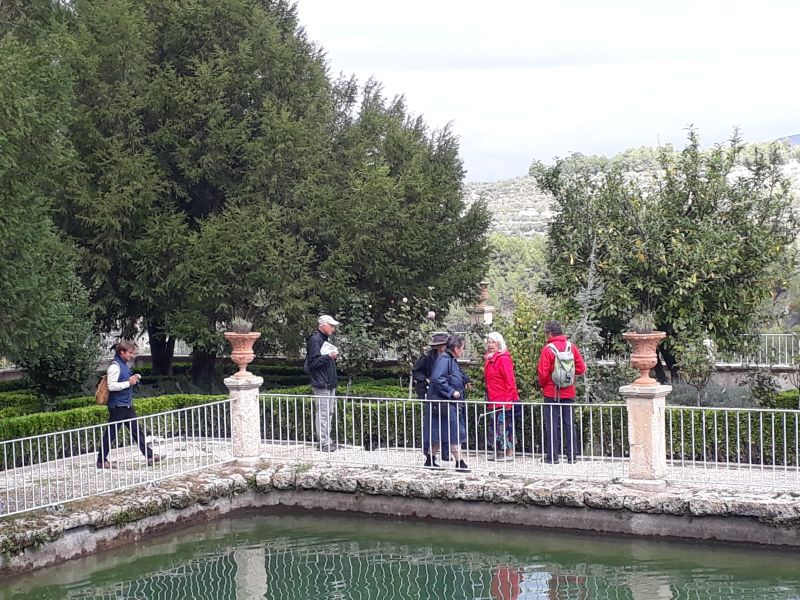
On Saturday 27 we all journeyed northwards to visit gardens in the mountainous interior of the province. In the morning we spent time in two historic gardens, both created in the mid 19th century. The highlight of the Brutinel Garden, built for a paper manufacturer next to his now-abandoned factory, is its Pavilion, a combination of reception rooms, large greenhouse and aviary, where a local historian described the fascinating history and the architectural features of the garden and its buildings.


The other garden, the ‘Jardín de Santos’, in the Romantic style, contains many different and contrasting garden features around a large central pool (which holds the water needed to irrigate the garden). There is also a small museum which explains the planning and the history of the garden.
For lunch on this day we arranged another typically Spanish meal, this time of 'tapas' (a succession of different small dishes, designed to be shared), in a nearby restaurant which concentrates on offering home-cooked local specialities. Afterwards, some people decided to return to their hotels to prepare for the evening talk, while the rest accompanied us to the inspirational demonstration garden at 'Casa Tápena', set up quite recently as a Centre of Sustainable Gardening. It has been designed to show how attractive gardens can be made using drought tolerant plants, with suitable mulches, and to house a representative collection of local crops (especially fruit trees), as well as demonstrating past and present methods of irrigation.

In the evening, many members attended an interesting talk by a specialist in the design and restoration of Botanic Gardens. He described the evolution of Spanish Botanic Gardens during the 20th century, in the context of the history of the country during that period, with particular emphasis on his own involvement in projects in various parts of Spain.
Sunday 28 began with a scenic drive along the coast northwards from Alicante to the town of Jávea, where the Parador Hotel was the venue for the General Assembly. Some Costa Blanca branch members joined the visitors for the GA, and for events later in the day, which allowed them better to understand the workings of the MGS and to meet its leaders.
The GA began with an expression of thanks from the President, Caroline Davies, to all those who had organised and managed the AGM, and the pre-AGM and post-AGM tours. She then gave a summarised account of the many developments during the past year, including those at the Sparoza garden, the revitalizing of the UK branch, the affiliation with the Mediterranean Gardening Association of Portugal (MGAP), the foreign tours organised by the MGS and the new responsive website. She thanked the many people who had put great efforts into both new and long-standing elements of the MGS’s activities (including the Journal, Facebook page, Plant Forum, and the Seed Exchange), other members of the AC and all the Branch Heads. She also announced a small increase in the annual subscription.
The Treasurer then read and explained her statement for the year and thanked the Auditors and others who had checked her accounts. This statement was approved by the members present and was followed by the year's report by the Secretary, a report on the year at Sparoza, and a report by the Editor of the Journal (encouraging members to contribute more articles and noting the approach of the 100th issue in April 2020). The report about the MGS Forum and Facebook pages showed how widely popular these pages are, and how much information about mediterranean plants and gardens is available to the public via the MGS.
An important part of this GA was the report about the new ‘responsive’ MGS website, and the changes that have been made to its format. There are several new features, others have been redesigned, and now all the different branches will be encouraged to express their own personalities on their branch webpages. The President issued a password which allowed those present immediate access to the new website so that we could see and comment on the new format.
Preliminary plans for the 2019 AGM (the 25th) were announced, which fittingly will take place in Greece. The President encouraged all members to consider standing for election to the AC, now that modern communication systems make possible online meetings. She also announced that the annual donation to a local garden would this year be given to the ‘Foundation Enrique Montoliu’ (FUNDEM), based at the Albarda garden, which would be visited that afternoon.
Before the meeting ended there was a short talk about the April 2019 MGAP event in Portugal, (to which all MGS members are invited), discussion about the site for the 2020 AGM and a mention that some seeds from the MGS seed collection were available at the meeting. The holder of the MGS seed collection mentioned that she was having difficulty in contacting members in France and a new French member offered to resurrect the French branch, an offer which was very gratefully accepted. The meeting concluded with thanks to the participants in the AGM, with special thanks to all those in the Costa Blanca and Mallorca for their efforts in making it such a success.
NB The full official minutes of the meeting can be requested from the Secretary via the link on the website.
A buffet lunch was then served at the hotel, which was much appreciated, as was the opportunity for participants to mingle and discuss the morning’s meeting. After lunch we drove the short distance to the ‘Jardín de L'Albarda’, the base for FUNDEM, which demonstrates the richness of the flora that survive in this climate and especially promotes the use of native plants. It also funds the purchase of threatened areas of land so that they can be retained in a natural state. The five-hectare site contains many beautiful and varied gardens, and we were given a guided tour or allowed to wander about before we were offered drinks and homemade cakes by the owner and his staff.

We all returned to Alicante to enjoy the evening’s Farewell Dinner at the Melia Hotel, during which all the organisers of the AGM tour received the thanks of the MGS, and the personal gratitude of the President, for having provided such an interesting and enjoyable three days.
Author Carol Hawes
October 2018
Post-AGM Tour to Valencia
After the main AGM tour, which was based in Alicante, on Monday 29 October 43 of the AGM participants travelled to Valencia for the post-AGM Tour. This three-day tour was designed to give a brief view of some of the many public gardens of this historic city and was organised with the help of MGS member Salvador Pastor, a city head gardener, who also acted as guide to the gardens.
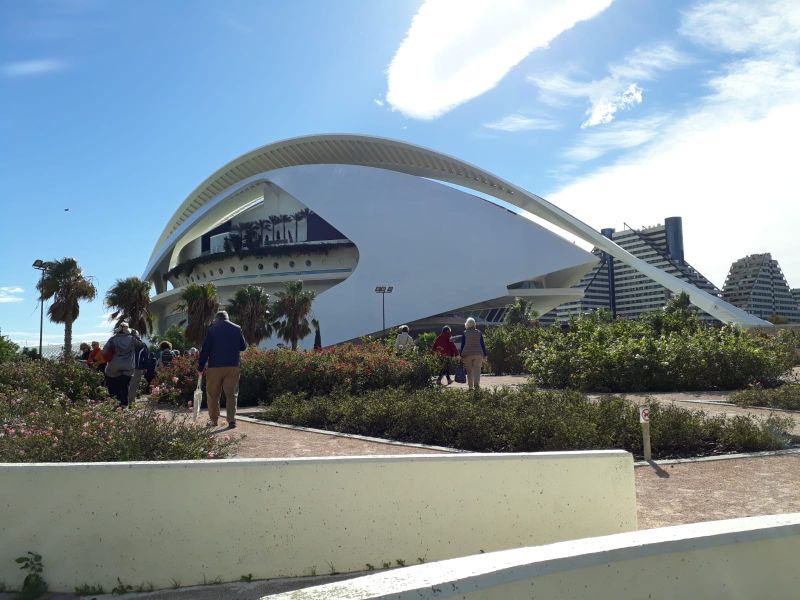
We started with a visit to the Turia Gardens, an 8 km long park created in the old course of the diverted River Turia through the centre of the city. This has been designed as a multifaceted public space accessible to the city centre – we visited a rose garden, a palm walk, a floral bridge and part of the “City of Arts and Sciences”, a stunning development of museums, exhibition halls and an opera house designed by Santiago Calatrava.
After lunch in a seafront restaurant we were given a guided walk to the plantings along one of the main avenues of the city centre, the Gran Vía Marqués del Turia, which leads to the central commercial area near the historic North Station where most of us were staying. The station is a wonderful modernista-style building with a beautiful tiled interior. A free evening was spent shopping and visiting some of the many bars and restaurants in this area.

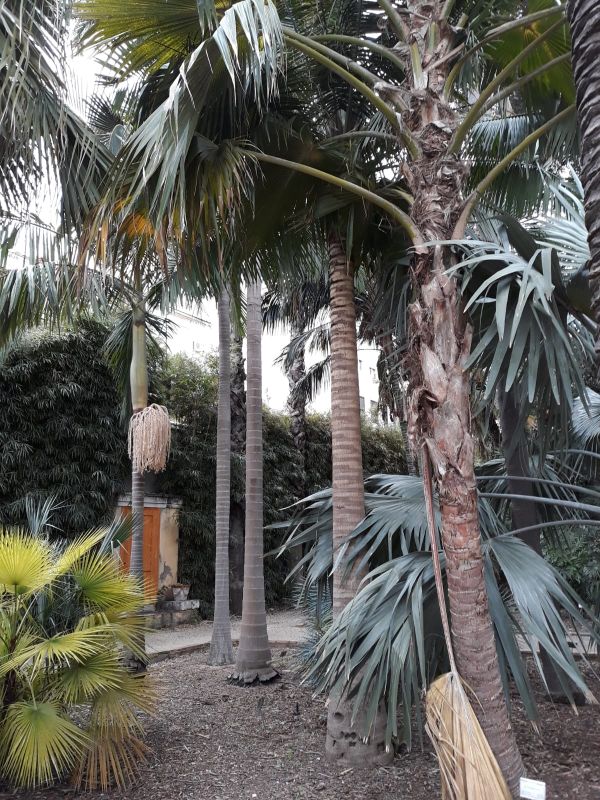
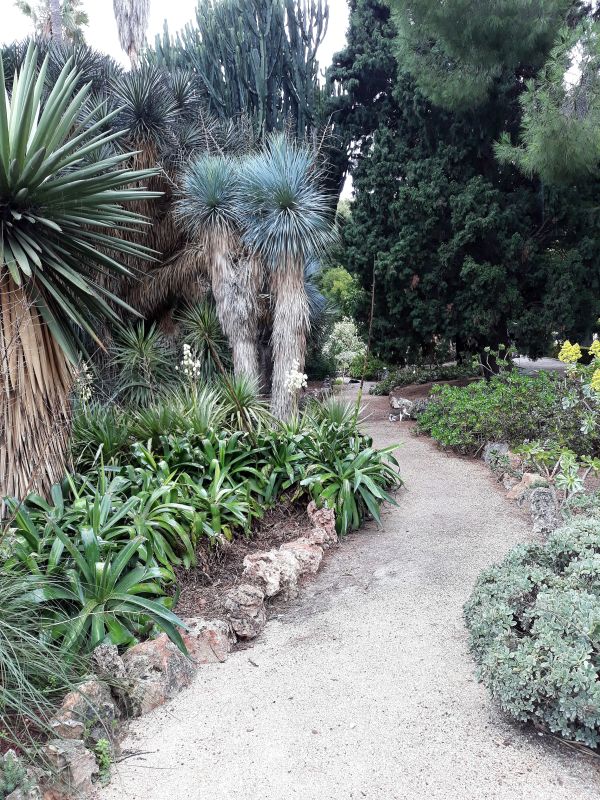
On Tuesday 30th the morning was spent in the University Botanic Garden, which has existed since 1567, and which has occupied its present site since 1802. The garden has a fantastic collection of mature trees established from this time and a wonderful collection of plants brought from around the world by Spanish plant collectors, who used this garden to test their hardiness in the city’s mediterranean climate.
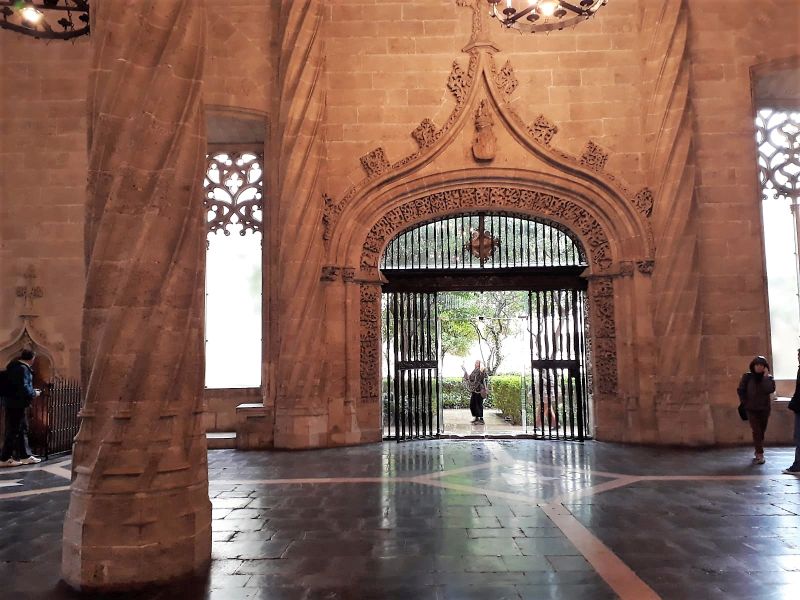
From the Botanic Garden the group was taken on a guided walk into the historic centre of the city, taking in parts of the city walls, the Central Market, the 14th century Silk Exchange and the Cathedral, after which the afternoon was free for sightseeing and shopping.
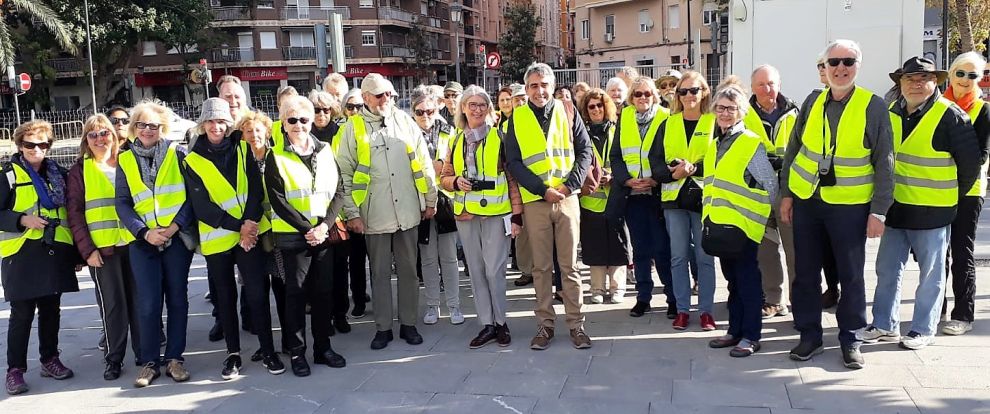
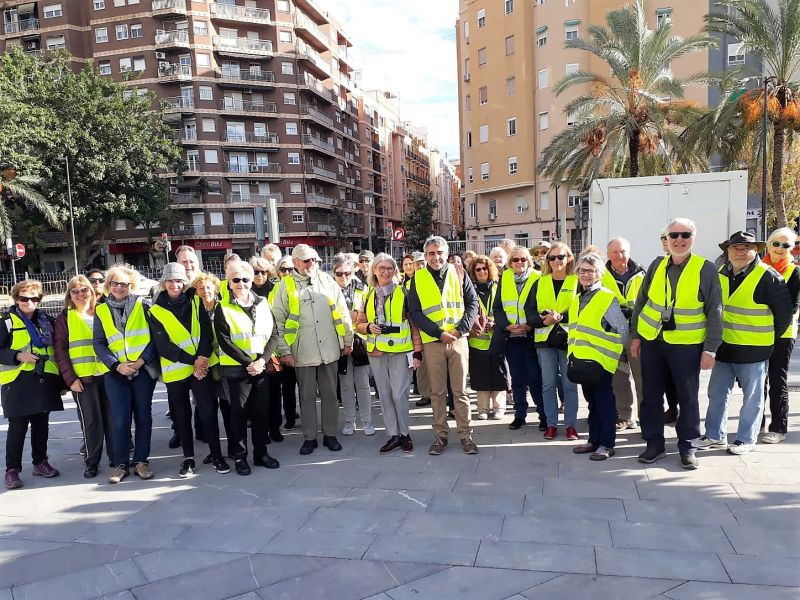
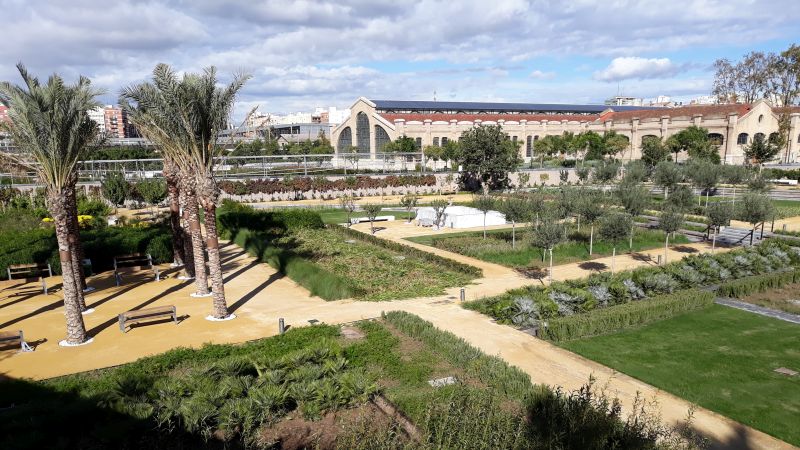
On Wednesday 31st in the morning we visited, by special arrangement, the new 20-hectare Central Park, which was still under construction at the time of our visit, necessitating our wearing high-visibility jackets. This park is a development of land that was part of the railway terminus in the centre of the city and because of its central location it should be a great asset to the residents. The highly imaginative modern design, by the Californian architects Gustafson Porter + Bowman, was a marked contrast to the more historic gardens in the city.

During lunch in a restaurant on the edge of the Viveros Garden we had a small farewell celebration, where thanks were given to the organisers, especially to Salvador, our guide to the city’s gardens.
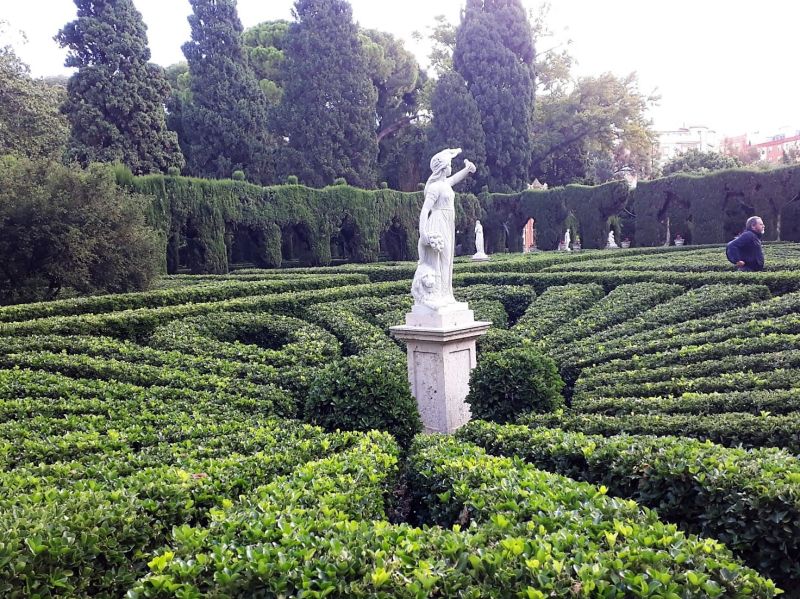
After lunch, as a deliberate contrast to the morning visit, and as a fitting end to the tour, we visited the beautiful neoclassical Monforte Garden, a survival from the 19th century, full of symbolism and precise formality, and wonderfully maintained by the city parks department.
Author Alan Hawes
June 2018
Visit to the Monforte Garden and the Ayora Garden in Valencia
Both of these gardens were created in the 19th century on land that was then outside the city and was used for farming, orchards, for nurseries or for growing cut flowers. Although they are now surrounded by urban developments, they are important green oases, full of mature trees and interesting garden features, and free access to them is very much valued.
The Monforte Garden is one of the most important Neoclassical gardens in Spain. It was created for the Marquis of San Juan, Juan Bautista Romero, a rich silk merchant, and the mansion and garden were completed in 1859. On the death of the owner it passed to a close relative, Josefa Monforte Parrés, from whom it takes its current name. The original garden has been restored and enlarged several times but always the design aspects of the first plans have been respected. During the last thirty years, modern methods of irrigation and garden maintenance have been introduced in order to conserve this historic gem.
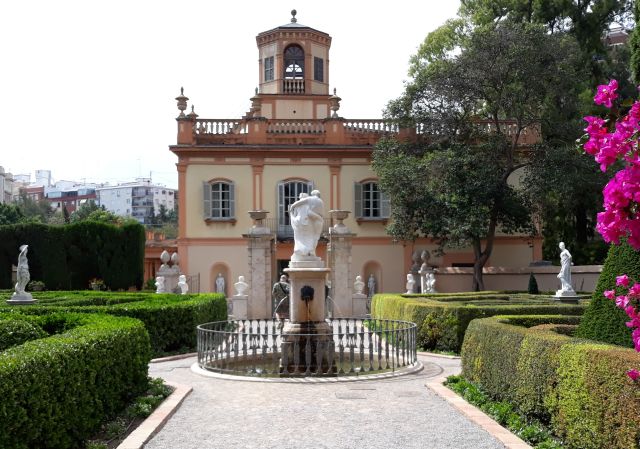
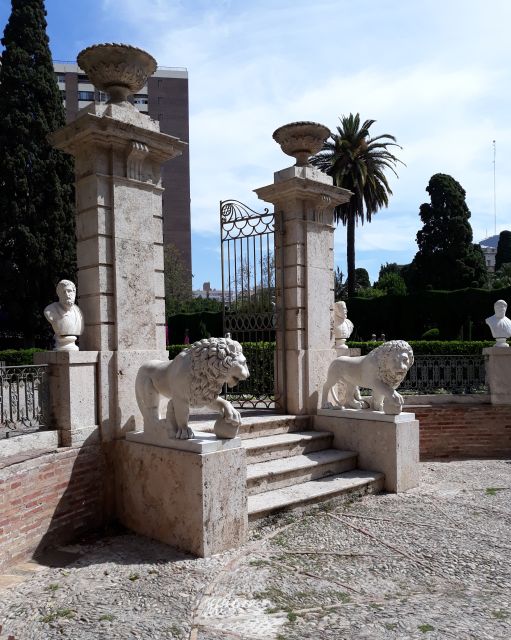
The three-storey mansion, in one corner of the plot, dictates the layout of the garden. The northern face overlooks the severely Neoclassical Old Parterre and at ground level it opens out on to a semi-circular patio featuring busts of important men of ideas, such as Dante and Petrarch. Two domesticated lions, symbolizing the dominance of man over nature, guard the gate to the geometrically-designed Old Parterre. The four areas of topiary hedges on each side of the main axis surround statues representing the four continents and at the crossing of the paths there is a central fountain with a statue of Daphnis and Chloe, as a reminder of the power of love. Two more areas of topiary contain statues representing Winter and Spring. All of the many fine statues of Italian marble were made in Rome by a Valencian sculptor.
The vista from the house ends at a long pergola, which follows the south-facing wall of the plot and provides a shady retreat. Long hedges of cypresses, trimmed to provide a cloister-like effect, enclose the Old Parterre. Beyond the hedge is a small triangular area with a central fountain in a circle of orange trees, from which there is an entrance to a large formal rose garden. Another path leads on to the New Parterre, in whose centre stands a statue of Flora, the goddess of flowers and good harvests. This statue is surrounded by an array of hidden water jets which can be turned on to surprise those who pause to admire her.
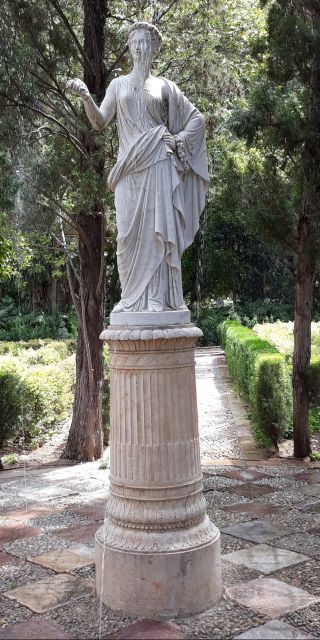
After this point the design of the garden becomes much less formal, with winding paths in a more Romantic style, all part of the original desire of the architect to reflect the idea that in some areas nature should be allowed to rule instead of man. Almost at the furthest point from the house there is an artificial mound, which was constructed partly out of the necessity to conceal a large reservoir of water at a level higher than the rest of the garden for irrigation purposes, but it is surrounded by attractive paths circling it and leading to a Mirador at the top. There are many mature trees in this area, some of them original, including huge specimens of Pinus halepensis, and later plantings of trees such as Magnolia grandiflora, Ceiba speciosa, Ginkgo biloba and Bauhinia variegata.
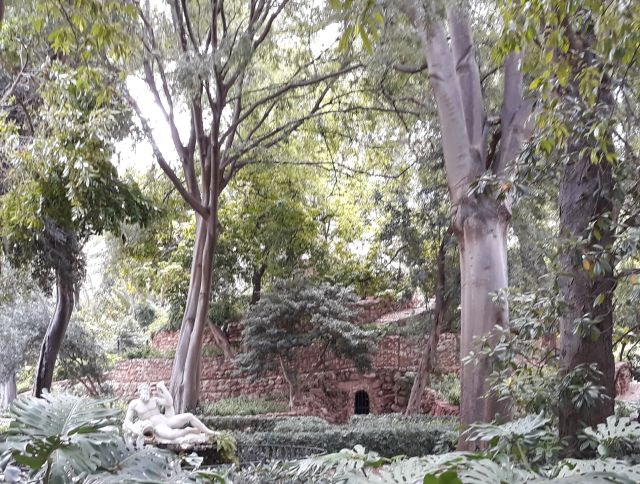
Between the mound and the mansion there is a large circular pool, ringed with weeping evergreen trees, two of which are the rare Cupressus funebris and Casuarina. It contains clumps of Papyrus and it is surrounded by hedges of Pittosporum tobira.
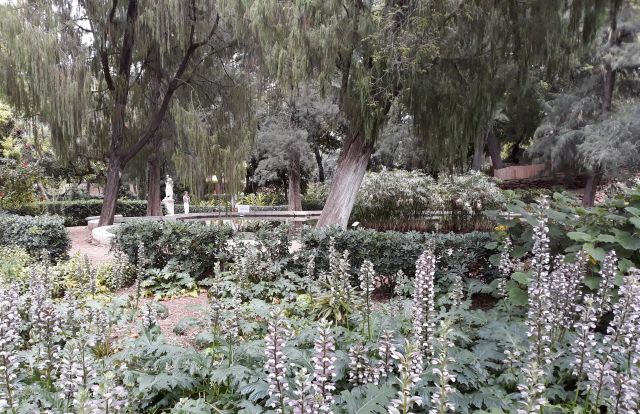
Nearby is another informal area leading back towards the eastern façade of the mansion and the impressive arch which separates the Romantic and Neoclassical areas. This arch is surmounted by statues of mythical seahorses and it has been restored to its original colours. On the other side of the arch, the formality of the design returns and the patio on the eastern side of the mansion features many small statues of children or cherubs surrounded by the original paving made of small stones laid in attractive patterns.

The mansion and garden remained the property of the Monforte family until 1971, when they were acquired by the City Council. Some land adjoining the garden was also bought and planted following the themes of the original garden, and later the mansion itself was restored. Now both mansion and garden are important components of life in the city.
The Ayora mansion and garden created for José Ayora at the end of the nineteenth century are also important today to those who live around them. The mansion is used for educational purposes by the ‘People’s University’ and for social events; the old garden has been restored and many new species have been introduced. Recently a new metro station nearby prompted the redevelopment of another part of the historic Ayora garden and the inclusion of a new landscaped open space and sports facilities.

The mansion was built to a square plan in the Modernista style, with attractive facades of natural stone and contrasting red brick, ornamented with ceramic plaques in blue and white. Its most outstanding feature is an impressive square tower above the four-sided hipped roof, topped with a cupola covered in tiles with a copper-coloured metallic sheen. It stands in the most northerly part of the current garden and it was used as a family home until the 1960s, after which its condition deteriorated and it was bought by the City Council in 1976. It was saved from the threat of demolition and instead declared a ‘Building of Cultural Interest’ in 1983. After being used by the council in various ways, it was recently thoroughly restored and opened to the public.
Immediately surrounding the mansion there are many tall Phoenix canariensis and Washingtonia filifera palms, which frame and complement the building and form part of the original plantings. Another screen of trees, including many jacarandas, follows the boundary walls with an opening into a section where some original plants such as orange and lemon trees remain among others which were part of the redevelopment of the area in the 1980s, including an impressive Araucaria columnaris.
The largest and most richly planted area is reached through another opening in the wall around the mansion. It is a large rectangular space enclosed by high walls and it was also bought by José Ayora when he bought the site for his house. It was at that time a plant nursery and contained some trees which still exist, including clumps of Ficus macrophyllaf. columnaris with gigantic trunks.
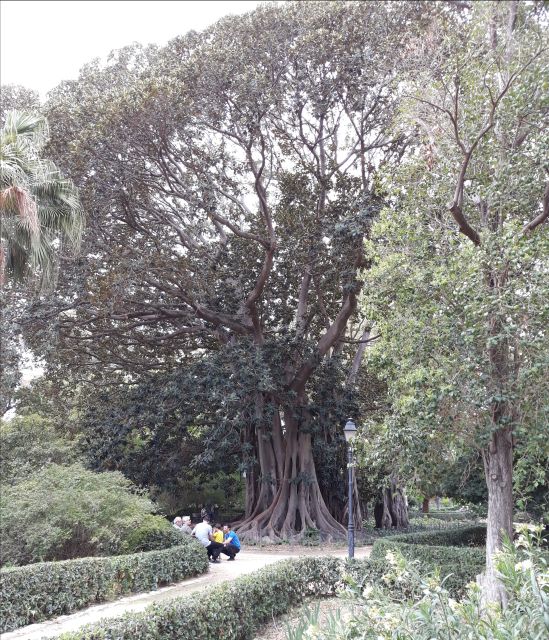
Large parts of this garden were replanted after its purchase in 1976 so there are now many mature trees which offer welcome shade to the visitor. Many sinuous paths wind between hedged beds containing a wide variety of trees and shrubs, underplanted with attractive flowering plants. Some of the most interesting and beautiful examples are huge trees of Ceiba speciosa, Eucalyptus camaldulensis, Casuarina cunninghamiana, Livistona chinensis, Grevillea robusta, Magnolia grandiflora, Metrosideros and Hibiscus. Underplantings include many Brugmansia, Acanthus and Crinum plants. There are ceramic benches on which to rest, fountains and a rose pergola, all of which help to make this garden an enticing place in which to linger.
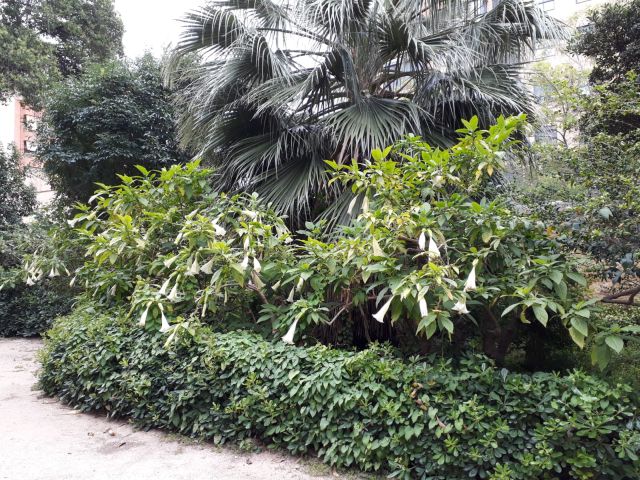
Outside the original wall, to the west of the mansion, another area was redeveloped to provide an open space for public enjoyment and games, enclosed by a huge curving pergola covered in Bougainvillea, and planted with Jacaranda trees and many palms. More developments are under way to landscape the new metro station and sports facilities, which will enhance the already highly popular Ayora Garden.
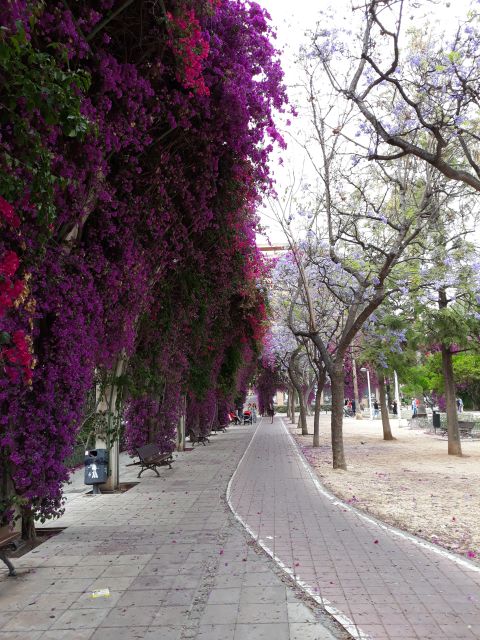
On June 9th a group of local members was privileged to be guided around the Monforte and Ayora Gardens by one of our members, Salvador Pastor, who is one of the city’s head gardeners. His knowledge of these gardens is extensive and inspiring. Our visit to Valencia ended with a delicious paella lunch in the beautiful Viveros Gardens and we all felt that we had experienced a very special day.
For older reports and articles please check out the archived (non-responsive) Costa Blanca Branch page.
Edith Haeuser has re-started the Costa Blanca branch with the valuable support of John Danzer as co-branch head. During her childhood in Switzerland she was introduced to gardening, plants and botany by her grandfather. Having been a teacher of English with a great interest in other languages and cultures, she appreciates the linguistic diversity of this coast.

After two years back in Switzerland she realised how much she missed the Mediterranean light and the fragrances of mediterranean plants, and of course, her friends on the Costa Blanca. She and her husband have now a smaller garden very close to Javea’s southern nature reserve. She is intrigued by the rich biodiversity around the Mediterranean basin and has chosen also for her second garden in Spain many native plants, mainly to have the vegetation of the region echoed in her garden, but also bearing in mind the climate change, which has dramatically accelerated within the past few years.
John Danzer is an American product designer and founder of Munder Skiles, a thirty-year-old company researching, designing and producing garden furniture. John and his spouse Chip Allemann now work together living in Madrid and Javea, Spain. They have been redoing their house and garden in Javea for the past twelve years for their enjoyment and as a location to display their collected and designed pieces. From their Madrid showroom they will also manage their four showroom locations in the USA, the production in Costa Rica, Tangiers and Vietnam. In the USA John is a Fellow of the Garden Conservancy and Advisory Council of the Cultural Landscape Foundation. In May 2022 John received the Arthur Ross Award for Artisanship & Craftsmanship from The Institute of Classical Architecture and Design.

The MGS is for them the best way to learn about appropriate plants that use little to no water. They just attended the wonderful MGS trip to Morocco, perfectly organized by Angela Durnford. John is thrilled to be co-Branch Head of the Costa Blanca branch with Edith Haeuser.
THE MEDITERRANEAN GARDEN is the registered trademark of The Mediterranean Garden Society in the European Union, Australia, and the United States of America