Mediterranean Garden Society
Mediterranean Garden Society
A Moroccan Eden
by Duncan J.D. Smith
Photographs by Duncan J.D. Smith
Photographs to illustrate the article published in The Mediterranean Garden No. 122, October 2025
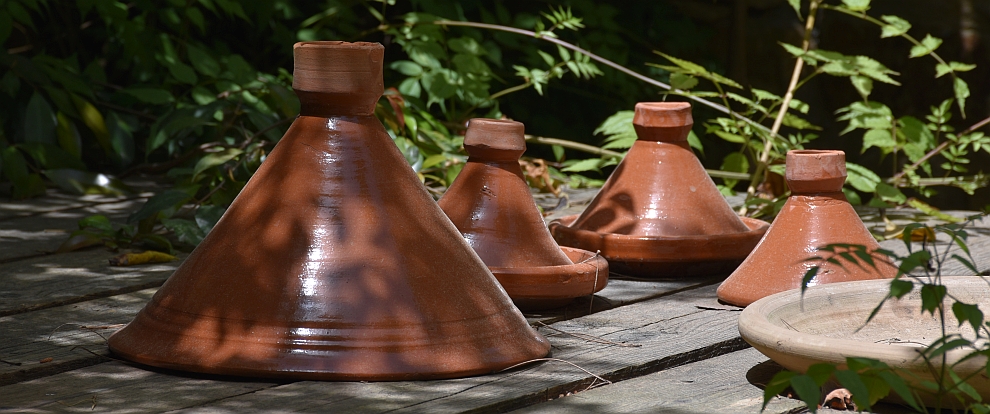
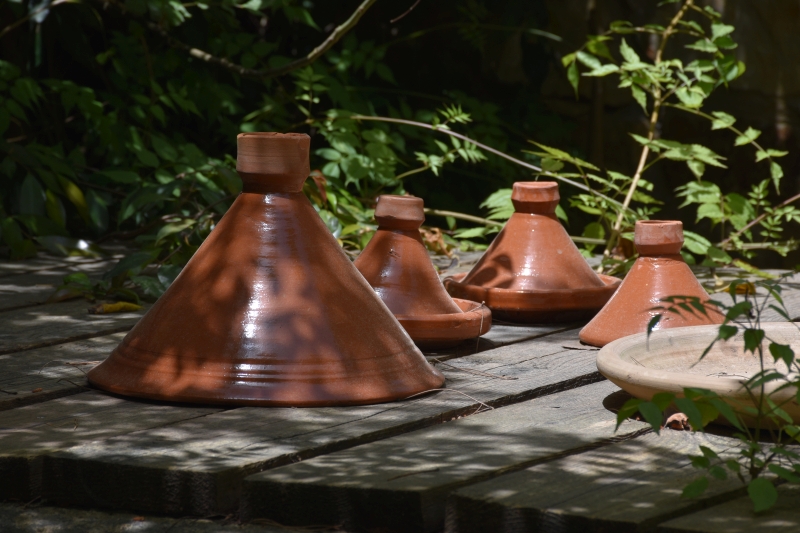
The photo at the top of this page shows Donabo Botanical Gardens, traditional Moroccan cooking vessels known as tagines (Photo Duncan J D Smith)
Duncan writes: Visitors to the north Moroccan city of Tangier might not automatically associate the place with gardens. In fact the once-shabby port city is today surprisingly verdant. Its myriad green spaces include not only trim public parks tended by an army of municipal gardeners but also flower-filled domestic courtyards, as well as sprawling estates created by well-to-do expatriates.
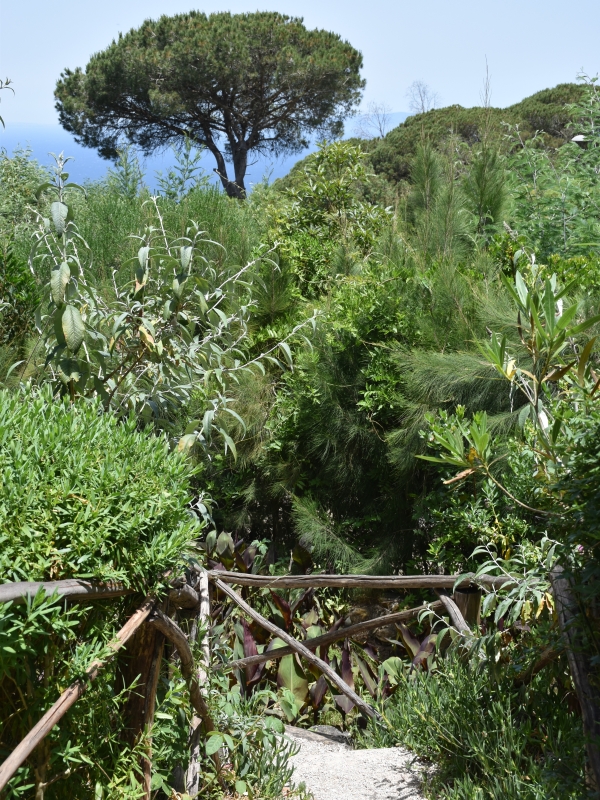
A unique location is the Donabo Botanical Gardens, the first of its kind in the city. Located on the Route du Cap Spartel in the western suburb of Rmilat, these relatively new gardens are contained within a stone pine (Pinus pinea) forest conservation area overlooking the Atlantic. They are the work of Lalla Malika El Alaoui, whose father was a Moroccan royal prince with long-standing connections to the area, and English decorative artist Paul Belvoir.
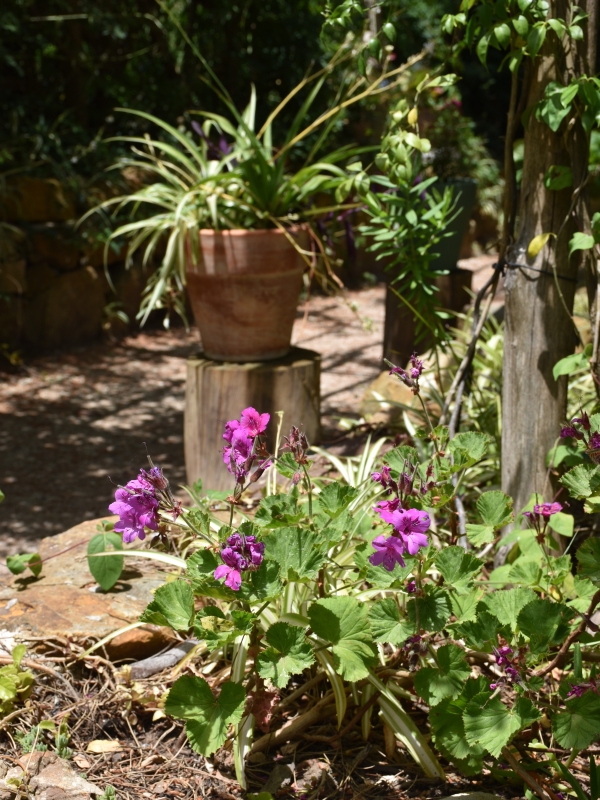
The name ‘Donabo’ comes from the Latin donare, meaning ‘to give’. It reflects not only the generosity of the land but also the warm welcome accorded to travellers visiting this part of the world. Certainly, the soil here is bountiful, helped in no small measure by the presence of natural springs and cool ocean breezes. These factors combined have facilitated the creation of ten distinct pocket gardens laid out across a hectare of sloping terrain.
The visitor’s journey begins immediately beyond the ticket office with a floral roundabout of sorts formed by banks of rosemary, sage and thyme, and overhung with lemon trees. From here the various gardens radiate outwards like the chambers of a seashell.
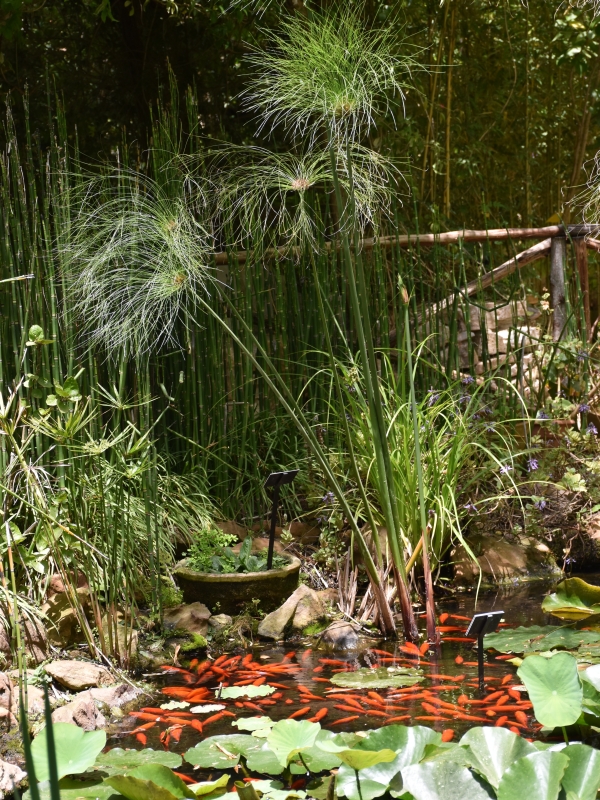
The first garden, on the right, is a contemplative Chinese Garden accessed through a circular, stone-built portal known as a Moon Gate. Lush with bamboo and ferns, it includes a tranquil lily pond in which goldfish find shade beneath papyrus fronds and a rustic bridge.
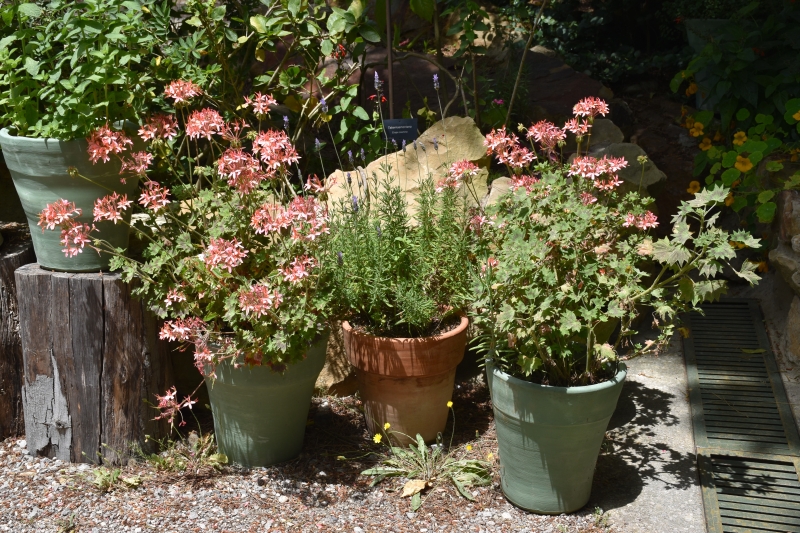
Beyond is the Moroccan Garden, containing a wide variety of medicinal and culinary herbs long used by Moroccans in their cuisine and herbal remedies. They include oregano (Origanum vulgare), wormwood (Artemisia absinthium), fringed rue (Ruta chalepensis), turmeric (Curcuma longa) and lemon verbena (Aloysia citrodora), as well as winter savory (Satureja montana), green lavender cotton (Santolina virens), sage (Salvia officinalis) and scented geranium (Pelargonium graveolens).
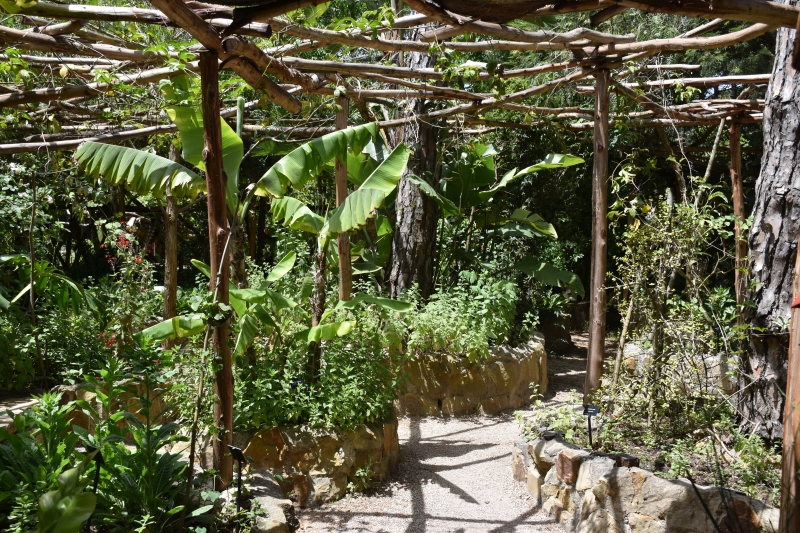
Back on the main path is a novel Mint Maze, which contains more than twenty varieties of the fresh, fragrant plant that is a quintessential part of Moroccan culture. Introduced into the Mediterranean region through ancient trade routes, it thrives in fertile plains and gardens alike. Its Arabic name, na’na’, can be made out in a floor mosaic.
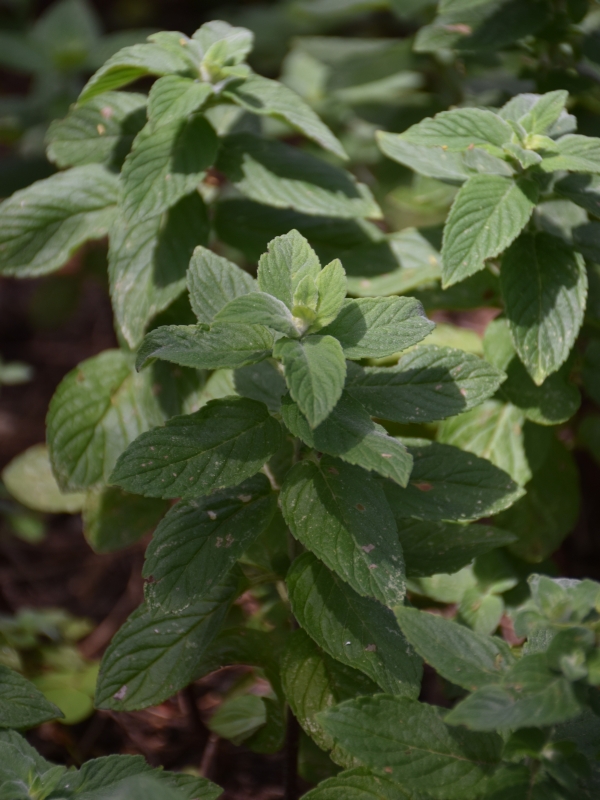
Spearmint (Mentha spicata) is probably the most important species since it forms the main ingredient of mint tea (Atay bin-na na). This has been Morocco’s national drink since the mid-19th century when Chinese Gunpowder green tea was introduced by British merchants, to which Moroccans added mint leaves and sugar. The refreshing beverage remains a staple of cafés old and new across Tangier. Other varieties of mint on display include apple mint (Mentha suaveolens), peppermint (Mentha × piperita), European pennyroyal (Mentha pulegium), water mint (Mentha aquatica), horse mint (Mentha longifolia), wild mint (Mentha arvensis) and the rare mint from the Atlas Mountains (Mentha suaveolens subsp. timija)
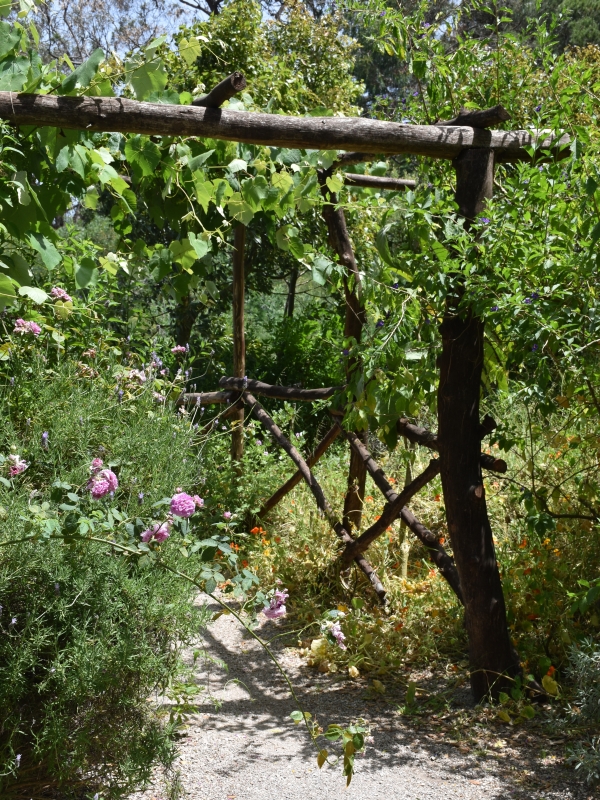
Next comes the Vegetable Garden or potager. Consisting of a series of simple raised beds, it is used for growing salad vegetables such as tomatoes, chard, courgettes and fennel. All are used in the adjacent cooking school, where students are trained in the knowledge that everything is sourced locally, organically and seasonally. There is also the Chilli Garden. Varieties grown here include Capsicum annuum, chilli (Capsicum frutescens) and habanero pepper (Capsicum chinense).
Leading away from the potager is the lovely, old-school trellised Rose Garden, beyond which is the Pollinators Garden where swaying stems of gaura (Oenothera lindheimeri) attract bees, butterflies and other winged insects. The ten pocket gardens are then filled out with a shaded promenade, the Hibiscus Garden and the Rock Garden.

At the far end of the garden is a delightful, tree-shaded café, which serves a fully organic menu. The terrace wall of the café is clad in climbing aloe (Aloiampelos ciliaris), beyond which the garden drops away to the seashore. The view is truly sublime.
For visitors with a serious botanical interest, the garden’s website details more than 300 plant species grown on the site Sourced from around the world, they include Chinese wisteria (Wisteria sinensis), Egyptian papyrus, a South American solanum (Solanum jasminoides syn. S. laxum), South African pelargoniums and English roses.
The most remarkable private garden on Tangier’s Atlantic coast is the work of Italian horticulturalist and writer Umberto Pasti (b. 1957). Located close to the village of Rohuna, it too is a hillside garden, only this time it began as a bare plot, ravaged by the local demand for wood to make charcoal. From this unpromising start, a borehole was dug for water, and the land was replanted with native species salvaged from construction sites across Tangier. The result is a wildly romantic garden of olive and almond trees, holm oaks, figs, and viburnums. These provide a backdrop for damask roses, Madonna lilies, hollyhocks, carnations, geraniums and the increasingly rare indigenous Tangierian purple wild iris (Iris tingitana).
Here is a video of Umberto Pasti talking to MGS about the garden at Rohuna in June 2025
When at the garden, Pasti occupies a modest property called Tebarek Allah (‘Blessed by God’), spending the rest of his time in an art-filled villa in the city. To experience vicariously Pasti’s achievements read his books Eden Revisited: A Garden in Northern Morocco (Rizzoli, 2019) and The House of a Lifetime: A Collector’s Journey in Tangier (Rizzoli, 2023).
This article could not have been written without the kind support of Paul Belvoir.
See the websites Donabo gardens and Garden of Rohuna for information about visiting these gardens.
THE MEDITERRANEAN GARDEN is the registered trademark of The Mediterranean Garden Society in the European Union, Australia, and the United States of America
website designed and maintained
by Hereford Web Design