The Living Canopy: Southern African Shade Trees for the Mediterranean Garden
by Christoph Wieschus
Photographs by Christoph Wieschus except where stated otherwise
Photographs to illustrate the article published in The Mediterranean Garden No. 123, January 2026
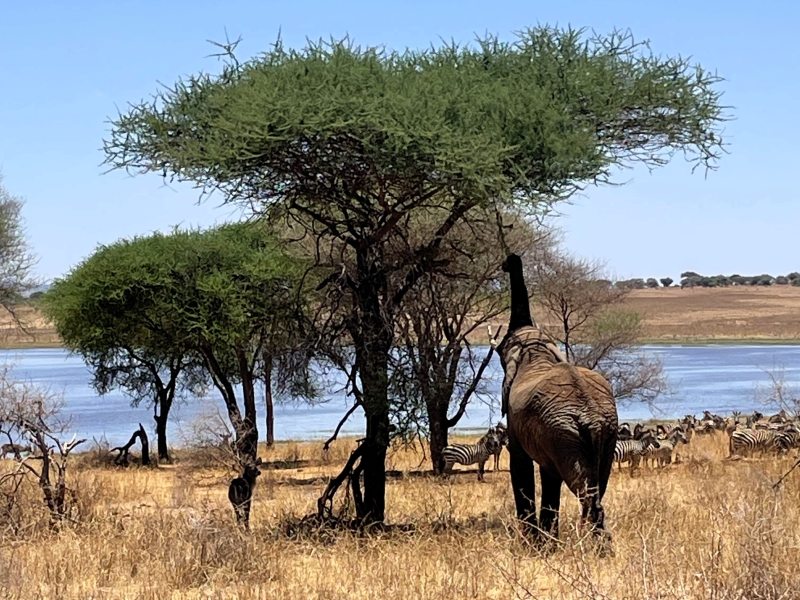
The photo at the top of this page shows Umbrella Thorn (Vachellia tortilis) at dawn in Southern Africa (Photo Christoph Wieschus)
Christoph Wieschus writes: There is something profoundly comforting about the dappled shade of a well-placed tree. In the heat of summer, when the sun beats down with relentless fervour, a tree’s canopy becomes more than a botanical feature - it becomes a sanctuary.
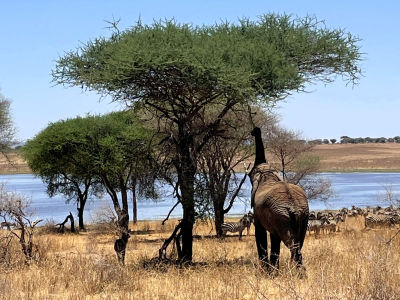
Umbrella Thorn (Vachellia tortilis)
But not all trees are created equal in this regard. Some offer more than shade: they perfume the air, feed the birds or delight the eye with seasonal drama. Others, while handsome, may come with caveats that the discerning gardener must weigh up. During my stay in Southern Africa, I witnessed how both people and animals seek refuge when the midday heat becomes unbearable. In addition to the widespread Umbrella Thorn (Vachellia tortilis), there are many indigenous trees that provide cool shade as a living canopy. Let us stroll, then, through a curated grove of trees grouped by their suitability as shade providers.
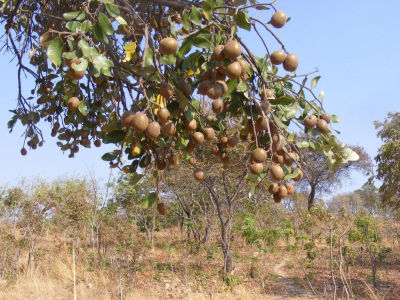
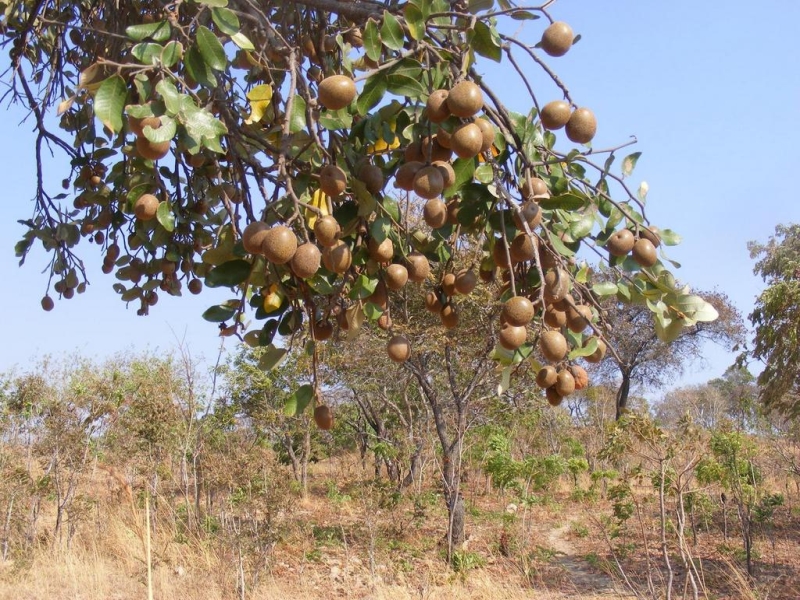
Mobola Plum (
Parinari curatellifolia) (Photo Flora of Zimbawe - M G Bingham)
Best choices: the masters of shade
- Transvaal Red Milkwood (Mimusops zeyheri). A tree of quiet dignity, evergreen with glossy, leathery leaves that shimmer in the sun. Its dense crown casts a deep, cooling shade, ideal for patios or garden seating. Come spring, it offers small, creamy-white flowers with a subtle, sweet fragrance that attracts bees and butterflies. Later, it bears golden-yellow fruits – edible and mildly sweet, beloved by birds and children alike. Its slow growth is a virtue for those who prize longevity and structure.
- Mobola Plum (Parinari curatellifolia). This broad-crowned beauty is a true gift to the gardener. Its leathery leaves with silvery undersides rustle in the breeze like whispered secrets. The tree is semi-evergreen, retaining much of its foliage through the dry season. Its pinkish-white flowers are not especially showy but are pleasantly fragrant. The real treasure lies in its plum-like fruits – sweet, nutritious and a staple in many rural diets. A deep taproot makes it drought-hardy, though it may resent heavy clay soils.
- Cheesewood (Pittosporum viridiflorum). A refined evergreen with a rounded canopy, Cheesewood offers year-round foliage and a profusion of small, greenish-white, intensely fragrant flowers in spring. The scent is reminiscent of orange blossom, and it lingers in the evening air. Though its fruits are not edible, they split open to reveal bright red seeds that add ornamental interest. It is adaptable and relatively pest-free, although it prefers well-drained soils.
- Purple-pod Clusterleaf (Terminalia prunioides). This deciduous tree is a sculptural delight, with a spreading, layered canopy that filters sunlight beautifully. Its small, inconspicuous flowers are not fragrant, but the tree compensates with its striking purple seed pods and edible fruits. It is fast-growing and tolerant of drought, making it a practical choice for large gardens. In winter, its bare branches form elegant silhouettes against the sky.
- Buffalo Thorn (Ziziphus mucronata). A tree of folklore and function, Buffalo Thorn is semi-deciduous and deeply rooted in African tradition. Its zigzagging branches bear small, fragrant flowers that attract pollinators, followed by sweet, edible fruits. The canopy is dense and spreading, offering excellent shade. However, its hooked thorns can be formidable so it is best planted away from paths or play areas. Nevertheless, its resilience and utility make it a worthy candidate for the patient gardener.
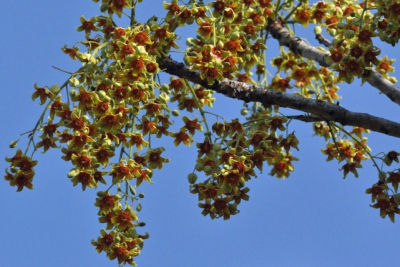
Lowveld Chestnut (
Sterculia murex) (TreeSA.org)
Moderately suitable: the capable companions
- Weeping Wattle (Peltophorum africanum). With its fern-like foliage and cascading sprays of golden-yellow flowers, this deciduous tree is a visual delight. The flowers are lightly fragrant and attract a host of pollinators. Its canopy is moderately dense, offering filtered shade. However, it can be messy in bloom and fruit drop, and its rapid growth may require regular pruning.
- Red Currant Rhus (Searsia chirindensis). A fast-growing, semi-deciduous tree with a rounded crown, It provides moderate shade and seasonal interest. Its small, red fruits are edible and attract birds, though not particularly palatable to humans. It is hardy and adaptable, although its vigorous growth may require management in smaller gardens.
- Lowveld Chestnut (Sterculia murex). This unusual tree bears large, spiny seedpods that split open to reveal shiny black seeds. The pods are striking but can be hazardous if left underfoot. Its canopy is moderately dense and, while not evergreen, it retains foliage well into the dry season. Not recommended near walkways, but a conversation piece in open spaces.
- Forest Waterberry (Syzygium gerrardii). A graceful evergreen with glossy leaves and clusters of fluffy white flowers that emit a mild fragrance. The edible berries are tart but refreshing. It prefers moist soils and partial shade, making it ideal for riparian zones or sheltered garden corners. Its shade is light but pleasant.
- Camphor Bush (Tarchonanthus camphoratus). Technically a large shrub or small tree, this species offers aromatic foliage with silvery undersides that shimmer in the breeze. Its shade is sparse but its resilience to drought and wind makes it useful in exposed sites. The camphor scent may not appeal to everyone, but it deters pests and adds a medicinal note to the garden air.
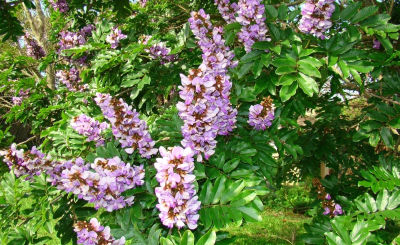
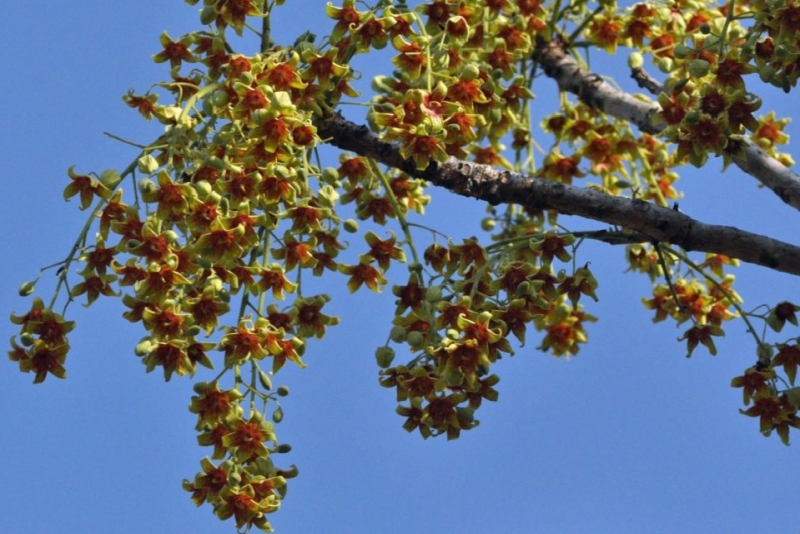
Umzimbeet (
Millettia grandis) (Michael Hickman)
Suitable with reservations: the eccentrics and specialists
- Pompom Tree (Dais cotinifolia). A showstopper in bloom, this small deciduous tree erupts in pink pompom-like flowers in early summer. The display is breathtaking but the tree offers only light shade and is short-lived. It is best used as an accent rather than a primary shade source.
- False Frangipani (Holarrhena pubescens). Known for its fragrant white flowers, this deciduous tree is attractive but somewhat brittle and prone to storm damage. Its shade is modest and it may require protection in colder climates.
- Tarwood (Loxostylis alata). This semi-deciduous tree bears attractive red-tinted new growth and small, fragrant flowers. It is ornamental but offers limited shade and may be sensitive to frost.
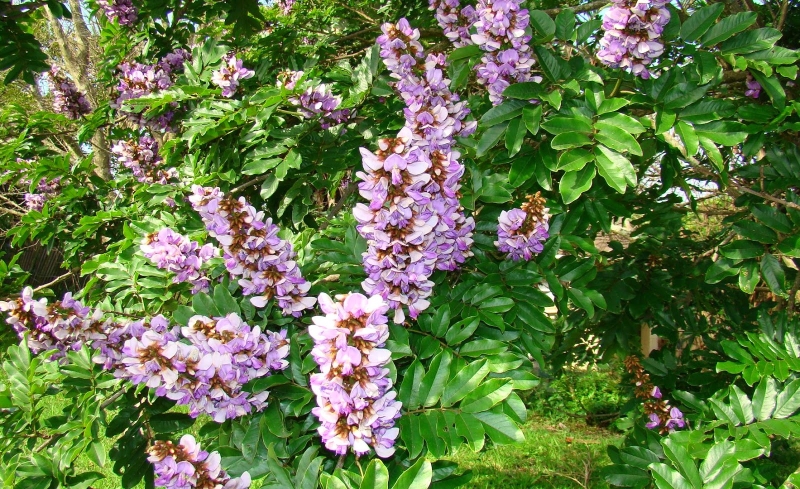
- Umzimbeet (Millettia grandis). A leguminous tree with striking purple flowers and a light canopy. While beautiful, it contains toxic compounds and is best admired from a distance. Suitable for experienced gardeners.
- Round-leaved Teak (Pterocarpus rotundifolius). A deciduous tree with attractive foliage and yellow flowers. It offers moderate shade but is slow-growing and prefers deep soils.
- Weeping Boer-bean (Schotia afra). This small tree produces nectar-rich flowers that attract birds. It is semi-deciduous and drought-tolerant but its canopy is not dense. Ideal for wildlife gardens.
- Nyala Tree (Xanthocercis zambesiaca). A majestic tree with glossy foliage and edible fruits. It is evergreen and provides good shade but its size and slow growth make it suitable only for large gardens.
In addition
Africa’s arboreal wealth extends far beyond the familiar shade trees, offering species that combine beauty, utility and cultural resonance. The following trees that do not have the traditional umbrella shape embody Africa’s diversity, although their size makes them unsuitable for the average garden. Their fragrant blossoms, edible fruits and sculptural silhouettes, balanced by occasional drawbacks, remind us of nature’s complexity.
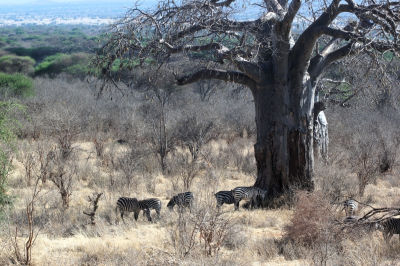
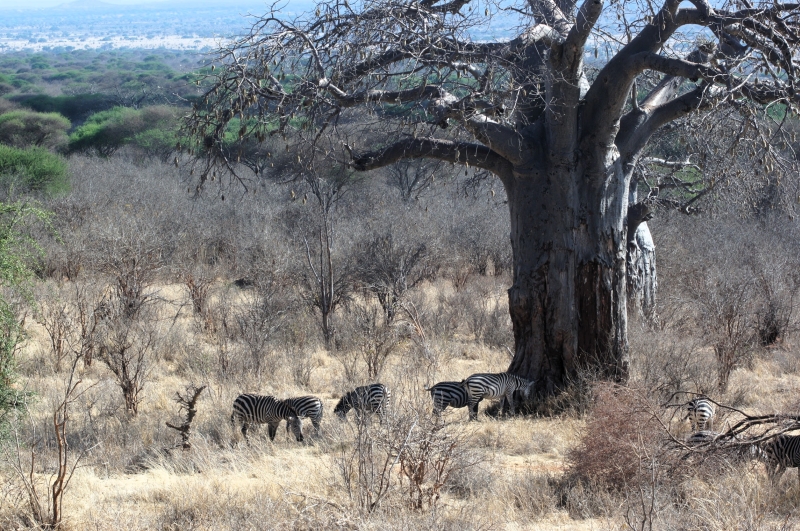
Baobab (
Adansonia digitata)
- Baobab (Adansonia digitata). An iconic tree whose massive trunk stores water, while its pendulous white blossoms release a subtle fragrance at dusk. The tart, powdery pulp of its fruit is highly nutritious. I tried it at a local market with plenty of sugar and dazzlingly coloured. The tree’s leafless winter silhouette can appear stark. According to legend, the devil uprooted it and shoved it back into the ground upside down, revealing its tangled roots.
- Candelabra Tree (Euphorbia candelabrum). Rising like a living candelabrum, its sculptural form is striking against the skyline. However, its milky latex is toxic – a reminder that not all ornamental beauty comes without perils.
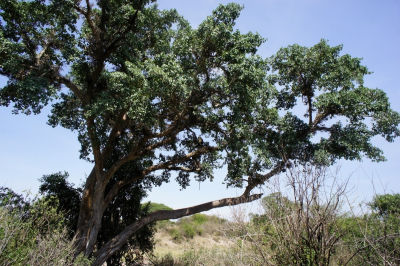
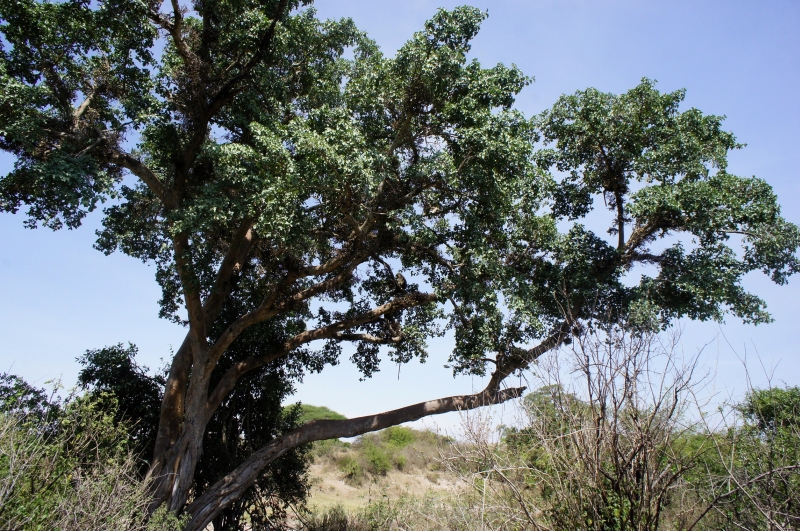
Sycamore Fig (Ficus sycomorus)
- Sycamore Fig (Ficus sycomorus). Revered since antiquity, this tree bears cherry-sized edible figs, loved by baboons who drop quite a lot of them, thus feeding animals unable to climb trees. It provides dense shade from its evergreen canopy. Its roots, however, can be invasive near buildings.
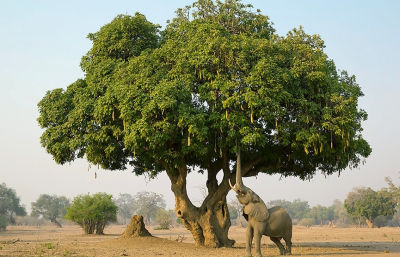
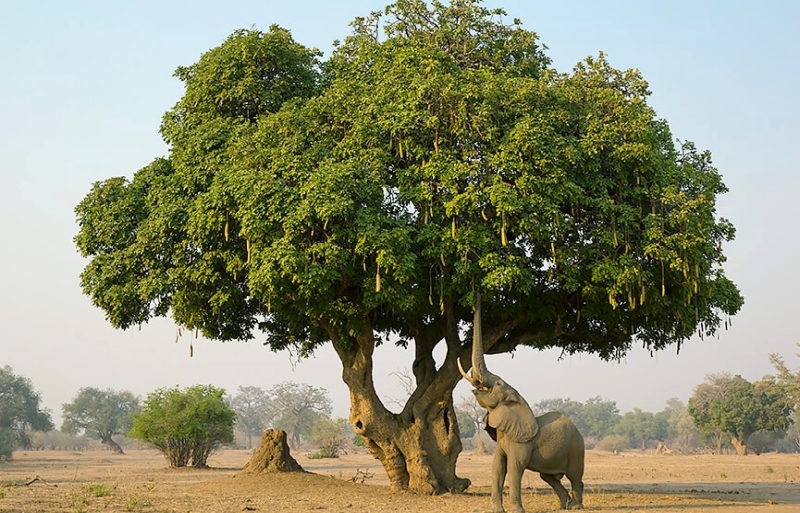
Sausage tree (
Kigelia africana)
- Sausage tree (Kigelia africana). A tree that delights us with large maroon blossoms exuding a faint perfume that attracts bats. Its heavy, sausage-shaped fruits are not palatable raw but have medicinal and cosmetic uses.
- Marula (Sclerocarya birrea). The golden fruits of this tree are enjoyed fresh or fermented into traditional beverages. Its deciduous habit means a seasonal loss of foliage but the tree’s bounty more than compensates.
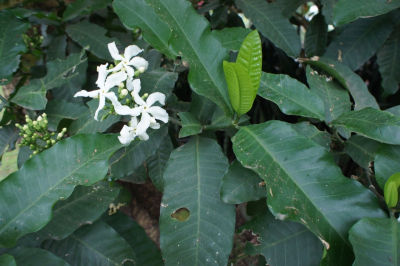
Tabernaemontana (
Tabernaemontana ventricosa)
- Small-fruited Tabernaemontana (Tabernaemontana ventricosa). With its starry white fragrant flowers it lends a delicate charm to gardens, although its latex is mildly toxic.
- Madagascar Almond (Terminalia neotaliata). With its tiered branches and broad leaves this tree offers generous shade. Its deciduous phase leaves it bare for part of the year but its architectural form remains appealing.
Non-natives
Not all shade trees gracing the Southern African landscape are native to the region. Some introductions have thrived, introducing an exotic character.
Even though the garden was made in two parts, its design was integral to the overall plan for the construction. The position of buildings on either side of the courtyard was determined by a space between existing olive trees. The front of the main house and the studio centred on a point midway between olive trees, ensuring privacy for the master bedroom and a view to the Skiathos lighthouse from both bedrooms.
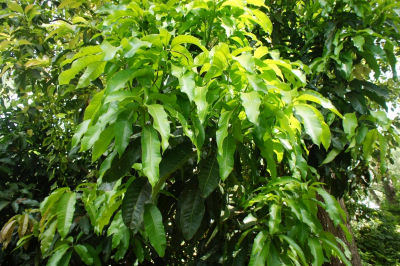
Mango (
Mangifera indica)
- Mango (Mangifera indica). A tree that hails from South-East Asia. Its sweet, golden fruit is beloved worldwide, while its evergreen foliage ensures year-round shade. Yet fallen fruit can create litter and the tree’s size demands space.
- Weeping Bottlebrush (Melaleuca viminalis). Its scarlet, brush-like flowers are nectar-rich and slightly fragrant, attracting birds and insets. It takes a while for it to turn from a shrub into a graceful tree. However, its mature silhouette impressed me when I saw it at Muller’s Lodge in Lushoto, Tanzania.
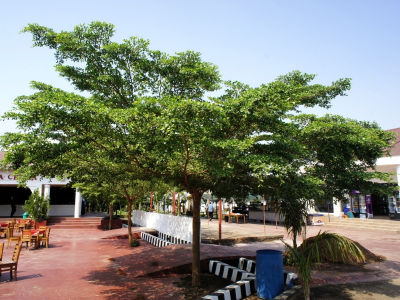
Jamaican Cherry (
Muntingia calabura)
- Jamaican Cherry (Muntingia calabura). Native to tropical America, this tree is a fast-growing species with small, cherry-like fruits that are edible and sweet. Its delicate white blossoms add charm, though the tree’s brittle wood and short lifespan limit its usefulness.
When choosing a shade tree, one must consider not only the breadth of its canopy but also the breadth of its character. A tree may offer fruit, fragrance, or flowers – but the finest among them offer all three, along with the grace of a generous silhouette. Plant wisely, and in time your garden will reward you with a living parasol under which to dream.
THE MEDITERRANEAN GARDEN is the registered trademark of The Mediterranean Garden Society in the European Union, Australia, and the United States of America
Data Protection Consent
website designed and maintained
by Hereford Web Design