Mediterranean Garden Society
Mediterranean Garden Society
Chaparral in a California Garden
by Katherine Greenberg
Photographs by Katherine Greenberg
Photographs to illustrate the article published in The Mediterranean Garden No. 124, April 2026
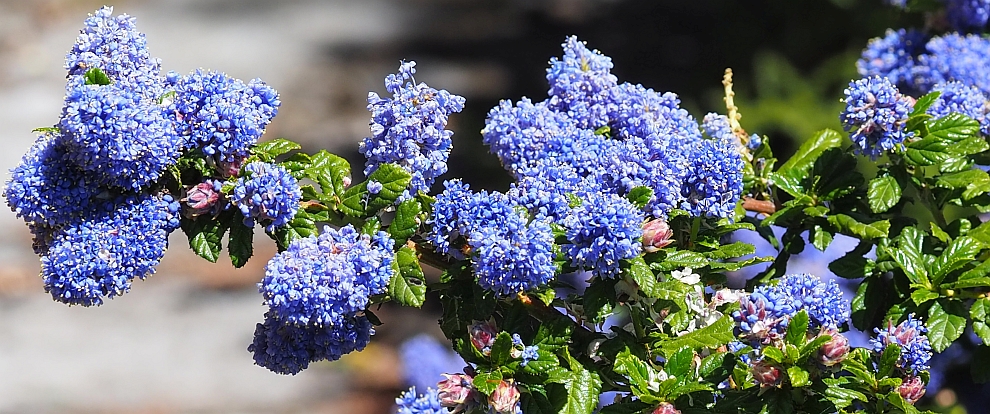
The photo at the top of this page shows shows Ceanothus thyrsiflorus var. repens
Katherine Greenberg writes: Shrublands are found in the mediterranean-climate regions of the world. They consist of drought-adapted woody plants with multiple trunks or branches growing from the base, and range in size from groundcover forms to shrubs up to fifteen feet (five metres) or the height of a small tree. In California this plant community or vegetation type is called chaparral, meaning in Spanish ‘place of scrub oak’. It resembles maquis in the Mediterranean Basin, fynbos in the Western Cape of South Africa, kwongan in Australia and matorral in Chile.
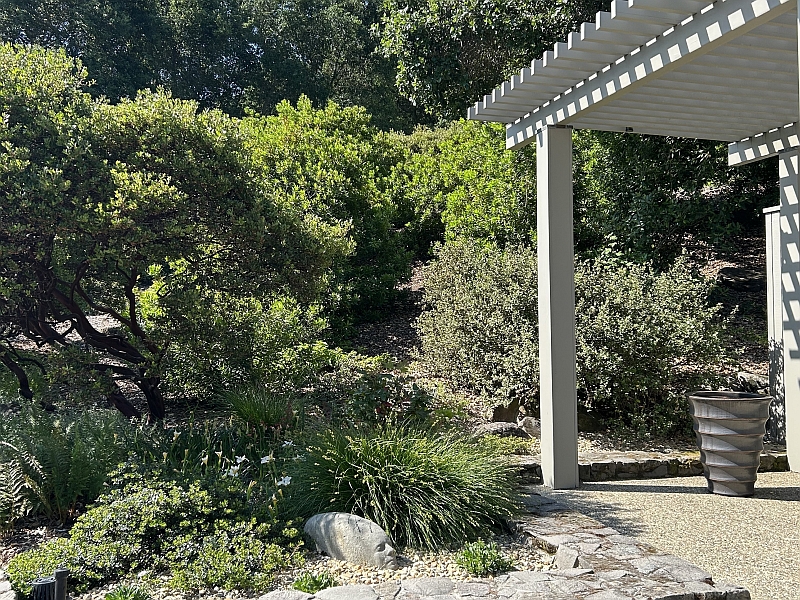
Chaparral planting in Katherine’s garden
Chaparral shrubs are characterised by tough, mainly evergreen, drought-adapted (sclerophyllous) leaves that enable the plants to survive long, dry summers, when they are typically dormant. They provide a durable foundation for waterwise gardens, where their foliage, flowers and fruits add interest throughout the year. The growing season for chaparral shrubs begins with the autumn rains, and they typically bloom through the winter months into early spring.
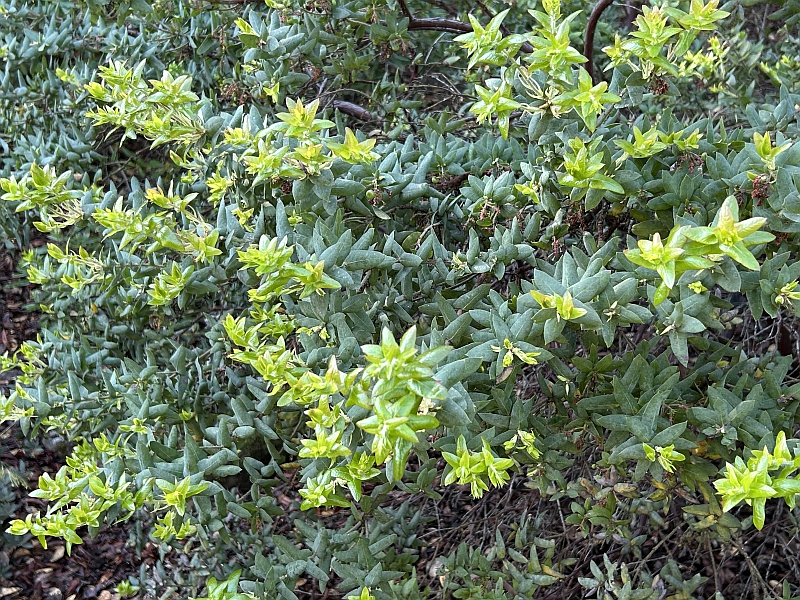
Arctostaohylos pajaroensis with new leaves emerging in early spring
My favourite chaparral shrubs for gardens include manzanitas (Arctostaphylos spp.) and wild lilacs (Ceanothus spp.). Manzanita in Spanish means ‘little apple’, a reference to manzanita berries which were used by Indigenous tribes and early settlers to make a cider-like drink. The plants are long-lived and range in size from low spreading forms to large upright shrubs. All have handsome mahogany-red bark, attractive evergreen foliage and delicate clusters of small pink or white flowers. Leaf colour varies from dark green to shades of blue-green and grey.
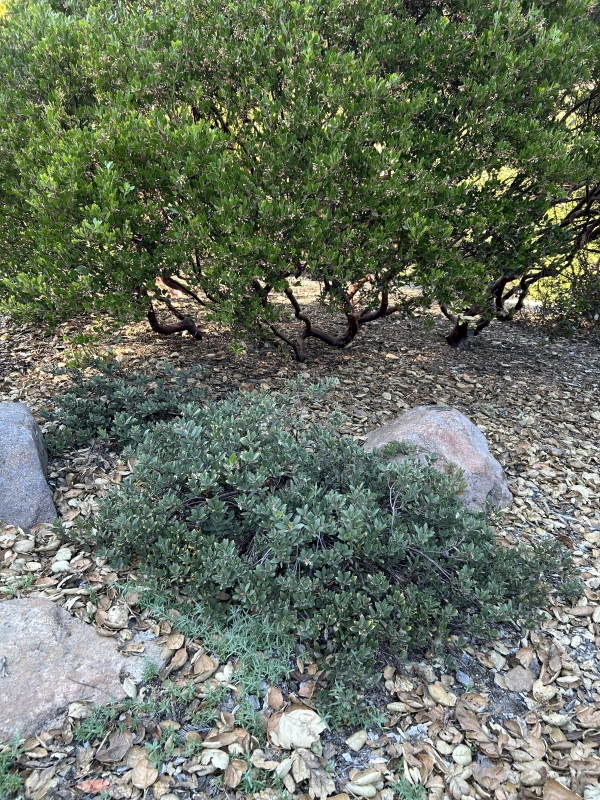
Arctostaphylos 'Pacific Mist' and Arctostaphylos densiflora 'Howard McMinn'
Drifts of Arctostaphylos densiflora ‘Howard McMinn’ bloom in my garden from October through March and provide a winter source of nectar for hummingbirds. Pajaro manzanita (A. pajaroensis)is a large shrub with bronze-coloured leaves that emerge in spring and transition to a lovely blue-green shade over the summer. Bearberry manzanita (A. uva-ursi), a low mat-forming groundcover, is the only species of manzanitathat grows beyond California in other regions of the northern hemisphere. I have seen it growing in the mountains of northern Spain and near St. Moritz in Switzerland.
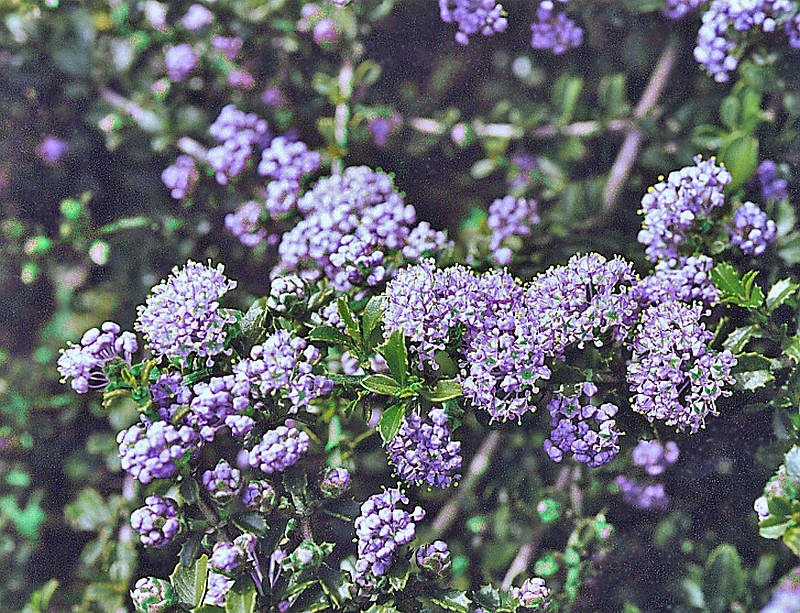
Ceanothus gloriosus subsp. Porrectus (Uni Cal Berkley)
While there are many attractive species and named cultivars of ceanothus, they are also appealing to browsing deer. Because my garden was designed to be a habitat for wildlife, including deer, I have planted only a few small-leaved species of ceanothus that are generally avoided by deer. Mt. Vision wild lilac (Ceanothus gloriosus subsp. porrectus)is a rare and endangered species that produces dark blue flower clusters on low, spreading branches. It has successfully naturalised along one of the deer trails in my garden. Ceanothus species are not generally long-lived, but they grow quickly in gardens and are easily replaced when they begin to decline.
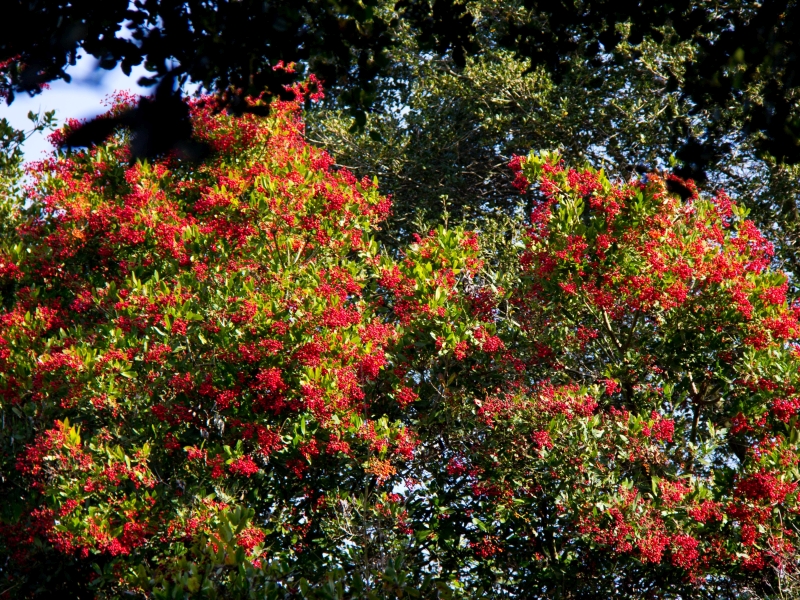
Heteromeles arbutifolia
Toyon, Heteromeles arbutifolia (syn. Photinia arbutifolia), is a large evergreen shrub that produces clusters of brilliant red berries in autumn and winter. This is the plant that gave Hollywood its name, and it grows throughout California’s canyons and foothills. I planted several toyons in my hillside garden over forty years ago, and a few have grown from seeds dropped by birds. The edible berries are favoured by birds and were also eaten by Indigenous people, after cooking to remove their bitter taste. This long-lived shrub may be trained against a sunny wall or pruned into a small tree by removing the lower limbs.
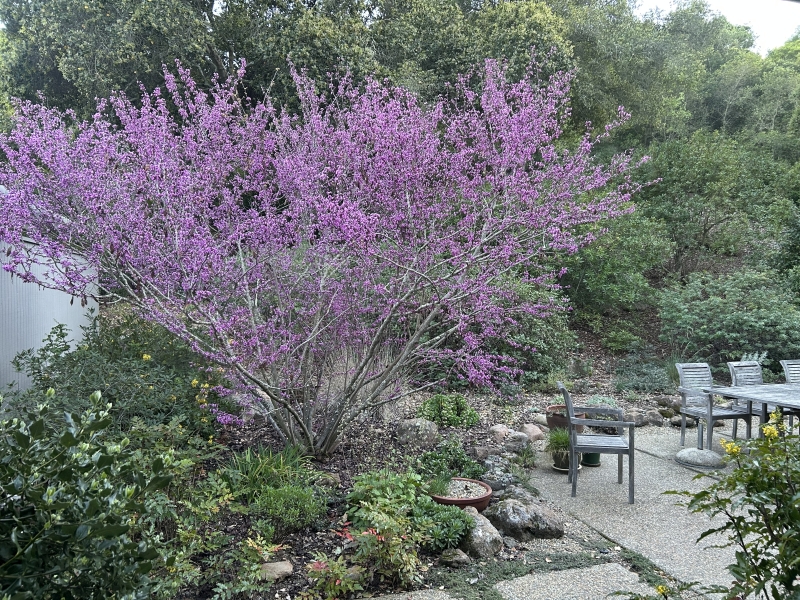
Cercis occidentalis
Western redbud (Cercis occidentalis) is a large deciduous shrub that can also be used as a small, multi-trunked tree. Native to dry slopes in California’s foothills, this shrub was coppiced by Indigenous people to produce new stems for basketry. I planted several western redbuds in my garden for year-round enjoyment, from the masses of pink flowers that emerge from bare branches in February to the heart-shaped leaves that turn a soft shade of yellow in autumn, and the zig-zag branches and seed pods in winter.
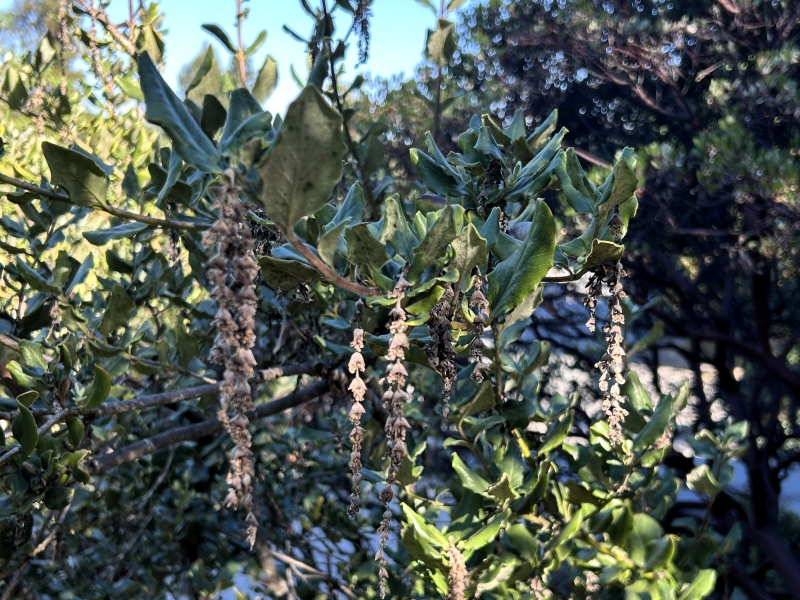
Garrya elliptica
For a stunning winter effect, coast silk-tassel (Garrya elliptica) is unmatched. Delicate silver catkins hang from the branch tips like strands of tinsel in January and February. The male cultivar ‘James Roof’ is most often sold in nurseries, and I have several in my garden. I also have a female Garrya elliptica, which produces shorter catkins which resemble clusters of pearls. After the catkins have fallen, this large evergreen shrub recedes into the background for the rest of the year.
Mountain mahogany (Cercocarpus betuloides) is an upright shrub with arching branches and smooth, silver-grey bark. It has a refined habit and attractive birch-like leaves, although its small flowers are seldom noticed. The slender, feathery seeds or achenes are striking in summer when they glow in the afternoon light. Mountain mahogany is a long-lived shrub that merits greater use in gardens.
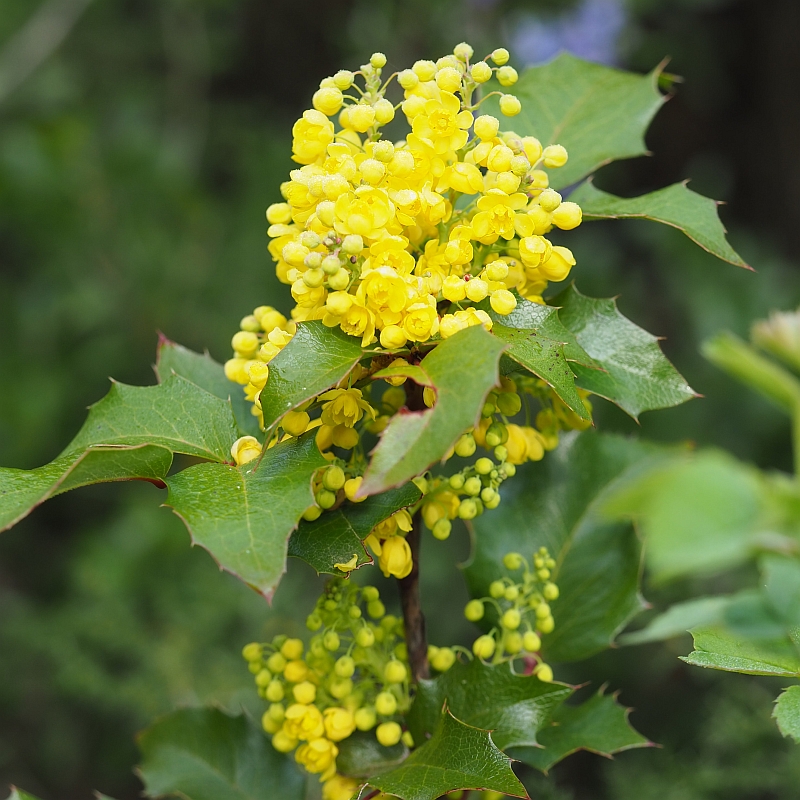
‘Oregon grape’ (Mahonia aquifolium)
Bush anemone (Carpenteria californica) has long been admired by gardeners in California and in Europe for its elegant white flowers. It blooms in the spring, and by late summer the dark green leaves and shredding bark develop a rather shabby appearance. This is the best time to cut the plant back by half or more to promote new growth. This shrub is a wonderful addition to any garden, perhaps tucked into a corner where its lovely flowers can be enjoyed in season.
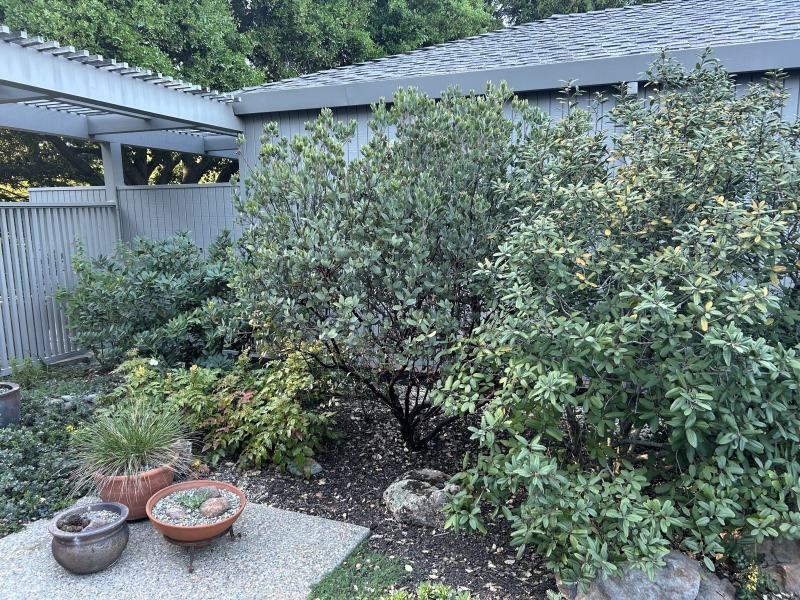
Toyon, Manzanita, Coffeeberry in Katherine’s garden
No ‘chaparral’ garden would be complete without coffeeberry (Frangula californica, formerly Rhamnus californica). The decorative fruits that give this plant its common name persist on the plant for several months, as they transition from green to red and then black over the summer. There are several notable cultivars, including the compact selection ‘Eve Case’ and the taller ‘Mound San Bruno’. Flowering perennials and native grasses are natural companions for coffeeberry in a summer-dry garden.
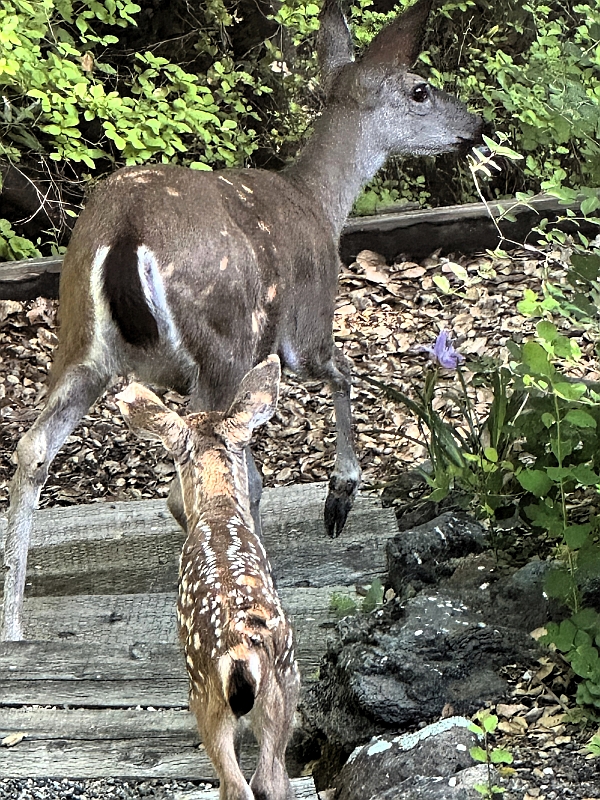
Doe and fawn walking through Katherine’s garden
Perhaps this article will inspire members from other mediterranean-climate regions of the world to write about their favourite shrubs for summer-dry gardens. Cistus, commonly known as rockrose,comes to mind for gardens in Spain and France.
THE MEDITERRANEAN GARDEN is the registered trademark of The Mediterranean Garden Society in the European Union, Australia, and the United States of America
website designed and maintained
by Hereford Web Design