
Mediterranean Garden Society
Mediterranean Garden Society
Climate Change at Sparoza: Trends and Observations (2000 – 2026)
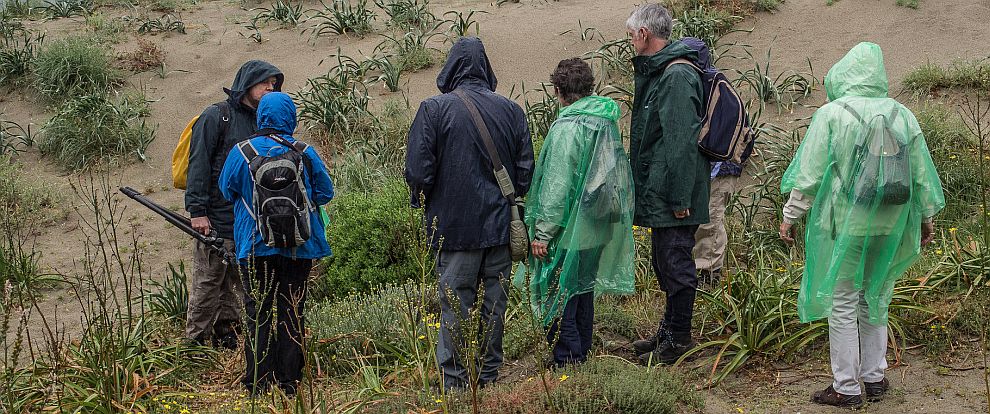
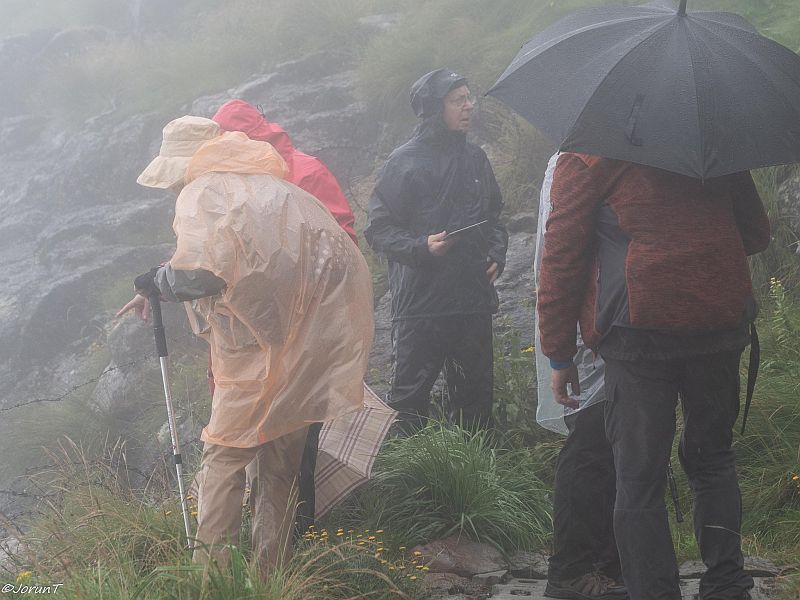
The photo at the top of this page shows MGS members during a botanical tour of Crete one April on a wet walk from Plakias across the hill to Damnóni (Photo Jorun Tharaldsen)
Villy Loumaki, Head Gardener writes:
The Mediterranean climate has always been defined by its variability, but long-term data collected at Sparoza and across Greece reveals shifts that directly impact our gardens. Below is an overview of changing rainfall patterns, rising summer heat, and winter warming trends.
At Sparoza, we have maintained detailed rainfall records since 2003, beginning with data meticulously gathered by Sally Razelou.
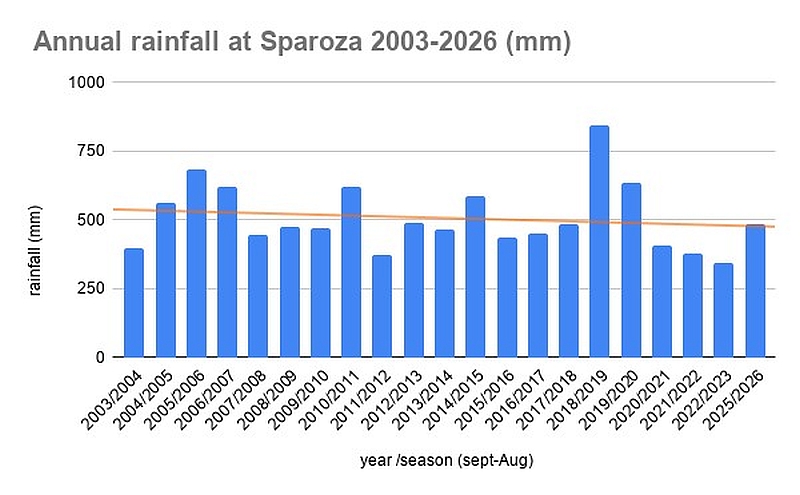
When observing the "long view," standard climatic cycles usually emerge: periods of drier years followed by wetter seasons. However, a closer look at our historical data reveals a subtle downward shift. Over the past decade, our annual rainfall average has dropped from nearly 450 mm to closer to 400 mm, with the four years preceding this season sitting consistently between 350 mm and 390 mm.
The current 2025 / 2026 season has been an exception to this recent dry trend. Following a tiny 3 mm drop of rain on the final day of September, we recorded an impressive total of 490 mm by the end of April 2026. The effect on the garden was immediate and highly visible, resulting in unusually lush spring growth.
Despite occasional wet years, the data reveals a more complex reality: total annual rainfall volumes are not changing as drastically as the way the rain falls. Precipitation increasingly arrives in concentrated, intense events separated by prolonged dry spells.
This shifting pattern results in:
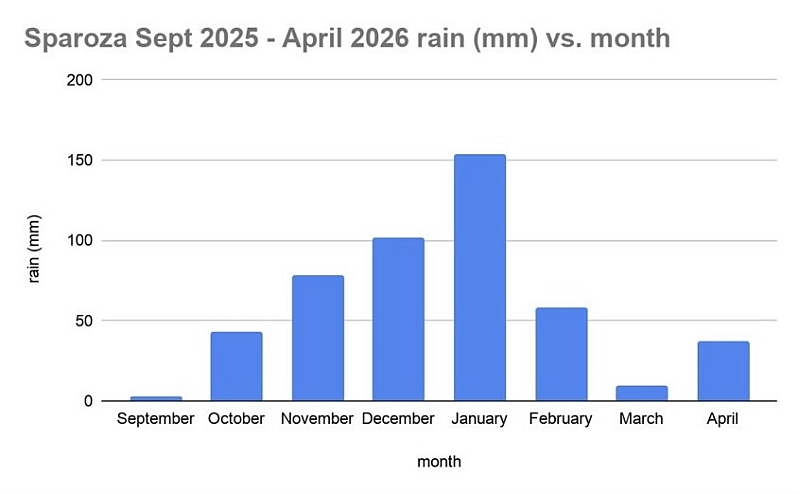
Looking closely at the monthly distribution for the 2025/2026 season highlights just how unpredictable the weather has become. We saw almost no rain in September, followed by a gradual build through October, November, and December. January 2026 was the absolute peak of the winter, delivering over 150 mm in a single month. March returned to a severe drought with only about 10 mm, before April brought a closing bounce of 37 mm.
Temperature records from Athens show a clear, measurable increase in the number of extreme summer heat days - defined here as days where the maximum temperature exceeds 35∘C.
At the beginning of the century, summers typically experienced around 10 to 15 such days. In recent years, several summers have exceeded 40 days above 35C. Notably, 2024 was recorded as the hottest summer on record, with 2025 tracking closely behind among the most severe.
This rise in prolonged, intense summer heat has major implications for Mediterranean planting:
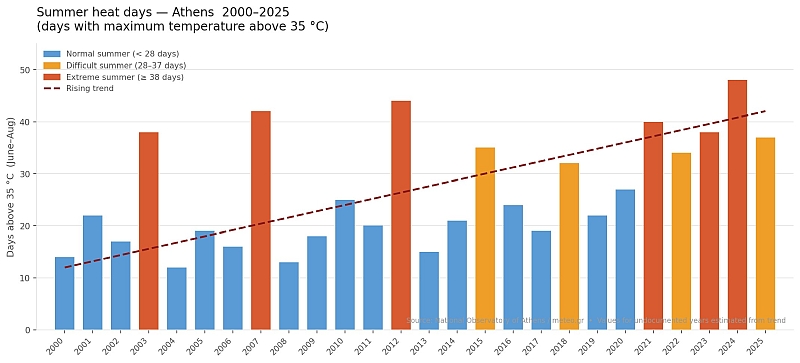
Summer heat days, Athens 2000-2025 (days with max temperature above 35°)
Climate change in Greece is not exclusively expressed through blistering summers; winters are also becoming significantly warmer.
Recent winters include some of the warmest ever recorded at a national level, while genuinely cool, restorative winters have become increasingly rare. This lack of winter chill directly impacts the garden ecosystem by disrupting:
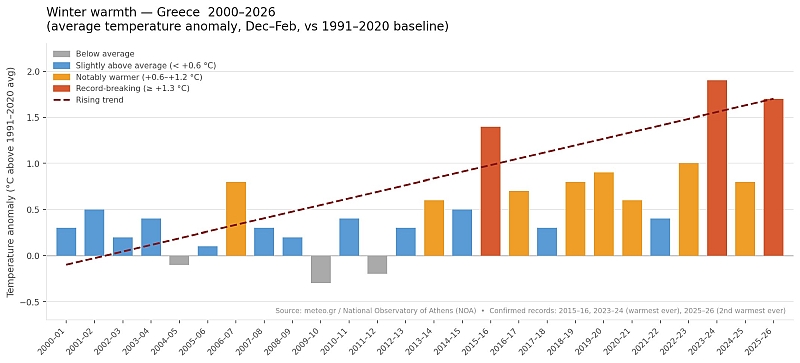
Winter warmth, Greece 2000-2026 (average temperature anomaly Dec-Feb vs 1991-2000 baseline)
Cultivating the Future
Mediterranean gardens have always adapted to climatic variability and seasonal extremes. The distinct challenge today is that these extremes are becoming more frequent, more intense, and far less predictable. As Sparoza continues to evolve in response to these shifting conditions, it serves not only as a beautiful garden display but also as a vital, long-term record of environmental change within the Mediterranean landscape.
THE MEDITERRANEAN GARDEN is the registered trademark of The Mediterranean Garden Society in the European Union, Australia, and the United States of America